


Introduction
Seamless titanium pipes are essential components used in demanding applications, from aerospace hydraulic systems to deep-sea oil and gas systems. So, what transforms a crude titanium ingot into high-performance seamless tube?
At TSM Technology, we believe understanding this complex process is key to appreciating the final product's value. In this article, we delve into the manufacturing process of seamless titanium tubes, highlighting the sophisticated engineering and stringent controls that ensure unparalleled reliability.
Why Choose Seamless? The Fundamental Advantage
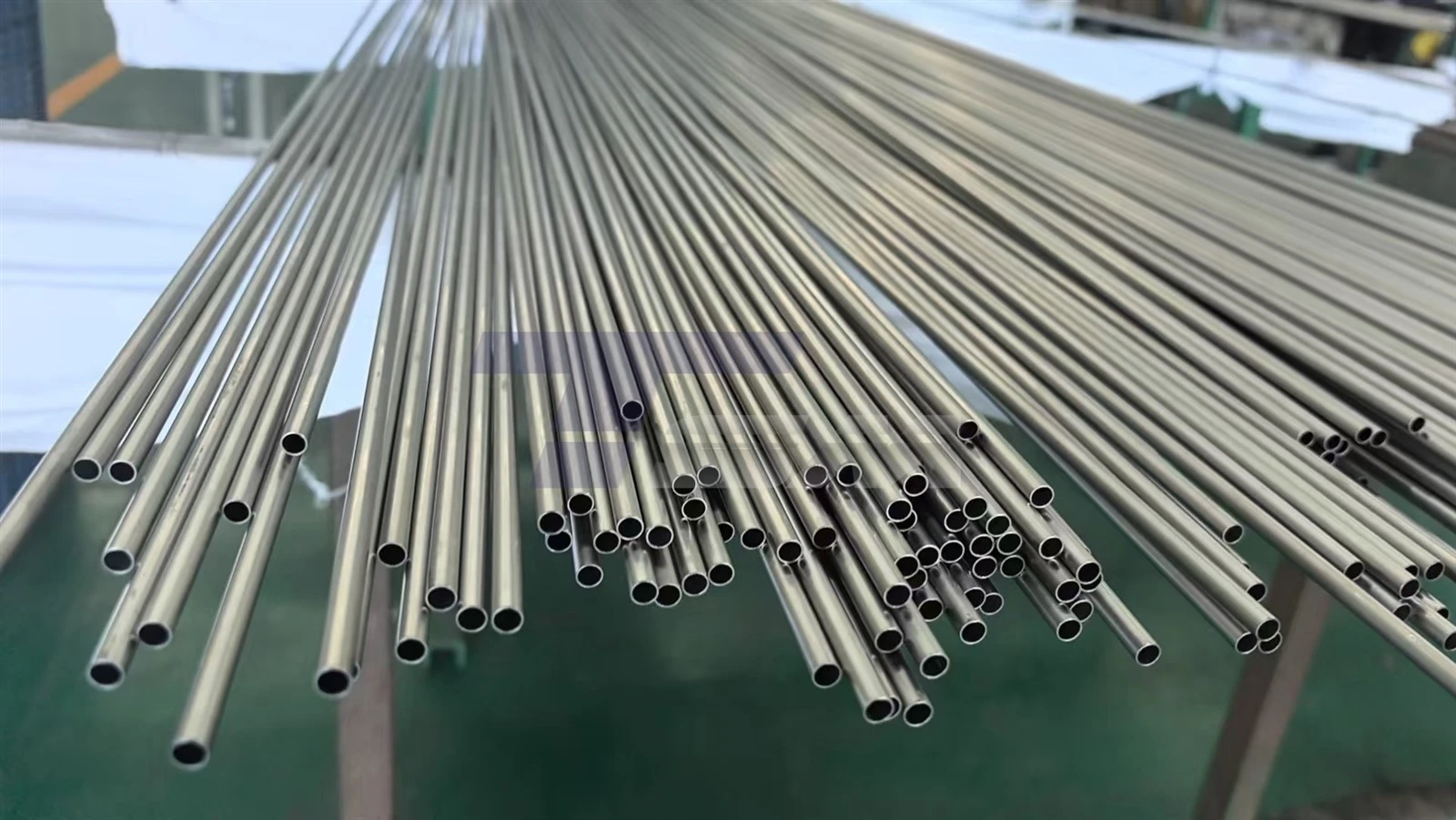
Before exploring the "how," it's essential to understand the "why." Seamless titanium pipes feature a continuous grain structure that follows the pipe's circumference. This homogeneous structure provides:
Superior Pressure Integrity: No weld seam means no potential weak point, making them ideal for high-pressure applications.
Enhanced Reliability: Uniform mechanical and corrosion-resistant properties throughout the entire pipe body.
Consistent Performance: Excellent performance under cyclic loading and high temperatures.
Step-by-Step: The Manufacturing Journey Unveiled
The creation of a seamless titanium pipe is a multi-stage process where precision is paramount. The following flowchart outlines the key stages involved in transforming a raw titanium ingot into a high-performance seamless pipe.
Step 1: From Ingot to Billet – Heating and Forging
The journey begins with a cylindrical titanium ingot, typically produced via vacuum arc remelting (VAR) to ensure utmost purity and homogeneity. This ingot is heated to a specific high temperature (often within the range of 850°C to 1000°C ) to increase its malleability. It is then subjected to intense forging operations. Forging refines the metal's coarse as-cast grain structure, improves density, and creates a preliminary shape, resulting in a solid, dense tube billet.
TSM Quality Insight: Precise control of temperature and deformation during forging is critical for developing a uniform microstructure, which lays the foundation for the pipe's final mechanical properties.
Step 2: Creating the Hollow – The Piercing Process
This is the defining step that creates the "seamless" hollow body. Several advanced techniques are employed:
- Extrusion: The heated billet is forced through a die containing a mandrel. The metal flows around the mandrel, creating a hollow tube. This method is well-suited for a variety of sizes and provides a good surface finish.
- Tandem Skew Rolling (TSR): An innovative and efficient short-flow process where the heated billet is rotated and pierced by two angled, tapered rolls. This method is highly effective for titanium alloys, which have a narrow hot-working window and rapid heat loss characteristics. It can successfully produce tubes with high dimensional accuracy and no obvious surface defects when parameters like the initial rolling temperature (e.g., 1050°C) are optimally controlled.
- Alternative Methods: Other methods include drilling a hole through a solid bar or using advanced techniques like electrical discharge machining (EDM) to create a precise pilot hole in the billet.

Step 3: Shaping and Sizing – Hot and Cold Rolling
The rough, thick-walled hollow shell (bloom) then undergoes rolling to achieve its final dimensions, wall thickness, and improved mechanical properties.
Hot Rolling: The bloom is heated and passed through a series of rolls that elongate and thin the tube. This process is efficient for significant size reduction and refining the grain structure.
Cold Pilgering (Cold Rolling): This is a critical precision-forming process. The tube is rolled over a mandrel using a specially designed pilger mill that applies a combination of rolling and hammering actions. Cold pilgering dramatically improves dimensional accuracy, surface finish, and strength through work hardening . This step is often interwoven with intermediate heat treatment (annealing) to relieve stresses and restore ductility for further processing .
Step 4: Microstructure Control – Heat Treatment
Heat treatment is a vital step to tailor the final properties of the titanium pipe. Processes like annealing or solution treatment and aging are performed in controlled atmosphere furnaces. This step optimizes the microstructure (e.g., creating a fine, basketweave structure in grade 5 alloys), resulting in the desired combination of strength, ductility, and toughness . For instance, studies show that seamless tubes produced via warm rolling can achieve a finer, more uniform microstructure compared to other methods, leading to better ability to carry higher loads and impact .
Step 5: Finishing and Stringent Quality Control
The pipe is then subjected to a series of finishing operations:
- Straightening (both pre-straightening and fine straightening) ensures perfect linearity .
- Cutting to the required length.
- Surface finishing (polishing, pickling) to achieve the desired surface quality.
- Non-Destructive Testing (NDT): This is where TSM Technology's commitment to quality shines. Every pipe undergoes rigorous inspection, including:
- Ultrasonic Testing (UT): To detect internal flaws.
- Eddy Current Testing: To identify surface and near-surface defects.
- Hydrostatic Testing: To verify pressure integrity.
- Dimensional Checks: Ensuring compliance with strict tolerances.
Innovation in Manufacturing: The Rise of Short-Flow Processes
The industry is continuously evolving towards more efficient methods. Short-flow processes like Tandem Skew Rolling (TSR) aim to consolidate production steps, reducing time, energy consumption, and cost while maintaining high quality. These methods are proving highly suitable for the mass production of high-grade seamless titanium alloy tubes .
Conclusion: More Than Just a Pipe – A Product of Precision
The manufacturing process of seamless titanium pipes is a complex symphony of metallurgy, engineering, and meticulous quality control. It's a journey that demands expertise at every stage to transform a raw metal into a component of exceptional reliability and performance.
As a leading supplier, TSM Technology masters every step of this intricate process. We leverage both traditional and innovative technologies to provide our clients with seamless titanium pipes that meet the most demanding international standards. When you partner with us, you are not just buying a product; you are investing in a legacy of engineering excellence.
Contact Us
For expert guidance on selecting Titanium Grade 7 plate or Grade 2 plate for marine applications, contact TSM Technology. Our technical team is ready to support your project with professional titanium solutions.
Email: info@tsm-titanium.com
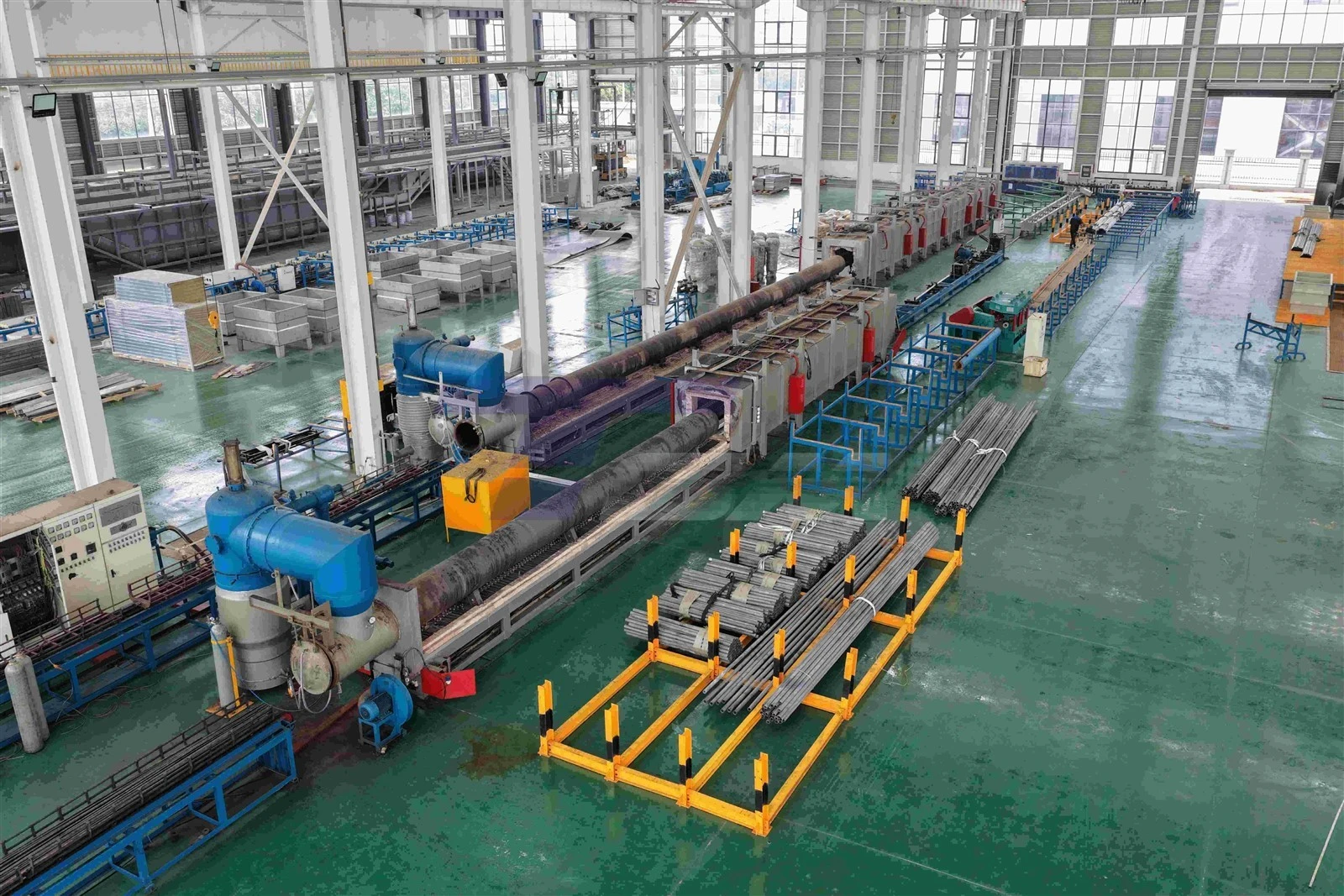
We are always at your service when you need
TSM Technology, one of the leading Asian suppliers of high-performance titanium-based materials in China, specializes in factory-made products such as titanium tubes, welded titanium pipes and fittings, titanium flanges, titanium fasteners and nuts, titanium plates and rods, among others.
They are widely used in the construction of heat exchangers, condensers, power plants, seawater desalination facilities, oil and gas pipelines, chlor-alkali plants, and other related fields.
Number of Employees
years experience
Modern factory
Global Supply

Let TSM Technology help you get your project off the ground
Since 2011, TSM Technology is a China-based titanium manufacturer specializing in titanium tubes, plates, bars, forgings, fasteners, flanges, and custom-machined titanium components for aerospace, medical, marine, and industrial applications.


