


Grade 2 Titanium is widely valued for its corrosion resistance in many industrial environments. Its performance in alkaline solutions, however, depends on more than the solution's pH. Temperature, concentration, dissolved oxygen, oxidizing agents, and other chemicals can all influence the stability of its protective surface film.
For engineers selecting Grade 2 Titanium for chemical equipment, the key question is whether the specific process conditions allow the passive film to remain stable throughout operation.
This guide explains how commercially pure titanium behaves in alkaline media, where its limitations may appear, and what information to review before specifying Grade 2 Titanium tube or plate.
1. Why Does Grade 2 Titanium Resist Alkaline Corrosion?
Grade 2 Titanium is a commercially pure titanium grade. Its corrosion resistance mainly comes from a thin, adherent oxide film that forms naturally on the metal surface. Titanium dioxide (TiO₂) is the principal oxide associated with this passive layer.
When the film remains stable, it separates the underlying metal from the surrounding solution and slows further metal dissolution. If the film is damaged, titanium can often repassivate when the environment supports oxide-film formation.
Electrochemical research on commercially pure and analytically pure titanium in sodium hydroxide solutions has identified active, passive, and transpassive behavior. The passive region is associated with a higher polarization resistance than the active-corrosion region. These findings help explain the role of the oxide film, but they should not be treated as a universal service guarantee for every Grade 2 product or process.
Engineering point: Titanium's resistance in alkaline media is conditional. A stable passive film can provide good protection, but sufficiently severe temperature, chemistry, or operating conditions may reduce that protection.
2. How Does Grade 2 Titanium Perform in Different Alkaline Solutions?
2.1 Sodium Hydroxide (NaOH) Solutions
Sodium hydroxide is used in chemical processing, pulp and paper production, cleaning systems, and other industrial operations. Titanium can show useful resistance in some caustic environments, but its performance becomes more dependent on temperature, concentration, aeration, and exposure conditions as service severity increases.
An industrial corrosion reference reports the following corrosion rates for commercially pure titanium under particular caustic test conditions:
| Test condition | Reported corrosion rate |
|---|---|
| Boiling 10% NaOH | 0.02 mm/year |
| Boiling 50% NaOH | 0.05 mm/year |
| 40% NaOH at 121°C | 0.13 mm/year |
These figures are literature values for commercially pure titanium under the stated conditions. They are not guaranteed corrosion rates for a specific Grade 2 tube, plate, weld, or fabricated component. Differences in material condition, solution chemistry, oxygen content, test method, and operating history can affect actual performance.
2.2 Potassium Hydroxide (KOH) Solutions
Potassium hydroxide is another strong alkali used in chemical production, electrochemical processes, and industrial cleaning. Its effect on titanium should be assessed in the same condition-specific way as sodium hydroxide. Do not assume that a result obtained in NaOH automatically applies to KOH at the same nominal concentration.
For a meaningful material review, document the KOH concentration, operating and upset temperatures, dissolved oxygen level, contaminants, and whether the solution contains oxidizing additives. Where conditions are severe or poorly defined, laboratory testing in a representative solution is preferable to relying on a general compatibility chart.
2.3 Mixed Alkaline Process Solutions
Real process liquids rarely contain only one chemical. They may include salts, chlorides, sulfides, organic compounds, suspended solids, or oxidizing chemicals. These additional constituents can change the corrosion behavior of titanium and may create conditions that are not represented by a simple NaOH or KOH test.
A corrosion report on pulp-mill flash-tank service describes commercially pure titanium exposed to complex black-liquor conditions at elevated temperatures. The reported corrosion cannot be assigned to pure sodium hydroxide alone because the process liquor contains multiple constituents.
3. How Do Temperature and Concentration Affect Titanium in Alkaline Solutions?
Temperature
Temperature can influence reaction kinetics, oxide-film growth, and the balance between passivation and dissolution. A laboratory study examined analytically pure titanium in 1.0 M NaOH at 25°C, 35°C, and 55°C. It reported an increase in TiO₂ growth rate as temperature rose to 35°C, while a further increase to 55°C did not produce a corresponding increase in the measured growth rate.
This is a result from a defined laboratory system using analytically pure titanium. It is not a maximum operating temperature for Grade 2 Titanium and should not be used as a design limit. Actual equipment assessment must consider the alloy condition, solution composition, concentration, flow, oxygen availability, and exposure duration.
Concentration
The effect of alkali concentration is not always a simple linear relationship. Published tests may show different trends depending on concentration, temperature, aeration, and the electrochemical region being measured. A result from one concentration range should not be extrapolated to a more concentrated process without supporting data.
Dissolved Oxygen and Aeration
Oxygen availability can affect the ability of titanium to maintain or rebuild its passive film. In some alkaline systems, aeration supports passivation, while deaerated or boiling conditions may produce different corrosion behavior. Process specifications should state whether the solution is open to air, inerted, deaerated, or subject to boiling and flashing.
4. What Are the Main Limitations of Grade 2 Titanium in Alkaline Environments?
4.1 High Temperature and Severe Caustic Conditions
High temperature can increase corrosion risk in some caustic environments. Concentrated alkali, long exposure, boiling, and low oxygen availability may combine to challenge the passive film. A material decision should use the full operating envelope, including start-up, shutdown, cleaning, and upset conditions.
4.2 Alkaline Peroxide Solutions
Alkaline peroxide systems deserve special attention. Industrial corrosion guidance reports that titanium may perform poorly in alkaline peroxide bleaching liquors when pH exceeds approximately 11, even when only a small amount of hydrogen peroxide is present. This is a warning for that specific type of oxidizing process chemistry, not a universal pH threshold for every alkaline solution.
4.3 Complex Chemistry and Contamination
Chlorides, fluorides, oxidizing agents, organic acids, sulfides, and process contaminants can alter corrosion behavior. The combined effect may be more important than the nominal pH. Review the complete chemical analysis rather than specifying a material from the main alkali concentration alone.
4.4 Welds, Crevices, Deposits, and Fabrication
Material selection is only one part of corrosion control. Weld quality, heat tint removal, surface contamination, crevice geometry, stagnant zones, and deposits can influence local service conditions. Fabrication procedures and post-weld cleaning should be suitable for titanium, and inspection should verify that the finished component meets project requirements.
Important limitation: Do not select Grade 2 Titanium solely because a compatibility chart labels titanium as resistant to alkalis. Confirm the actual chemical composition and complete operating conditions before final approval.
5. Is Grade 2 Titanium Suitable for Alkaline Chemical Processing Equipment?
Grade 2 Titanium may be considered for selected chemical-processing components when service conditions are compatible with its corrosion behavior. Potential equipment forms include process piping, heat-exchanger components, tanks, vessels, and fabricated plate structures. Suitability must be established for the actual process rather than assumed from the equipment type.
| Review item | Information to confirm |
|---|---|
| Chemical composition | Alkali type, concentration, impurities, oxidizers, and other process chemicals |
| Temperature | Normal, maximum, minimum, start-up, shutdown, and upset temperatures |
| Process conditions | Pressure, flow velocity, aeration, boiling, and residence time |
| Component design | Welds, crevices, deposits, drainage, and cleaning method |
| Verification | Representative corrosion testing, inspection plan, and material documentation |
For critical equipment or aggressive service, involve a corrosion specialist and consider testing coupons or representative welded samples in the actual process solution. A corrosion allowance alone may not address localized attack or changes in process chemistry.
6. Selecting Grade 2 Titanium Tube for Alkaline Service
When a project specifies Grade 2 Titanium tube, confirm the applicable product standard and manufacturing route. ASTM B338 is commonly associated with titanium and titanium-alloy tubes for condensers and heat exchangers, while ASTM B861 covers seamless titanium and titanium-alloy pipe. The correct specification depends on the product form and intended application.
Review outside diameter, wall thickness, length, dimensional tolerances, delivery condition, surface finish, and required testing. For welded or seamless products, make sure the selected manufacturing route and inspection scope meet the design specification.
Explore TSM's ASTM B861 Titanium Seamless Tube and Pipe page for product information. Confirm the available grade, dimensions, and order requirements with the supplier before placing an order.
7. Selecting Grade 2 Titanium Plate for Alkaline Equipment
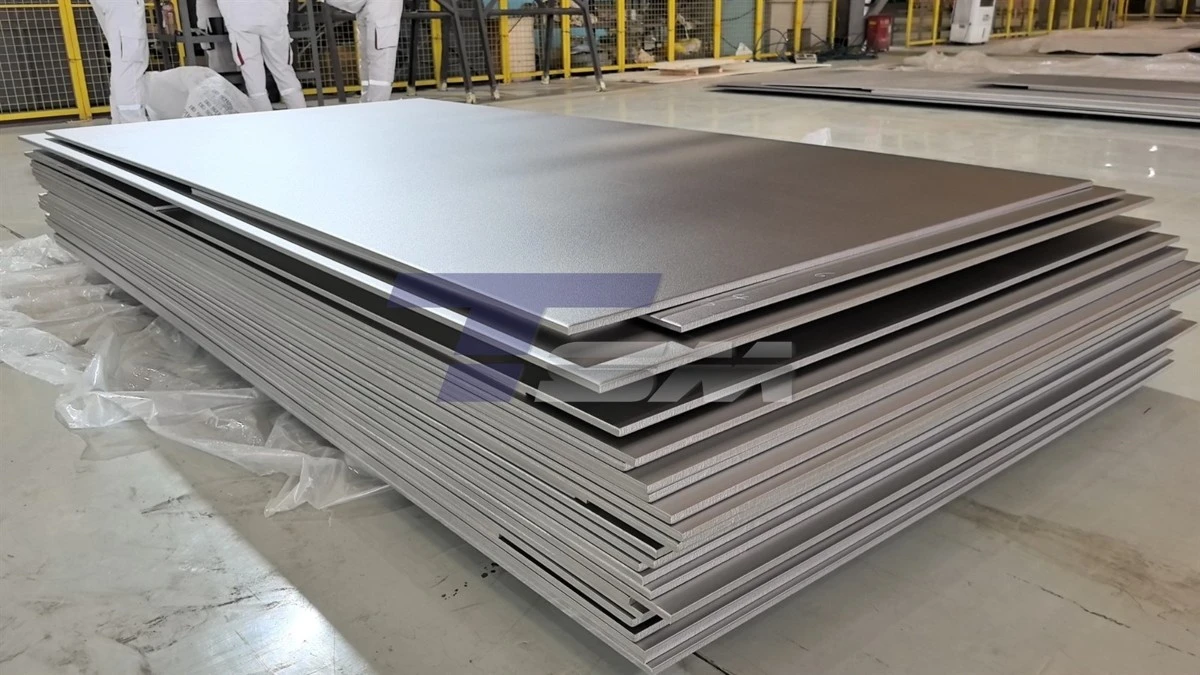
Grade 2 Titanium plate may be specified for tanks, vessel shells, linings, covers, and other fabricated components when the service environment has been reviewed. ASTM B265 is the relevant specification commonly used for titanium and titanium-alloy strip, sheet, and plate.
When preparing a plate inquiry, provide the grade, thickness, width, length, quantity, delivery condition, surface finish, and any additional testing or documentation requirements. Also identify whether the plate will be formed, welded, machined, or used as a lining.
View TSM's Grade 2 Titanium Plate / Sheet product page for available product details. Confirm the exact dimensions and specification requirements for your project.
8. How to Choose a Reliable Grade 2 Titanium Supplier
For industrial procurement, corrosion resistance is only one part of material quality. Buyers should also verify product traceability, manufacturing capability, inspection procedures, and the supplier's ability to meet the required standard and documentation package.
TSM Technology is a China-based titanium manufacturer supplying titanium tubes, plates, bars, forgings, fasteners, flanges, and custom-machined components for industrial and other critical applications. The company reports more than 15 years of manufacturing experience, a 60,000 m² production facility, and supply to more than 70 countries.
TSM's stated quality and production capabilities include AS9100 and ISO 9001 certification, material traceability, and inspection processes such as ultrasonic testing, eddy-current testing, positive material identification, mechanical testing, chemical analysis, and dimensional inspection. Project-specific inspection and documentation requirements should be confirmed when requesting a quotation.
Learn more on the TSM Titanium About Us page, or browse the full range of Grade 2 Titanium products.
9. Frequently Asked Questions
Is Grade 2 Titanium resistant to sodium hydroxide?
Grade 2 Titanium may offer useful resistance in some sodium hydroxide environments, but performance depends on concentration, temperature, oxygen availability, and other chemicals. Severe caustic conditions require a specific corrosion assessment.
Can Grade 2 Titanium be used in potassium hydroxide?
It may be considered for selected KOH services, but NaOH test data should not be treated as direct proof of KOH compatibility. Confirm the actual concentration, temperature, contaminants, and operating conditions.
Does higher alkali concentration always mean higher corrosion?
Not necessarily. The relationship depends on the solution and test conditions. Published results should be interpreted within their stated concentration, temperature, and aeration ranges.
What is the effect of temperature on titanium in alkaline solutions?
Temperature can change reaction rates and passive-film behavior. Because the response depends on the complete chemical environment, a laboratory result at one temperature should not be used as a universal service-temperature limit.
Is Grade 2 Titanium suitable for alkaline peroxide bleaching liquor?
This service requires particular caution. Industrial corrosion guidance reports poor titanium performance in certain alkaline peroxide bleaching liquors above approximately pH 11, even with a small amount of hydrogen peroxide. Confirm the exact process chemistry before selecting the material.
Which product form should I choose: Grade 2 Titanium tube or plate?
Choose the form based on equipment design and fabrication needs. Tube or pipe is used for fluid transport and heat-transfer components, while plate or sheet is used for shells, panels, linings, and fabricated structures. The applicable product standard and dimensions must match the engineering specification.
10. Conclusion
Grade 2 Titanium can provide corrosion resistance in selected alkaline environments because of its stable passive oxide film. However, it is not immune to every caustic process. High temperature, severe concentration, low oxygen availability, alkaline peroxide, and complex process chemistry may limit its suitability.
Before specifying Grade 2 Titanium tube or plate, review the complete chemical composition and operating envelope. For demanding applications, use representative corrosion testing and confirm material documentation, fabrication requirements, and inspection scope with the supplier.
Need Grade 2 Titanium for Your Project?
Contact TSM Technology for Grade 2 Titanium tube, plate, and other titanium products. Share your required standard, dimensions, quantity, and service conditions so the team can review your inquiry.
Email: info@tsm-titanium.com
References
- Pjescic, M. et al. (2000). "Electrochemical and Corrosion Behaviour of Commercially and Analytically Pure Titanium in Alkaline Solutions." Journal of Corrosion Science and Engineering, Volume 3, Paper 7.
- Clarke, W. and Stead, P. (2000). "Corrosion Testing in Flash Tanks." Avesta Sheffield Corrosion Management and Application Engineering, Acom 2-2000.
- Wilhelmsen, W. and Hurlen, T. (1987). "Passive Behaviour of Titanium in Alkaline Solutions." Electrochimica Acta, 32, 85.
- TSM Titanium. "About Us." Company information and manufacturing capabilities.
- TSM Titanium. "Grade 2 Titanium Sheet." Product information.
- TSM Titanium. "Grade 2 Titanium Tube / ASTM B861 Titanium Pipe." Product information.


