


If you're sourcing metal for a new project, you've probably run into three names over and over: Grade 1, Grade 2, and Grade 5 titanium. A Grade 2 titanium bar sits right in the middle of these options, and that middle ground is exactly why so many engineers pick it. This guide breaks down the real differences in strength, corrosion resistance, and cost, so you can choose the right grade without guessing.
You'll see plain numbers, honest trade-offs, and practical buying tips pulled straight from industry standards. No fluff. Just what you need to make a confident decision for your next order.
What Is Grade 2 Titanium Bar?
Grade 2 titanium bar is a commercially pure titanium product. It contains no major alloying elements like aluminum or vanadium. Instead, it relies on small, controlled amounts of oxygen, iron, carbon, nitrogen, and hydrogen to shape its properties.

This composition gives you:
Excellent corrosion resistance in seawater, chlorides, and many industrial chemicals
Good ductility, so it bends and forms without cracking
Moderate strength, enough for most structural and piping applications
Full weldability, which keeps fabrication costs down
Under ASTM B348, Grade 2 titanium bar carries a minimum tensile strength of 345 MPa (50 ksi) and a minimum yield strength of 275 MPa (40 ksi), with elongation around 20%. These numbers explain why engineers call it the "workhorse" grade of pure titanium.
How Grade 1 Titanium Bar Compares
Grade 1 is the softest and most ductile of the commercially pure titanium grades. It has the lowest oxygen and iron content of the group, which keeps it soft but also limits its strength.
Here's what stands out about Grade 1 titanium bar:
- Tensile strength around 240 MPa (35 ksi) minimum
- Yield strength around 138 MPa (20 ksi) minimum
- Elongation near 24%, the highest of the CP grades
- Best formability among all commercially pure titanium options
Grade 1 shines in deep-drawing applications, like heat exchanger plates that need tight bend radii without cracking. If your part goes through heavy cold forming, Grade 1 titanium bar often makes the process smoother than Grade 2 would.
The trade-off is strength. Grade 1 can't handle the mechanical loads that Grade 2 or Grade 5 manage comfortably. Buyers who need corrosion resistance above everything else, and who aren't fighting tight pressure or load requirements, often land on Grade 1.
How Grade 5 Titanium Bar Compares
Grade 5 titanium, known as Ti-6Al-4V, moves into different territory. This alloy adds 6% aluminum and 4% vanadium to the titanium base. That alloying dramatically boosts mechanical performance.
Grade 5 titanium bar delivers:
Tensile strength around 895 MPa (130 ksi) minimum
Yield strength around 828 MPa (120 ksi) minimum
Elongation near 10%, lower than the CP grades
Strength-to-weight ratio that rivals many steels at a fraction of the density
That's roughly two and a half times the tensile strength of Grade 2. Aerospace engineers rely on Grade 5 for structural components, landing gear parts, and turbine hardware because it holds up under extreme stress.
The catch is formability. Grade 5 resists cold bending and cracks if you push it too hard. Machining also runs slower and wears tools faster than it does with Grade 2 or Grade 1. You gain strength, but you give up some ease of fabrication.
Grade 2 vs Grade 1 vs Grade 5: Quick Comparison
|
Property |
Grade 1 |
Grade 2 |
Grade 5 |
|
Tensile Strength (min) |
240 MPa |
345 MPa |
895 MPa |
|
Yield Strength (min) |
138 MPa |
275 MPa |
828 MPa |
|
Elongation |
~24% |
~20% |
~10% |
|
Corrosion Resistance |
Excellent |
Excellent |
Very Good |
|
Formability |
Best |
Good |
Limited |
|
Typical Use |
Deep-draw parts, heat exchangers |
Marine, chemical, medical, general fabrication |
Aerospace, high-load components |
This table shows why Grade 2 sits in the sweet spot. It carries enough strength for most industrial and marine work while keeping the corrosion resistance and machinability that make fabrication easy.
Why Buyers Choose Grade 2 for Most Industrial Projects
Grade 2 titanium bar covers a wider range of applications than any other titanium grade. That's not a coincidence. It balances four things that most projects care about at once: strength, corrosion resistance, weldability, and cost.
You'll find Grade 2 titanium bar in:
Chemical processing equipment, including reactors and acid handling systems
Marine and offshore hardware exposed to seawater and chlorides
Medical devices and implants, thanks to strong biocompatibility
Desalination plant components that face constant saltwater exposure
General industrial fabrication where welding and machining speed matter
Its naturally formed oxide layer protects against oxidizing acids, alkaline environments, and salt solutions. This layer keeps rebuilding itself if scratched, which gives Grade 2 titanium bar a long service life even in harsh settings.
Grade 2 also costs less to machine than Grade 5. Lower cutting forces mean less tool wear, shorter cycle times, and lower overall production costs, especially on large batch orders.
Certifications and Traceability That B2B Buyers Need
If you're a procurement manager, engineer, or distributor, specs on paper aren't enough. You need proof that the material meets the standard it claims to meet.
When sourcing Grade 2 titanium bar, look for these documents:
- Mill Test Reports (MTR) confirming chemical composition and mechanical properties
- EN10204 3.1 certification, which verifies traceability to the original heat number
- ASTM B348, ASTM F67, and ASTM F136 compliance for industrial and medical-grade applications
- AMS 4928 compliance for aerospace-related specifications
- ISO 9001 quality management certification from the manufacturer
TSM Technology supplies Grade 2 pure titanium bar with full heat number traceability, MTR and SGS reports, and EN10204 3.1 certification acc to ISO9001:2008 and TÜV standards. Every bar ships with paperwork that lets you verify the material chain from raw titanium to finished product.
This matters more than most buyers realize. A supplier without traceability can't prove where the metal came from. That gap turns into a real risk once your part reaches a customer audit or a failure investigation.
Choosing the Right Titanium Grade for Your Project
Ask yourself three questions before you place an order:
Does the part need heavy cold forming? Grade 1 gives you the most flexibility.
Does the application need balanced strength and corrosion resistance? Grade 2 covers the widest range of uses.
Does the design demand maximum strength-to-weight performance? Grade 5 delivers that, at the cost of formability.
Most industrial buyers land on Grade 2 titanium bar because it avoids the extremes on both ends. It handles moderate loads, welds cleanly, resists corrosion in aggressive environments, and machines faster than Grade 5. Unless your project truly needs the extra strength of Grade 5 or the extreme formability of Grade 1, Grade 2 titanium bar remains the safer, more economical starting point.
TSM Technology stocks Grade 2 pure titanium bar in round, square, rectangular, and hexagonal shapes, with diameters from 3mm to 350mm and lengths from 500mm to 6000mm. Both cold rolled and hot rolled options ship in bright, matte, or polished finishes, depending on your application.
Work With a Trusted Grade 2 Titanium Bar Supplier
Choosing the right titanium grade only solves half the problem. You also need a supplier who backs that grade with real manufacturing capability, consistent quality, and dependable lead times.
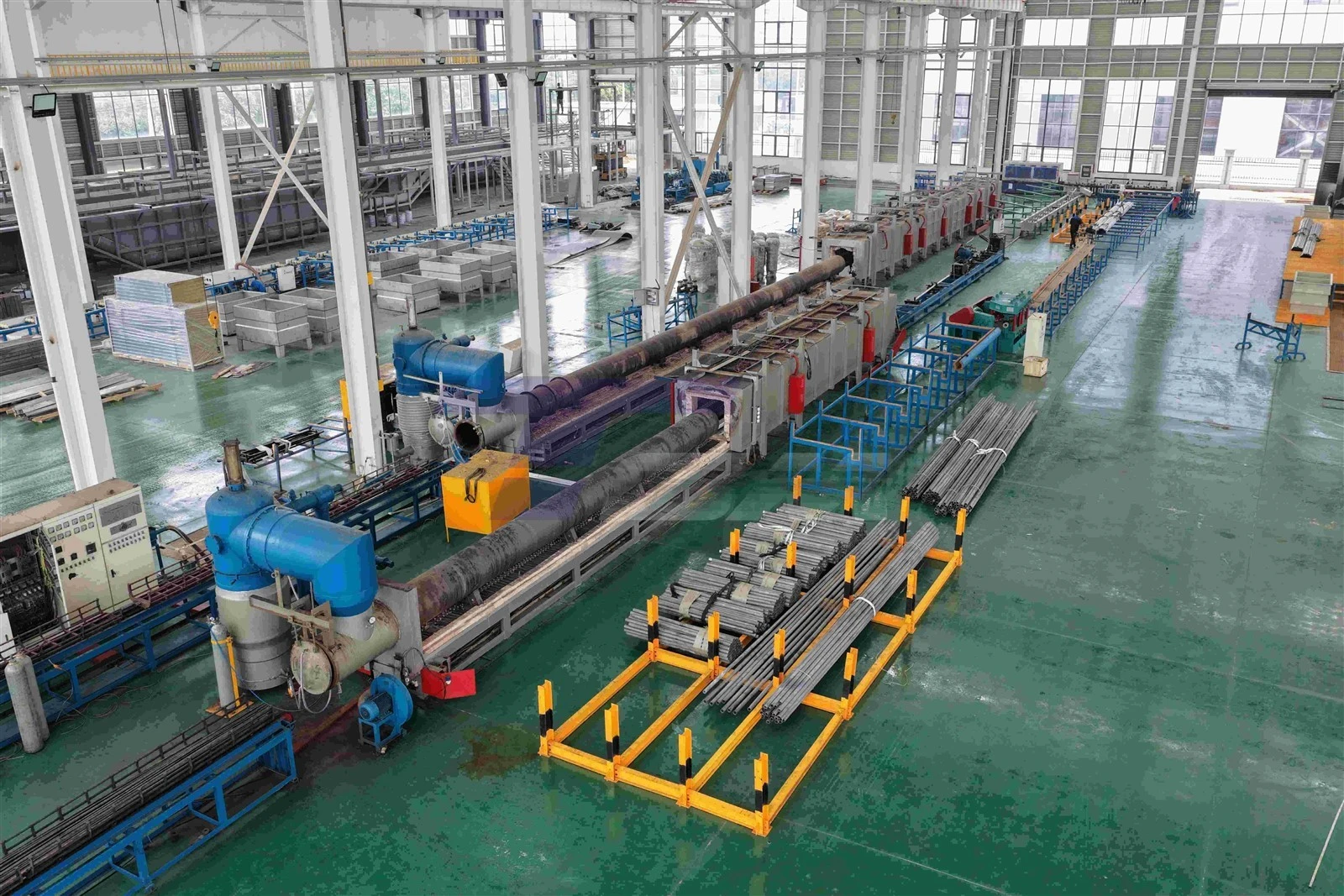
TSM Technology has operated in Baoji, Shaanxi, China's titanium industry cluster, since 2011. The company runs a 60,000 square meter facility with in-house melting, forging, and machining capabilities, and holds both ISO 9001 and AS9100 aerospace certifications. Material ships with 100% traceability and supports customers across 70+ countries.
References
ASTM International, ASTM B348/B348M Standard Specification for Titanium and Titanium Alloy Bars and Billets
Donachie, Matthew J., Titanium: A Technical Guide, ASM International
ASTM International, ASTM F136 Standard Specification for Wrought Titanium-6Aluminum-4Vanadium ELI Alloy for Surgical Implant Applications
SAE International, AMS 4928 Titanium Alloy Bars, Forgings, and Rings
Boyer, R., Welsch, G., Collings, E.W., Materials Properties Handbook: Titanium Alloys, ASM International
ASTM International, ASTM F67 Standard Specification for Unalloyed Titanium for Surgical Implant Applications
Contact Us:
If you're ready to request a quote, a sample, or technical guidance on which titanium grade fits your project, reach out directly
Email: info@tsm-titanium.com
The team can walk through your specifications, confirm certifications, and arrange fast delivery for your next order.
We are always at your service when you need
TSM Technology, one of the leading Asian suppliers of high-performance titanium-based materials in China, specializes in factory-made products such as titanium tubes, welded titanium pipes and fittings, titanium flanges, titanium fasteners and nuts, titanium plates and rods, among others.
They are widely used in the construction of heat exchangers, condensers, power plants, seawater desalination facilities, oil and gas pipelines, chlor-alkali plants, and other related fields.
Number of Employees
years experience
Modern factory
Global Supply


