


If you are selecting pure titanium plate for marine or chemical equipment, corrosion resistance is probably one of your main concerns. You may already know that titanium performs well in seawater. But does the same apply to acidic environments?
Pure titanium offers excellent corrosion resistance in seawater and many oxidizing environments. Its performance becomes more complicated in strong reducing acids. Acid concentration, temperature, oxygen content, and chemical composition can change the result.
This distinction matters when you select a titanium plate for real industrial service. A material that performs well in seawater may not be the best choice for every acid process.
Why Is Pure Titanium Plate So Corrosion Resistant?
The main reason is titanium's natural passive oxide film.
When titanium contacts oxygen or moisture, it quickly forms a thin and stable oxide layer. This layer separates the metal from the surrounding environment.
If the surface receives minor damage, the passive film can reform when suitable conditions remain available.
This protective behavior gives titanium strong resistance to many corrosive environments.
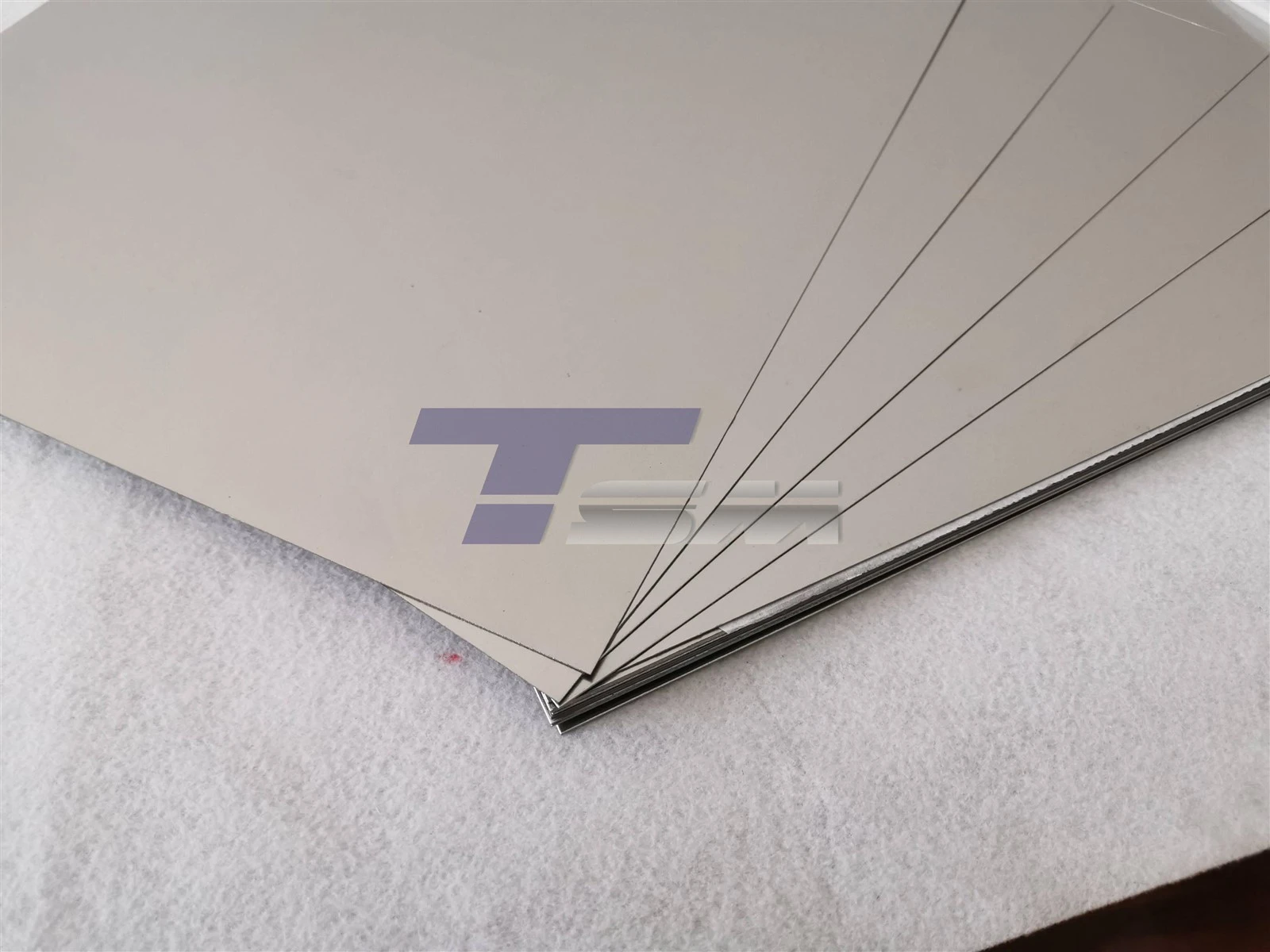
Titanium Industries reports that titanium performs well in natural waters, salt solutions, chlorides, and many other environments. It also identifies Grade 2 as a common choice for seawater applications.
This makes pure titanium plate attractive for equipment exposed to:
- Seawater
- Brine
- Wet chlorine
- Many oxidizing chemicals
- Marine atmospheres
- Selected chemical process fluids
However, passive protection has limits. The environment must support stable passivation.
Does Pure Titanium Plate Resist Seawater?
Yes. Pure titanium plate provides excellent resistance to natural seawater under many normal service conditions.
Seawater contains a high level of chloride ions. Chlorides can cause severe pitting and crevice corrosion in many metals.
Titanium behaves differently.
Its passive oxide film remains highly stable in oxygenated seawater. This gives commercially pure titanium excellent resistance to general corrosion.
Grade 2 titanium is commonly selected for seawater equipment because it combines corrosion resistance with good formability and weldability.
Typical applications include:
- Seawater heat exchangers
- Condenser components
- Desalination equipment
- Marine machinery
- Offshore equipment
- Seawater piping components
Long-term marine exposure has also shown very low corrosion rates for commercially pure titanium. Historical seawater studies reported strong corrosion resistance after extended exposure.
This performance explains why titanium has become an important material for seawater systems.
Can Titanium Plate Corrode in Seawater?
Titanium is highly resistant to seawater corrosion, but it is not correct to call it universally corrosion-proof.
Service conditions still matter.
Temperature is especially important when crevices exist.
Crevices can occur around:
- Washers
- Bolted joints
- Deposits
- Overlapping surfaces
- Tube-to-sheet connections
Inside a tight crevice, oxygen levels can become very low. This condition can weaken titanium's passive protection.
Research on titanium in near-anaerobic seawater found that Grade 2 can develop crevice corrosion around 80°C under specific test conditions.
This does not mean Grade 2 will fail in ordinary seawater service. It means you should evaluate temperature, geometry, oxygen availability, and water chemistry together.
If your equipment operates at elevated temperatures or contains tight crevices, another titanium grade may provide more corrosion margin.
Is Pure Titanium Plate Resistant to Acid?
This question needs more care.
Pure titanium performs very well in many oxidizing acid environments. It does not have the same resistance in every acid.
Titanium relies on its passive oxide film. Oxidizing conditions can help maintain this protective layer.
Strong reducing acids can destabilize the passive condition and increase metal dissolution.
A 2021 study comparing commercially pure Grade 2 and Grade 7 found that Grade 2 can face significant attack in strong reducing acid environments. The study identified sulfuric acid, hydrochloric acid, and oxalic acid as aggressive conditions under its test conditions.
This is an important point for chemical equipment buyers.
You should not select Grade 2 titanium plate for acid service based only on the word "titanium."
The exact process chemistry matters.
Which Acids Are More Challenging for Titanium?
The risk depends on acid type, concentration, temperature, and oxidation conditions.
Hydrochloric Acid
Hydrochloric acid is a reducing acid. Titanium can show increased corrosion as conditions become more aggressive.
Research on commercially pure titanium in NaCl-HCl solutions found that corrosion behavior changes with pH and temperature. Active dissolution can begin when the passive condition breaks down.
This makes concentrated or hot HCl service an application that requires careful engineering review.
Sulfuric Acid
Titanium can perform well in selected sulfuric acid conditions. Its resistance changes significantly with concentration and temperature.
Published corrosion data show that titanium corrosion rates can increase sharply under some sulfuric acid conditions.
You should provide the supplier with the full process conditions before selecting the plate.
Nitric Acid
Titanium generally performs well in many oxidizing nitric acid environments because the passive film remains stable.
This does not mean every nitric acid process is automatically suitable.
Temperature, concentration, contamination, and operating conditions still need review.
Fluoride-Containing Acids
Fluoride deserves special attention.
Research shows that fluoride ions can strongly promote titanium corrosion in acidic solutions. The effect can occur across several acid systems.
If your process contains hydrofluoric acid or fluoride contamination, tell your titanium supplier before ordering material.
Is Grade 2 Titanium Plate a Good Choice for Seawater?
For many seawater applications, Grade 2 titanium plate is a practical choice.
ASTM B265 identifies Grade 2 as UNS R50400 and classifies it as unalloyed titanium. The standard covers titanium and titanium alloy strip, sheet, and plate.
Grade 2 offers a useful balance of:
- Corrosion resistance
- Strength
- Ductility
- Formability
- Weldability
- Availability
That balance makes it suitable for many marine and industrial applications. For more aggressive conditions, you may need a different titanium grade.
Grade 7 contains palladium and provides improved resistance in certain reducing environments. The correct selection depends on the actual process conditions.
What Applications Use Pure Titanium Plate?
Pure titanium plate serves many industries because corrosion resistance often matters more than maximum strength.
Common applications include:
Marine Engineering
Titanium plate can support seawater equipment and marine components.
Its corrosion resistance helps reduce maintenance caused by seawater exposure.
Chemical Processing
Manufacturers use titanium plate in selected chemical processing equipment.
Typical applications include:
Heat exchangers
Reactors
Process equipment
Corrosion-resistant components
Chemical compatibility must be confirmed before production.
Desalination
Desalination systems expose materials to seawater and concentrated salt solutions.
Titanium can provide long service life in suitable components.
Heat Exchangers
Titanium performs well in many seawater-cooled heat exchanger applications.
Its corrosion resistance can help reduce replacement and maintenance requirements.
Aerospace and Industrial Equipment
Pure titanium plate also provides low density and useful mechanical properties.
TSM Technology lists aerospace, chemical processing, marine, petroleum, electronics, medical, pharmaceutical, heat exchanger, environmental, and metallurgical applications for its pure titanium plate.
What Should You Check Before Buying Pure Titanium Plate?
A corrosion-resistant material still needs the correct specification.
When you request a quotation, provide these details:
- Titanium grade
- ASTM or project standard
- Plate thickness
- Plate width
- Plate length
- Surface condition
- Required mechanical properties
- Operating temperature
- Chemical composition of the process fluid
- Required inspection documents
These details help the manufacturer evaluate the application correctly.
TSM Technology's pure titanium plate range includes Grade 1 through Grade 4, with thicknesses from 0.5 mm to 30 mm and widths from 10 mm to 2,500 mm. Custom dimensions are also available. The published product range supports ASTM B265, ASTM F136, ASTM F67, and AMS 4911 requirements. Available conditions include cold rolled, hot rolled, annealed, and other specified conditions.
Why Choose TSM Technology for Pure Titanium Plate?
When corrosion performance matters, material traceability and quality control are also important.
TSM Technology has 15+ years of manufacturing experience and operates a 60,000㎡ production facility. The company supplies titanium products to customers in more than 70 countries.
Its quality system includes:
- Chemical composition analysis
- Mechanical testing
- Dimensional inspection
- Surface quality inspection
- PMI
- Ultrasonic testing
- Eddy current testing
- Heat number traceability
TSM Technology can also provide EN 10204 3.1 certification, MTRs, ASTM/AMS compliance documentation, and NDT reports according to project requirements. This information helps you verify whether the material matches your purchasing specification.
How Should You Select Titanium for Seawater or Acid Service?
Use the actual operating environment as your starting point.
For seawater service, review:
- Water temperature
- Chloride level
- Flow rate
- Crevice conditions
- Deposits and fouling
- Oxygen availability
- For acid service, review:
- Acid type
- Concentration
- Temperature
- Oxygen level
- Fluoride content
- Contaminants
- Flow conditions
This approach gives you a more reliable material selection than simply asking whether titanium is corrosion resistant.
Final Thoughts
Pure Titanium Plate offers excellent corrosion resistance in seawater and many oxidizing environments. Its stable passive oxide film gives it a major advantage over many conventional engineering metals.
Grade 2 is a widely used commercially pure titanium grade for seawater and industrial applications.
Acid service requires more careful evaluation. Strong reducing acids, high temperatures, and fluoride-containing environments can challenge titanium's passive film.
If you are selecting titanium plate for a marine or chemical application, share your operating conditions with the manufacturer.
TSM Technology can help you review the required grade, dimensions, standard, and inspection requirements.
References
ASTM International. ASTM B265: Standard Specification for Titanium and Titanium Alloy Strip, Sheet, and Plate.
ASM International. ASM Handbook, Volume 13A: Corrosion: Fundamentals, Testing, and Protection.
Donachie, Matthew J. Titanium: A Technical Guide. ASM International.
Leyens, Christoph, and Manfred Peters. Titanium and Titanium Alloys: Fundamentals and Applications. Wiley-VCH.
Casanova, Luca, et al. A Comparison Between Corrosion Performances of Titanium Grade 2 and 7 in Strong Reducing Acids. Materials and Corrosion, 2021.
Watanabe, Takashi, Hiromitsu Naito, and Yasushi Nakamura. Corrosion Behavior of the Open Surface of Commercially Pure Titanium in NaCl-HCl Solutions. Journal of the Japan Institute of Metals, 1986.
We are here for you
To create the top brand in the field of titanium products


