Are you sourcing metal stock for a demanding industrial project and wondering which titanium grade best fits your design? Selecting the right pure titanium plate material can mean the difference between a system that lasts for decades and one that fails under stress. Commercially pure titanium offers exceptional corrosion resistance, excellent formability, and biocompatibility.
Commercially pure titanium covers four core unalloyed grades: Grade 1, Grade 2, Grade 3, and Grade 4. Each grade features unique mechanical properties governed primarily by varying levels of interstitial oxygen and iron.
In this comprehensive guide, you will learn the exact differences between these pure titanium grades. We will examine their chemical purity, mechanical strength, formability, and main industrial applications. You will also gain valuable B2B procurement advice for sourcing certified mill products.
Understanding Commercially Pure Titanium: What Does "Pure" Mean?
Commercially Pure (CP) titanium is an unalloyed metal containing at least 99% titanium. Metallurgy standards define these materials by trace amounts of interstitial elements rather than added alloying metals like aluminum or vanadium.
Elements such as oxygen, nitrogen, carbon, hydrogen, and iron act as powerful strengthening agents. Small increases in oxygen content boost tensile and yield strength significantly while slightly reducing material ductility.

Trace Interstitial Control: Precise control over oxygen and iron levels dictates the specific CP grade classification.
No Added Alloy Elements: Unlike Grade 5 (Ti-6Al-4V), CP grades contain no added aluminum or vanadium elements.
Protective Oxide Layer: All CP grades form an immediate passive titanium dioxide film that resists chemical attack.
Non-Magnetic Nature: CP titanium remains completely non-magnetic, making it ideal for delicate electronic and medical uses.
Controlling interstitial elements during melting guarantees consistent forming performance during cold bending and deep drawing operations.
Deep Dive into the 4 Core Pure Titanium Grades
Selecting a pure titanium plate requires matching structural loads and shaping needs with the correct grade standard. ASTM B265 and ASME SB265 govern these unalloyed metal specifications.

Grade 1 Titanium: Ultimate Formability and Softness
Grade 1 represents the softest, most ductile commercially pure titanium grade. It contains the lowest levels of oxygen and iron, giving it maximum impact toughness and cold formability.
Typical Applications: Deep drawn heat exchanger plates, explosive cladding sheets, desalination equipment, and chemical vessel linings.
Key Strengths: Outstanding cold formability, excellent corrosion resistance, and high impact energy absorption.
Grade 2 Titanium: The Universal Industrial Workhorse
Grade 2 is the most widely specified commercially pure titanium grade across global industries. It balances moderate yield strength with high ductility and superior weldability.
Typical Applications: Chemical reactor vessels, marine hardware, power plant condensers, and piping flanges.
Key Strengths: Ready availability, cost-effective performance, easy welding, and complete immunity to ambient seawater corrosion.
Grade 3 Titanium: Higher Mechanical Strength
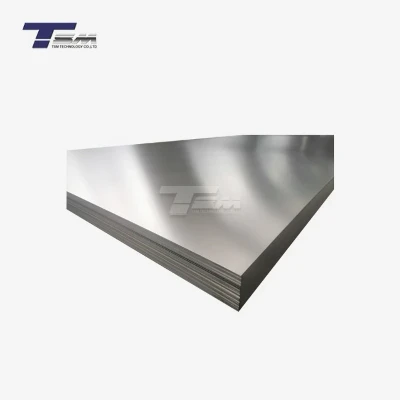
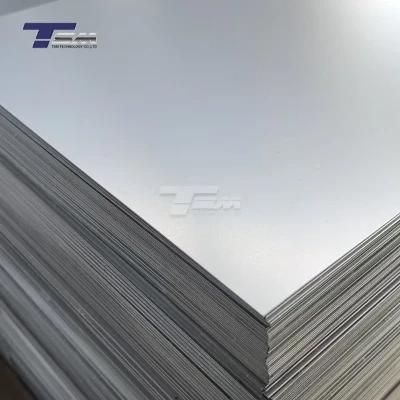
Grade 3 offers higher mechanical strength while retaining good ductility and corrosion resistance. Higher oxygen content elevates its yield point above Grade 1 and Grade 2 levels.
Typical Applications: Pressure vessels, condenser tubing, aerospace components, and compressor housings.
Key Strengths: Higher load-bearing capacity with reduced wall thickness, lowering total structural weight.
Grade 4 Titanium: Maximum CP Strength
Grade 4 provides the highest tensile and yield strength among all commercially pure titanium grades. Its high strength rivals some titanium alloys while maintaining unalloyed corrosion resistance.
Typical Applications: Aerospace airframe skins, surgical implants, hydraulic tubing, and high-strength industrial fasteners.
Key Strengths: Maximum yield strength among unalloyed grades, combined with high fatigue resistance.
Technical Comparison: Mechanical Properties and Specifications
Engineers rely on precise numerical data to choose between commercially pure grades. The table below compares the mechanical specifications of standard annealed CP titanium mill products according to ASTM B265.
|
Property / Specification |
Grade 1 CP Titanium |
Grade 2 CP Titanium |
Grade 3 CP Titanium |
Grade 4 CP Titanium |
|
Minimum Tensile Strength |
240 MPa (35,000 psi) |
345 MPa (50,000 psi) |
450 MPa (65,000 psi) |
550 MPa (80,000 psi) |
|
Minimum Yield Strength |
170 MPa (25,000 psi) |
275 MPa (40,000 psi) |
380 MPa (55,000 psi) |
483 MPa (70,000 psi) |
|
Minimum Elongation (%) |
24% |
20% |
18% |
15% |
|
Max Oxygen Content (%) |
0.18% |
0.25% |
0.35% |
0.40% |
|
Max Iron Content (%) |
0.20% |
0.30% |
0.30% |
0.50% |
|
Formability Rating |
Excellent |
Good |
Moderate |
Fair |
Higher tensile ratings allow designers to use thinner plates, reducing total assembly weight while keeping structural integrity fully intact.
Key Industry Applications for Unalloyed Titanium Plate
Corrosion protection and high strength-to-weight ratios make unalloyed metal stock essential in severe operating environments.
Chemical and Petrochemical Processing
Chemical reactors handle aggressive organic acids, nitric acids, and wet chlorine gas. Installing a high-grade pure titanium plate prevents wall thinning, equipment leaks, and catastrophic chemical spills.
Marine and Offshore Engineering
Seawater environments destroy carbon steel and copper-nickel alloys through pitting and stress corrosion cracking. Titanium plates serve reliably in marine heat exchangers, offshore platform pumps, and ballast water treatment systems.
Power Generation and Desalination
Desalination facilities convert ocean water into drinking water using giant flash evaporation chambers. Titanium plates withstand turbulent saltwater streams without surface erosion or pitting.
Medical and Surgical Devices
Pure titanium exhibits complete biological inertness inside the human body. Orthopedic implants, bone plates, and surgical tools use Grade 2 and Grade 4 materials to ensure human tissue compatibility.
How Processing Methods Influence Plate Quality
Raw material processing directly impacts grain structure, surface finish, and mechanical reliability. Leading manufacturers apply rigorous processing controls from raw sponge to finished flat stock.
- Vacuum Arc Remelting (VAR): Double or triple vacuum remelting eliminates gaseous impurities like hydrogen, nitrogen, and oxygen.
- Precision Hot Forging: Heavy hydraulic forging refines coarse cast ingots into uniform, fine-grained forging billets.
- Controlled Rolling Mills: Hot and cold rolling mills achieve exact thickness tolerances across wide sheet and plate stock.
- Vacuum Annealing Treatment: Heat treating in high-vacuum furnaces removes internal stresses without causing surface oxidation.
Consistently controlled production cycles ensure uniform mechanical properties across every production batch you purchase.
Essential Procurement Tips for B2B Purchasing Managers
Sourcing industrial metals requires careful supplier evaluation to avoid sub-standard materials and project delays. Purchasing managers should follow key verification steps during vendor selection.
- Verify Mill Test Certificates (MTC): Request material test reports conforming to EN 10204 3.1 detailing chemical composition and mechanical test results.
- Check Dimensional Standards: Confirm plate thickness, width, length, and flatness tolerances comply with ASTM B265 or ASME SB265 specifications.
- Inspect Surface Quality: Ensure flat products display a clean, descaled, or sandblasted surface free from cracks, laps, or heavy oxide scales.
- Evaluate Packaging Standards: Ensure suppliers pack heavy plates securely in reinforced wooden boxes with waterproof wrapping to prevent transit damage.
Working directly with an established primary manufacturer simplifies quality control and lowers your total material procurement spend.
Source Certified Pure Titanium Plate Products from TSM Titanium
TSM Technology is a global manufacturer and supplier of premium titanium mill products. We maintain extensive stocks of Grade 1, Grade 2, Grade 3, and Grade 4 metal stock in varying thicknesses and custom cut sizes.
Our manufacturing facilities operate under strict ISO 9001 and AS9100 quality management systems. We serve industrial clients across aerospace, chemical processing, marine engineering, and power generation sectors worldwide.
- Direct Factory Supply: Lower your purchasing costs by ordering directly from our primary manufacturing facility.
- Custom Cut-to-Size Services: We offer waterjet cutting, shearing, and custom machining to deliver ready-to-use parts.
- Full Material Traceability: Every order includes complete EN 10204 3.1 Mill Test Certificates verifying full compliance with global standards.
- Fast Global Shipping: Extensive raw material stock allows rapid order dispatch to support urgent maintenance schedules.
References
Leyens, C., & Peters, M. (2003). Titanium and Titanium Alloys: Fundamentals and Applications. Wiley-VCH.
Lutjering, G., & Williams, J. C. (2007). Titanium (Engineering Materials and Processes). Springer.
Donachie, M. J. (2000). Titanium: A Technical Guide (2nd Edition). ASM International.
ASTM International. (2020). ASTM B265 - Standard Specification for Titanium and Titanium Alloy Strip, Sheet, and Plate. ASTM Standards.
Froes, F. H. (2015). Titanium: Physical Metallurgy, Processing, and Applications. ASM International.
Boyer, R., Welsch, G., & Collings, E. W. (1994). Materials Properties Handbook: Titanium Alloys. ASM International
We are here for you
To create the top brand in the field of titanium products