



Fabricating high-performance metal components requires materials that handle severe stress without cracking or breaking. If you manufacture heat exchangers, chemical vessels, or marine hardware, you might wonder about workshop processing behavior. Can pure titanium plate be welded or formed easily? The short answer is yes. Commercially pure titanium ranks among the most weldable and formable corrosion-resistant metals available today.
Unalloyed titanium behaves much like stainless steel during press brake bending and arc welding operations. However, titanium requires absolute cleanliness and strict inert gas shielding to avoid embrittlement.
In this comprehensive guide, you will learn the exact techniques for welding and cold forming commercially pure stock. We will examine argon shielding requirements, minimum bend radii, grade variations, and core industry applications. You will also discover how sourcing certified mill products simplifies your production workflow.
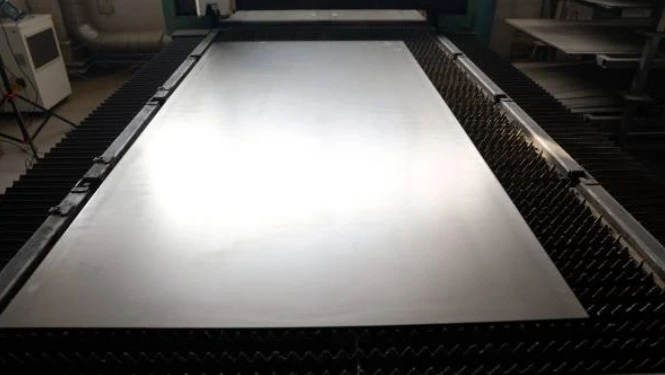
The Weldability of Pure Titanium: What You Need to Know
Commercially pure titanium exhibits excellent weldability when technicians follow proper inert gas protection rules. Unalloyed grades lack complex alloying elements like aluminum or vanadium, making them less prone to hot cracking during solidification.
Molten titanium acts as a universal solvent that absorbs oxygen, nitrogen, and hydrogen at temperatures above 426°C (800°F). Atmospheric gas contamination makes welds brittle and drastically reduces joint service life.
- High Ductility: Unalloyed weld pools flow smoothly and produce strong, ductile joints matching parent metal properties.
- Low Thermal Expansion: Titanium expands far less than stainless steel during heating, which minimizes weld distortion and residual stress.
- Thermal Conductivity: Low thermal conductivity concentrates heat in the weld zone, requiring precise amperage control to prevent burn-through.
- Contamination Sensitivity: Grease, finger oils, or air exposure cause rapid weld embrittlement and catastrophic joint failure.
Adhering to strict atmospheric protection keeps weld joints fully ductile and completely corrosion-resistant.
Essential Welding Processes and Shielding Guidelines
Fabricators successfully join pure titanium plate using standard fusion welding equipment found in modern metal shops. Gas Tungsten Arc Welding (GTAW or TIG) serves as the primary method for industrial plate fabrication.
1.Meticulous Surface Cleaning:Critical step to prevent weld joint contamination.
Mechanically wire brush the joint edges with clean stainless steel brushes. Wipe all mating surfaces thoroughly with acetone or alcohol to eliminate oils and dirt.
2.Primary Torch Gas Shielding:Protecting the immediate weld pool.
Supply high-purity argon gas (99.999% purity) directly through the TIG torch nozzle to shield the molten metal pool.
3.Trailing Shield Gas Application:Protecting cooling weld metal above 426°C.
Attach a secondary trailing shield behind the torch nozzle. The trailing shield floods the hot, cooling weld bead with continuous argon gas.
4.Backing Gas Protection:Shielding the root side of the plate joint.
Purge the back side of the joint with argon gas using specialized backing bars or purge bladders to prevent root contamination.
Weld Color Inspection
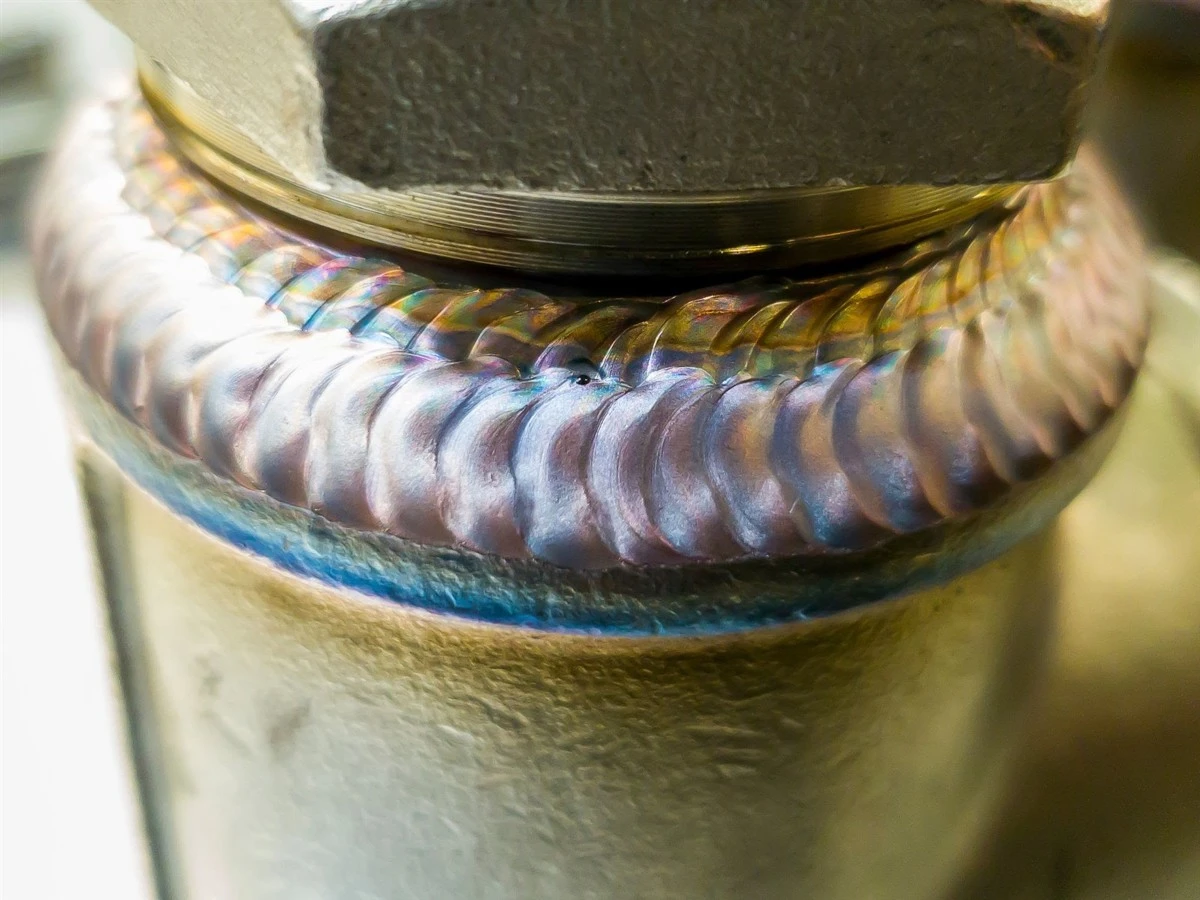
Inspecting post-weld surface coloration provides an immediate visual indicator of atmospheric shielding quality:
- Bright Silver or Light Straw: Indicates excellent argon coverage and maximum weld joint ductility.
- Deep Straw or Dark Blue: Signals minor atmospheric contamination that requires light mechanical grinding.
- White Powder or Dull Gray: Indicates severe oxidation and embrittlement; you must grind out the entire weld bead completely.
Cold Forming Behavior: Bending and Shaping Techniques
Unalloyed titanium plates offer high cold formability on standard metalworking equipment, including hydraulic press brakes and plate bending rolls. You can form tight bends without heating the metal workpiece.
The table below outlines cold forming parameters and minimum bend radiuses across the four commercially pure grades according to ASTM B265 standards.
|
Titanium Grade |
Purity Level |
Formability Rating |
Minimum Bend Radius (Under 1.5mm Thickness) |
Minimum Bend Radius (Over 1.5mm Thickness) |
|
Grade 1 |
Highest Purity |
Superior |
1.5 Sheet Thickness |
2.0 Sheet Thickness |
|
Grade 2 |
Standard Pure |
Excellent |
2.0 Sheet Thickness |
2.5 Sheet Thickness |
|
Grade 3 |
Moderate Pure |
Good |
2.5 Sheet Thickness |
3.0 Sheet Thickness |
|
Grade 4 |
Maximum CP Strength |
Moderate |
3.0 Sheet Thickness |
3.5 Sheet Thickness |
Managing Springback
Titanium exhibits a lower elastic modulus than carbon steel, resulting in greater springback after press brake release.
Comparing Fabricability Across Pure Titanium Grades
Selecting the ideal grade depends directly on whether your design prioritizes maximum forming flexibility or elevated structural strength.
Grade 1: Softest unalloyed grade with maximum elongation. Pick Grade 1 for complex deep drawing, intricate stamping, and tightly folded heat exchanger plates.
Grade 2: The global industrial workhorse. It balances high formability and easy TIG welding with robust structural strength for pressure vessels and piping systems.
Grade 3: Features higher yield strength due to increased oxygen content. It requires larger bend radiuses but reduces wall thickness in load-bearing structures.
Grade 4: Strongest unalloyed grade with tensile strength matching some titanium alloys. It requires greater press brake force and careful forming controls to avoid edge cracking.
Grade 2 remains the most economical and versatile choice for general industrial equipment fabrication.
Primary Industrial Applications for Formed and Welded Plate
Easily formed and welded flat stock allows engineers to construct custom process equipment for harsh environments.
- Chemical Reaction Vessels: Formed shell plates welded into pressure vessels withstand hot organic acids, nitric acid, and wet chlorine gas.
- Plate Heat Exchangers: Corrugated plates formed from thin sheets optimize heat transfer in power plants and desalination facilities.
- Marine Power Equipment: Welded titanium seawater intakes, platform scrubbers, and ballast pumps resist marine biofouling and pitting corrosion.
- Flue Gas Desulfurization (FGD): Welded duct liners in power station scrubbers withstand corrosive acid condensation over decades of operation.
Unalloyed titanium equipment operates reliably for decades with minimal maintenance requirements.
B2B Procurement Tips for Fabricators and Engineers
Smooth workshop fabrication begins with ordering high-quality, fully certified mill products from reliable suppliers. Sub-standard material causes forming cracks and weld porosity.
- Demand EN 10204 3.1 Mill Certificates: Verify material test reports to confirm chemical purity, tensile strength, yield strength, and elongation rates.
- Specify Annealed Material Condition: Order flat products in the fully annealed condition to ensure maximum ductility for bending operations.
- Check Edge Condition: Ensure plate edges are cleanly sheared, mitered, or plasma-cut without heavy burrs or thermal oxidation zones.
- Inspect Packaging Standards: Confirm your supplier ships flat stock on solid wooden skids with protective interleave paper to prevent surface scratching.
- Partnering directly with a primary titanium manufacturer eliminates middleman markups and ensures consistent material performance.
Source Premium Pure Titanium Plate from TSM Titanium
TSM Technology Co., Ltd. is a leading global manufacturer and exporter of high-performance titanium products. We maintain extensive stocks of Grade 1, Grade 2, Grade 3, and Grade 4 flat products in diverse sizes and thicknesses.
Our production facilities utilize modern rolling mills, vacuum annealing furnaces, and precision cutting systems operating under ISO 9001 and AS9100 quality certifications.
- Direct Factory Pricing: Lower your raw material costs by sourcing directly from our primary manufacturing facilities.
- Custom Cutting Services: We offer waterjet cutting, shearing, and beveling to deliver ready-to-weld plate dimensions.
- Complete Material Traceability: Every order includes full EN 10204 3.1 Mill Test Certificates for complete quality compliance.
- Fast International Shipping: Extensive factory inventory supports rapid dispatch to keep your fabrication project on schedule.
References
Leyens, C., & Peters, M. (2003). Titanium and Titanium Alloys: Fundamentals and Applications. Wiley-VCH.
Lutjering, G., & Williams, J. C. (2007). Titanium (Engineering Materials and Processes). Springer.
Donachie, M. J. (2000). Titanium: A Technical Guide (2nd Edition). ASM International.
ASTM International. (2020). ASTM B265 - Standard Specification for Titanium and Titanium Alloy Strip, Sheet, and Plate. ASTM Standards.
Froes, F. H. (2015). Titanium: Physical Metallurgy, Processing, and Applications. ASM International.
Boyer, R., Welsch, G., & Collings, E. W. (1994). Materials Properties Handbook: Titanium Alloys. ASM International.
We are always at your service when you need
TSM Technology, one of the leading Asian suppliers of high-performance titanium-based materials in China, specializes in factory-made products such as titanium tubes, welded titanium pipes and fittings, titanium flanges, titanium fasteners and nuts, titanium plates and rods, among others.
They are widely used in the construction of heat exchangers, condensers, power plants, seawater desalination facilities, oil and gas pipelines, chlor-alkali plants, and other related fields.
Number of Employees
years experience
Modern factory
Global Supply
We are here for you
To create the top brand in the field of titanium products


