


Titanium sheet manufacturing is a sophisticated process that transforms raw titanium sponge into precision-engineered metal sheets with outstanding strength, corrosion resistance, and lightweight performance. Due to its superior mechanical and chemical properties, titanium sheet is a preferred material in aerospace, chemical, marine, and medical industries.
At TSM TECHNOLOGY CO., LTD, we specialize in producing high-quality titanium sheets that meet ASTM B265, AMS 4911, and other international standards. Each step of our production process is designed to ensure consistency, purity, and dimensional accuracy from ingot to finished product.
Overview of Titanium Production
Titanium production begins with titanium sponge, derived from the Kroll process, where titanium tetrachloride (TiCl₄) is reduced with magnesium. This sponge serves as the primary raw material for creating titanium ingots, which are then processed into sheets, plates, and coils.
TSM TECHNOLOGY ensures full material traceability, selecting high-purity titanium sponge to guarantee optimal mechanical and chemical characteristics in the final sheet product.
Raw Material Selection
The quality of a titanium sheet begins with raw material selection. Only high-purity titanium sponge with controlled oxygen, nitrogen, and iron levels is used to ensure superior ductility and corrosion resistance.
Our sourcing process complies with ISO 9001 and AS9120 aerospace quality standards, ensuring that every batch of raw material meets precise chemical composition requirements according to ASTM B265 and AMS specifications.
Melting and Refining Process
Titanium ingots are produced through Vacuum Arc Remelting (VAR) or Electron Beam Melting (EBM). These advanced refining methods remove impurities and achieve a uniform microstructure, which directly affects the sheet's strength and machinability.
First Melt (VAR or EBM): Removes inclusions and improves purity.
Second Melt (VAR/EBM): Enhances homogeneity and density.
Ingot Forging: The ingot is forged into slabs or billets for rolling.
This stage is critical to ensuring tight control over titanium sheet grades such as Grade 1, Grade 2, and Grade 5 (Ti-6Al-4V).
Hot Rolling and Cold Rolling Steps
The refined titanium slab is then rolled at high temperatures to reduce thickness and refine the grain structure.
Hot Rolling: Conducted above the recrystallization temperature (~700–900°C) to improve mechanical strength and uniformity.
Cold Rolling: Performed at room temperature to achieve precise thickness and excellent surface finish.
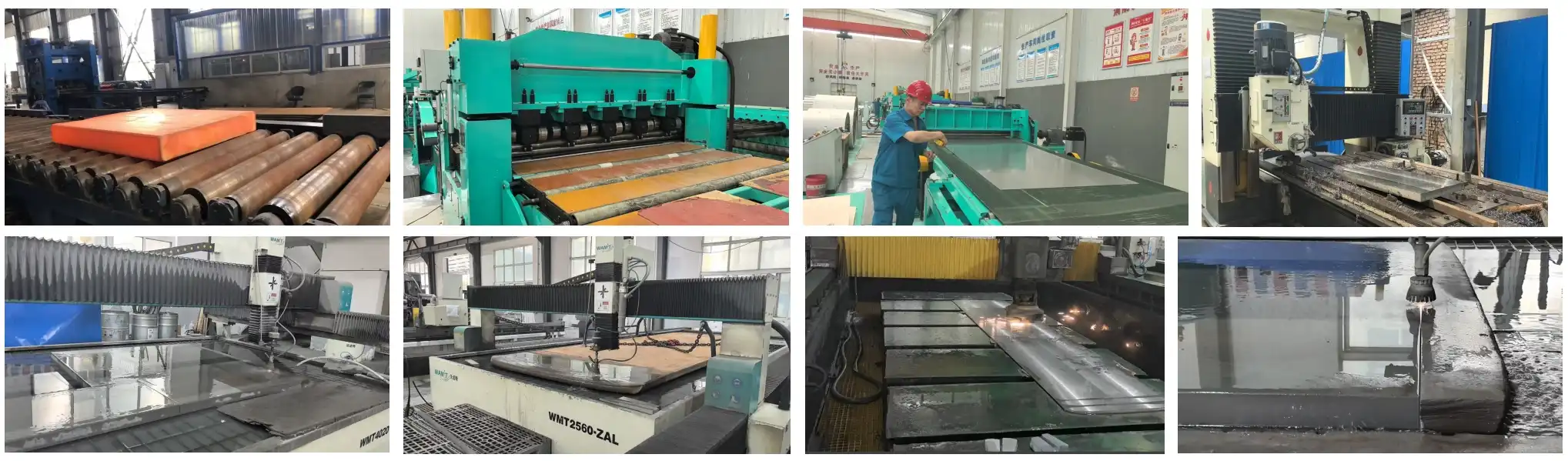
Multiple passes through high-precision rolling mills ensure the titanium sheet achieves consistent thickness tolerance and flatness.
Image suggestion 2: Cross-sectional diagram showing titanium hot and cold rolling process, highlighting grain refinement and dimensional accuracy.
Annealing and Pickling
After rolling, the titanium sheets undergo annealing - a heat treatment process that restores ductility and relieves internal stress. Controlled annealing parameters (typically 600–750°C) ensure optimal grain structure and improved formability.
Following annealing, the sheets are pickled in acid solutions to remove oxide layers and surface contaminants. This step enhances the sheet's appearance, corrosion resistance, and weldability.
Precision Cutting and Surface Finishing
Once the sheets are processed, they are cut to custom dimensions using CNC plasma, laser, or waterjet cutting systems. This precision ensures compliance with customer specifications while maintaining surface integrity.
Surface finishing options include:
Polished Finish: For decorative or optical-grade surfaces.
Matte Finish: For industrial applications requiring low reflectivity.
Anodized Finish: Adds color and extra corrosion protection.
Each titanium sheet is visually inspected and dimensionally verified to ensure quality consistency.
Thickness and Tolerance Control
Titanium sheets are manufactured in a wide range of thicknesses, typically from 0.3 mm to 50 mm. Tolerances are tightly controlled according to ASTM B265:
| Thickness (mm) | Tolerance (mm) | Flatness (mm/m) |
|---|---|---|
| 0.5–1.0 | ±0.03 | ≤3 |
| 1.0–3.0 | ±0.05 | ≤2 |
| 3.0–10.0 | ±0.1 | ≤1.5 |
Advanced rolling and calibration systems at TSM TECHNOLOGY ensure dimensional precision and excellent sheet flatness, suitable for critical aerospace and chemical applications.
Quality Inspection Procedures
Quality assurance is a vital part of titanium sheet production. Each batch undergoes comprehensive testing to ensure mechanical, chemical, and dimensional conformity:
Chemical Analysis: Spectrometry for Ti, O, N, Fe, C contents.
Mechanical Testing: Tensile, yield, and elongation per ASTM E8.
Ultrasonic & Eddy Current Testing: Detects internal defects.
Surface Inspection: Checks for cracks, inclusions, and oxidation.
Dimensional Verification: Automated measurement for thickness and width.
TSM TECHNOLOGY maintains third-party inspection certificates and full traceability for every shipment.
Packaging and Export Standards
Titanium sheets are packed following international export and shipping standards to ensure safe transit and storage:
Interleaved paper or PE film between sheets to prevent scratching.
Sealed plastic wrapping for moisture protection.
Strong wooden cases or pallets for export packaging.
Each package includes marking labels, mill certificates, and traceability documents for seamless customs clearance and customer verification.
Innovations in Titanium Sheet Production
TSM TECHNOLOGY continuously invests in advanced rolling, vacuum melting, and inspection technologies to enhance titanium sheet performance and cost-efficiency.
Recent innovations include:
AI-driven thickness control systems for real-time accuracy.
High-efficiency annealing furnaces to reduce energy consumption.
Surface enhancement treatments improving corrosion and wear resistance.
These improvements allow us to deliver superior titanium sheet properties, meeting the growing demands of aerospace, medical, and chemical industries.
Titanium Sheet Grades and Composition
| Grade | Chemical Composition (wt%) | Key Properties | Typical Use |
|---|---|---|---|
| Grade 1 | Ti ≥ 99.5 | Highest ductility, excellent corrosion resistance | Chemical, marine |
| Grade 2 | Ti ≥ 99.2 | Balanced strength and formability | Heat exchangers, pressure vessels |
| Grade 5 (Ti-6Al-4V) | Al: 6%, V: 4%, Ti: balance | High strength, lightweight | Aerospace, medical |
| Grade 7 | Ti + Pd | Superior corrosion resistance | Chlorine and acid environments |
Mechanical Properties
| Property | Grade 2 | Grade 5 (Ti-6Al-4V) |
|---|---|---|
| Density (g/cm³) | 4.51 | 4.43 |
| Tensile Strength (MPa) | 345–450 | 895–930 |
| Yield Strength (MPa) | 275 | 830 |
| Elongation (%) | 20–30 | 10–14 |
| Elastic Modulus (GPa) | 105 | 113 |
Titanium sheets combine high strength, corrosion resistance, and formability, making them suitable for demanding industrial environments.
Applications in Different Industries


Why Choose TSM TECHNOLOGY CO., LTD
TSM TECHNOLOGY CO., LTD is a leading titanium sheet supplier with ISO 9001 and AS9100 aerospace certification. We deliver high-precision titanium sheets, plates, and coils tailored to client requirements.
Why TSM:
Over 20 years of titanium manufacturing experience
Global supply capability and fast delivery
Custom cutting, surface finishing, and forming services
Competitive pricing with certified quality
Reliable customer service and technical support
Partner with TSM TECHNOLOGY - your trusted titanium sheet supplier for consistent quality, precision, and performance.

One-Stop Titanium Sheet Factory In China
The titanium sheet manufacturing process is a fine balance between technology, precision, and experience. From melting titanium ingots to final surface finishing, TSM TECHNOLOGY ensures every stage meets strict quality standards, delivering materials trusted across aerospace, chemical, and marine industries.
For high-quality titanium sheet supply, contact TSM TECHNOLOGY CO., LTD - where strength meets innovation.


