


If your project runs hot, you need a material that will not warp, crack, or lose strength when the heat climbs. That is where titanium strip earns its reputation. Engineers across aerospace, chemical processing, and electronics pick this thin, rolled metal because it holds its shape and strength far better than many common alternatives. This guide breaks down how titanium strip actually behaves as temperatures rise, where its limits sit, and what specifications matter most when heat is part of your application.
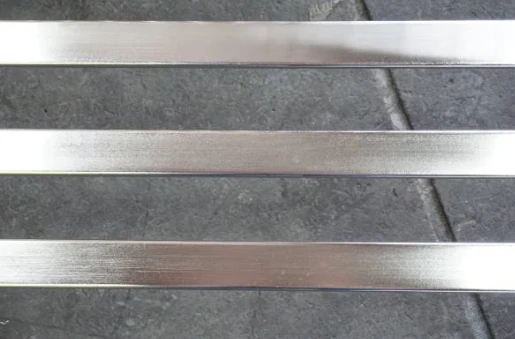
You do not need a metallurgy background to follow this. We will keep things practical. By the end, you will know how titanium strip compares to other metals under heat, which grade fits your project, and how to source material you can trust.
What Happens to Titanium at High Temperatures
Titanium has a melting point near 1,668°C, which is far higher than aluminum or most common steels. That high melting point gives titanium strip a strong head start in demanding thermal environments, though real-world service limits sit well below the melting point itself.
Heat does affect titanium in a few specific ways:
Strength changes. Titanium alloys hold up well within moderate temperature ranges, but strength gradually declines as temperatures climb toward the upper limits of the alloy.
Oxidation. At elevated temperatures, titanium reacts with oxygen in the air and forms an oxide layer on the surface. This layer starts thin and protective, but it thickens with prolonged exposure.
Alpha-case formation. Extended exposure to high heat can create a brittle surface layer called alpha-case, which reduces fatigue resistance if left untreated.
Thermal expansion. Titanium expands less than steel or aluminum when heated, which helps parts keep tight tolerances across wide temperature swings.
Knowing these behaviors helps you set realistic expectations before you commit to a design, rather than discovering limitations after production has already started.
How Titanium Strip Performs Under Heat Compared to Other Metals
Titanium strip does not conduct heat as fast as copper or aluminum, but that is not always a weakness. Slower heat transfer means the material distributes thermal load more evenly across a joint or component, which reduces hot spots and localized stress.
Here is how this material stacks up against common alternatives:
Versus aluminum. Aluminum loses strength quickly above roughly 200°C, while titanium retains useful strength at much higher temperatures.
Versus copper. Copper conducts heat faster, but titanium resists oxidation and corrosion far better in harsh, high-temperature chemical environments.
Versus carbon steel. Steel rusts and scales under sustained heat exposure, while titanium's oxide layer offers longer-term surface protection without added coatings.
This combination of heat tolerance and corrosion resistance is why titanium strip shows up in so many demanding thermal applications, from jet engines to industrial reactors.
Titanium Strip in Aerospace and Engine Applications
Jet engines create some of the harshest thermal environments in any industry. Compressor sections run hot, and every component needs to survive repeated heating and cooling cycles without fatigue failure over thousands of flight hours.
Titanium strip and related titanium alloys support:
- Compressor blades and structural brackets
- Engine casings that experience cyclic heating
- Ducting near heat-generating engine sections
- Precision-machined components that need dimensional stability under heat
- Fastener production for airframe sections near engine bays
Near-alpha and alpha-beta titanium alloys, including Ti-6Al-4V, are common choices for engine-adjacent parts because they hold strength longer under sustained thermal load than commercially pure grades. Beyond a certain temperature threshold, engineers switch to nickel-based superalloys, since oxidation resistance narrows as heat continues to climb.
Titanium Strip in Chemical Processing Under Thermal Cycling
Chemical plants combine two tough challenges: aggressive chemicals and repeated temperature swings. Equipment heats up during processing, cools during shutdowns, and repeats that cycle for years without a break.
This material handles that combination well because:
- The oxide layer keeps rebuilding itself after chemical exposure.
- The metal resists cracking from repeated thermal expansion and contraction.
- It maintains corrosion resistance even when process temperatures rise well above room temperature.
Process engineers use titanium strip in heat exchangers, reactor components, and piping connectors where hot acids or chlorides would quickly degrade other metals. Desalination plants and chemical processing lines both rely on this durability to reduce unplanned maintenance and unexpected shutdowns.
Titanium Strip in Electronics and Soldering
Soldering exposes materials to short bursts of intense heat. This metal holds its shape through these bursts because its melting point sits so far above typical soldering temperatures.
This matters for surface mount technology (SMT) assembly work:
- The strip will not deform during reflow soldering cycles.
- It resists oxidation from flux residue during repeated heating.
- It provides a stable joining surface between dissimilar metals.
- It keeps a consistent surface finish across large production batches.
Manufacturers building sensitive electronic assemblies count on this heat stability to keep joint quality consistent across large production runs, which reduces rework and scrap rates.
Oxidation and Alpha-Case: What Buyers Should Know
Sustained high-temperature exposure can cause titanium to form a brittle oxide scale on its surface. Left unmanaged, this can lead to alpha-case, a hardened layer that lowers fatigue life if the part faces repeated stress.
A few practical points help manage this risk:
- Grade selection matters. Some titanium alloys resist oxidation better than others at elevated temperatures.
- Protective coatings help. Certain high-temperature applications use coatings to slow oxide growth.
- Machining after heat treatment matters. Removing alpha-case through machining restores fatigue performance in critical parts.
- Service temperature limits exist. Every grade has a practical ceiling where oxidation resistance and mechanical properties start to work against the design.
Talking through these details with your supplier before production avoids costly surprises later.
How Grade Selection Affects High-Temperature Performance
Not every titanium grade behaves the same way under heat. Choosing the right one depends on how hot your application runs, how long it stays there, and what chemical environment surrounds it.
Grade 2 (commercially pure titanium). Offers strong corrosion resistance and good formability, suited for moderate-temperature industrial use.
Grade 5 (Ti-6Al-4V). Delivers higher strength and better elevated-temperature performance, common in aerospace and structural applications.
Grade 7 and Grade 9. Add palladium or other alloying elements for improved corrosion resistance in specific chemical environments, including hot acidic conditions.
Matching grade to application temperature keeps your project running safely and helps you avoid premature part failure. A quick conversation with your supplier's technical team before finalizing a design can save significant rework down the line.
Key Specifications to Confirm Before Ordering
Before you commit to a titanium strip order for a high-temperature application, confirm these details with your supplier:
Grade and alloy composition, since this drives temperature tolerance.
Standard compliance, such as ASTM B265 for general industrial strip or AMS 4911 for aerospace-grade material.
Thickness range, which typically spans from 0.01 mm up to a few millimeters.
Surface finish, since bright or matte finishes affect oxidation behavior slightly.
Certification, including Mill Test Certificates (MTC) and SGS test reports for verified composition.
Suppliers who can walk you through these specifications quickly usually have real manufacturing depth behind them.
Why Manufacturers Choose TSM Technology for Titanium Strip
TSM Technology has produced titanium mill products for over a decade from our facility in Baoji, Shaanxi Province, China, a region known for its titanium industry cluster. We supply titanium strip in Gr1, Gr2, Gr5, Gr7, and Gr9, following ASTM B265 and AMS 4911 standards.
Our product line comes in thicknesses starting at 0.01 mm, with custom widths and lengths available on request. Every batch includes complete heat number traceability, and we provide MTC and SGS test reports so you can verify chemical composition and mechanical properties.
We hold ISO 9001 and AS9100 certifications, and our in-house capabilities include melting, forging, rolling, and precision finishing. Customers across aerospace, medical, chemical processing, and electronics industries count on us for dependable delivery and technical guidance on grade selection for demanding thermal applications.
Frequently Asked Questions
What is the highest temperature titanium strip can handle?
Titanium melts near 1,668°C, but practical service temperatures for structural use are much lower and depend on the specific alloy and application.
Does titanium strip oxidize at high temperatures?
Yes, sustained heat exposure causes an oxide layer to form on the surface, and prolonged exposure can lead to alpha-case if not managed properly.
Which grade works best for high-temperature aerospace parts?
Ti-6Al-4V (Grade 5) is a common choice for aerospace applications because it holds strength well at elevated temperatures.
References
American Society for Testing and Materials, "Standard Specification for Titanium and Titanium Alloy Strip, Sheet, and Plate," ASTM International.
SAE International, "Titanium Alloy Sheet, Strip, and Plate 4Al-1V Annealed," AMS 4911 Aerospace Material Specification.
ASM International, "Titanium: A Technical Guide," Materials Park, Ohio.
Donachie, Matthew J., "Titanium: A Technical Guide," Second Edition, ASM International.
Lütjering, Gerd and Williams, James C., "Titanium," Engineering Materials and Processes Series, Springer.
National Association of Corrosion Engineers, "Corrosion Resistance of Titanium," NACE International Technical Publications.
We are here for you
To create the top brand in the field of titanium products


