


Ti-6Al-4V bars-also known as Grade 5 titanium bars-are among the most widely used titanium alloy products in aerospace, medical, marine, chemical processing, and high-performance engineering applications. This comprehensive guide explains everything you need to know about their properties, processing methods, benefits, applications, and how to select the right supplier for your project.
What Are Ti-6Al-4V Bars?
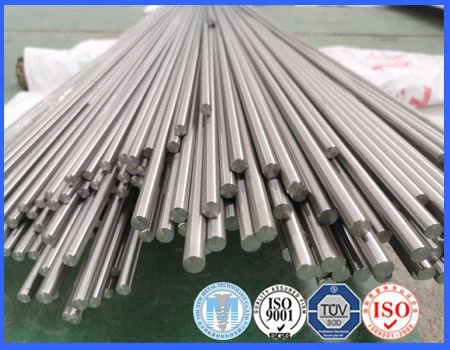
Ti-6Al-4V is an α-β titanium alloy containing 6% aluminum and 4% vanadium, offering an exceptional balance of strength, corrosion resistance, heat resistance, and weight reduction. Ti-6Al-4V bars are manufactured in multiple forms, including hot-rolled, forged, annealed, and precision-machined variants to meet diverse engineering requirements.
Table 1: Basic Properties of Ti-6Al-4V
| Property | Value |
|---|---|
| Density | 4.43 g/cm³ |
| Solidus Temperature | 1878 K |
| Liquidus Temperature | 1928 K |
| Specific Heat Capacity (Solid-phase) | 543 J/kg·K |
| Thermal Conductivity (Solid-phase) | 13 W/m·K |
| Laser Absorption Coefficient | 0.3 |
Chemical Composition and Material Structure
Ti-6Al-4V derives its name from its precise alloying composition: approximately 6% aluminum and 4% vanadium by weight, with titanium comprising the balance . This specific formulation creates an α-β type dual-phase titanium alloy that combines the advantages of both alpha stabilizers (aluminum) and beta stabilizers (vanadium).
The chemical composition typically falls within these ranges (weight percentage) :
Aluminum (Al): 5.5-6.75%
Vanadium (V): 3.5-4.5%
Iron (Fe): ≤ 0.30%
Oxygen (O): ≤ 0.20%
Carbon (C): ≤ 0.08%
Nitrogen (N): ≤ 0.05%
Hydrogen (H): ≤ 0.015%
Titanium (Ti): Balance
This carefully balanced composition can be heat treated to enhance specific properties, making it adaptable to various application requirements.
Key Properties and Advantages of Ti-6Al-4V Bars
Exceptional Strength-to-Weight Ratio
With a density of approximately 4.43 g/cm³ (about 60% that of steel), Ti-6Al-4V provides substantial weight savings while maintaining impressive mechanical strength . The typical tensile strength of Ti-6Al-4V bars reaches 950 MPa, with a yield strength of 880 MPa . This exceptional strength-to-weight ratio makes it ideal for applications where weight reduction is critical without compromising structural integrity.
Outstanding Corrosion Resistance
Ti-6Al-4V exhibits excellent resistance to corrosion in diverse environments, including atmosphere, seawater, chloride solutions, and various acids and alkalis . This resistance stems from the formation of a stable, continuous oxide surface film that protects the base metal from further attack, making it suitable for marine, chemical processing, and biomedical applications.
Excellent Biocompatibility
The biocompatibility of Ti-6Al-4V has been well-established in medical applications. It demonstrates non-toxicity, non-allergenic properties, and minimal interaction with bodily fluids . This makes it an ideal material for surgical implants, including joint replacements, bone plates, and dental implants.
Significant Temperature Performance
Ti-6Al-4V maintains its mechanical properties across a wide temperature range. It offers reliable performance at temperatures up to 400°C (750°F), with some formulations suitable for brief exposure to even higher temperatures . This thermal stability makes it valuable for aerospace and power generation applications.
Fatigue Resistance and Durability
The alloy demonstrates excellent fatigue properties, enabling it to withstand cyclic loading conditions that would degrade other materials. Combined with good fracture toughness, this fatigue resistance contributes to the exceptional durability of components machined from Ti-6Al-4V bars.
Table 2: Mechanical Properties of Ti-6Al-4V Bars
| Property | Value |
|---|---|
| Tensile Strength | ≥895 MPa , 950 MPa |
| Yield Strength | ≥825 MPa , 880 MPa |
| Elongation | ≥10% |
| Elastic Modulus | ~110 GPa |
| Hardness | 32 HRC |
Manufacturing and Processing of Ti-6Al-4V Bars
Production Methods
Ti-6Al-4V bars are typically produced through several manufacturing routes:
Traditional Forging: Involves thermomechanical processing above the beta transus temperature to achieve desired grain structure and mechanical properties.
Powder Compact Extrusion (PCE): An advanced powder metallurgy approach that enables production of Ti-6Al-4V structural members with relative density close to 100% through rapid powder consolidation .
Precision Forging: Advanced techniques involving heating at 40-100°C below the phase transition point with multiple forging passes and specific deformation percentages to achieve high sound velocity uniformity and consistent microstructure .
Heat Treatment Capabilities
Ti-6Al-4V responds well to various heat treatment processes:
Annealing: Typically performed at 700-800°C to relieve stresses and stabilize microstructure.
Solution Treatment and Aging (STA): Enhances strength properties through precipitation hardening.
Stress Relieving: Reduces residual stresses from machining or forming operations.
The specific heat treatment regimen can be tailored to achieve the optimal balance of strength, ductility, and toughness for particular applications.

Quality Standards and Specifications
Ti-6Al-4V bars are produced to various international standards, including:
AMS 4928: Covers bars, wires, forgings, and rings for applications requiring medium strength with maximum service temperature between 399-510°C
ASTM B348: Standard specification for titanium and titanium alloy bars and billets
ISO 9001:2015 and ISO 13485:2016 for medical applications
These standards ensure consistent material properties, dimensional accuracy, and performance reliability across different suppliers and batches.
Comparison with Other Titanium Grades
While Ti-6Al-4V (Grade 5) is the most widely used titanium alloy, it's valuable to understand how it compares to other grades:
Grade 2 (Commercially Pure Titanium): Offers excellent corrosion resistance but lower strength than Ti-6Al-4V
Grade 9 (Ti-3Al-2.5V): Provides intermediate strength and improved formability
Grade 23 (Ti-6Al-4V ELI): Extra-low interstitial version with enhanced fracture toughness for medical applications
The selection of Ti-6Al-4V represents the optimal balance of strength, corrosion resistance, fabricability, and cost for the majority of demanding applications.
Innovations in Ti-6Al-4V Bar Production
Recent advancements in Ti-6Al-4V bar manufacturing focus on improving material consistency and performance:
Precision forging techniques that enhance sound velocity uniformity and microstructural consistency
Powder metallurgy approaches that reduce cost through near-net shape forming while minimizing material waste
Thermomechanical processing developments that optimize microstructure for specific application requirements
These innovations continue to expand the applications and improve the performance boundaries of Ti-6Al-4V bars.
Why Ti-6Al-4V Bars Are the Superior Choice
Ti-6Al-4V bars represent the pinnacle of titanium alloy technology, offering an exceptional combination of light weight, high strength, excellent corrosion resistance, and biocompatibility. Their versatility across aerospace, medical, industrial, and consumer applications underscores their unique value proposition as engineering materials.
As manufacturing technologies advance, Ti-6Al-4V bars continue to evolve, providing even greater performance consistency and enabling new applications in emerging technologies. For engineers and designers seeking a proven, high-performance material solution, Ti-6Al-4V bars offer reliability and performance that few other materials can match.
TSM TECHNOLOGY CO: Your Trusted Partner for Ti-6Al-4V Bars
At TSM TECHNOLOGY CO, we specialize in providing premium quality Ti-6Al-4V bars that meet the most stringent industry standards. With years of expertise in titanium alloy distribution and processing, we guarantee:
Comprehensive inventory of Ti-6Al-4V bars in various diameters and lengths
Full traceability with complete material certification
Custom machining services to deliver ready-to-use components
Technical support from our experienced materials engineers
Competitive pricing and reliable delivery schedules
Our Ti-6Al-4V bars are sourced from reputable mills and processed according to precise quality control procedures, ensuring optimal performance for your most demanding applications. Whether you require standard sizes or custom-manufactured bars, TSM TECHNOLOGY CO has the capabilities to meet your specific requirements.
Contact us today to discuss your Ti-6Al-4V bar needs and experience the TSM difference in quality, service, and technical support.
faq
Q:1.What does "Ti-6Al-4V" mean?
A:The name indicates the chemical composition: approximately 6% Aluminum, 4% Vanadium, with Titanium comprising the balance. This specific formulation creates the optimal α-β phase structure for superior mechanical properties.
Q:2.What are the key advantages of Ti-6Al-4V bars over steel?
A:Ti-6Al-4V offers comparable strength to many steels but at about 60% of the weight, along with superior corrosion resistance and biocompatibility.
Q:3.Can Ti-6Al-4V bars be heat treated?
A:Yes, Ti-6Al-4V responds well to various heat treatments including annealing, solution treatment, and aging, which can enhance specific mechanical properties.
Q:4.How does Ti-6Al-4V compare to commercially pure titanium?
A:Ti-6Al-4V offers significantly higher strength than commercially pure titanium grades while maintaining excellent corrosion resistance, though with slightly reduced formability.
Q:5.What standards do TSM TECHNOLOGY CO's Ti-6Al-4V bars comply with?
A:Our bars meet relevant international standards including AMS 4928 and ASTM B348, with certifications available for traceability and quality assurance.
Q:6.What diameter sizes are available?
A:Sizes typically range from 5 mm to 300 mm, depending on production and inventory.


