When engineers choose titanium strip for demanding applications, they often ask one important question: can titanium strip be cold rolled or heat treated? The answer is yes. Both processes play an important role in controlling the material's thickness, surface quality, mechanical properties, and final performance.
A titanium strip is widely used because it combines low density, excellent corrosion resistance, and reliable strength. Among commercially pure titanium grades, Grade 2 titanium strip is one of the most common choices for industrial applications. It provides a good balance between strength, ductility, weldability, and corrosion resistance.
However, choosing the right processing method is just as important as choosing the right titanium grade. Cold rolling and heat treatment create different material characteristics. Understanding these differences helps you select the right titanium strip for your project.
What Is Titanium Strip and Why Is It Widely Used?
Titanium strip is a thin, flat titanium product with a smaller width compared with titanium plate or sheet. It is usually produced through rolling processes and supplied in customized thicknesses, widths, and surface conditions.
Commercially pure titanium strips are mainly available in grades such as Grade 1, Grade 2, Grade 3, and Grade 4. Among them, Grade 2 titanium strip is the most widely used because it provides a practical combination of mechanical performance and fabrication ability.
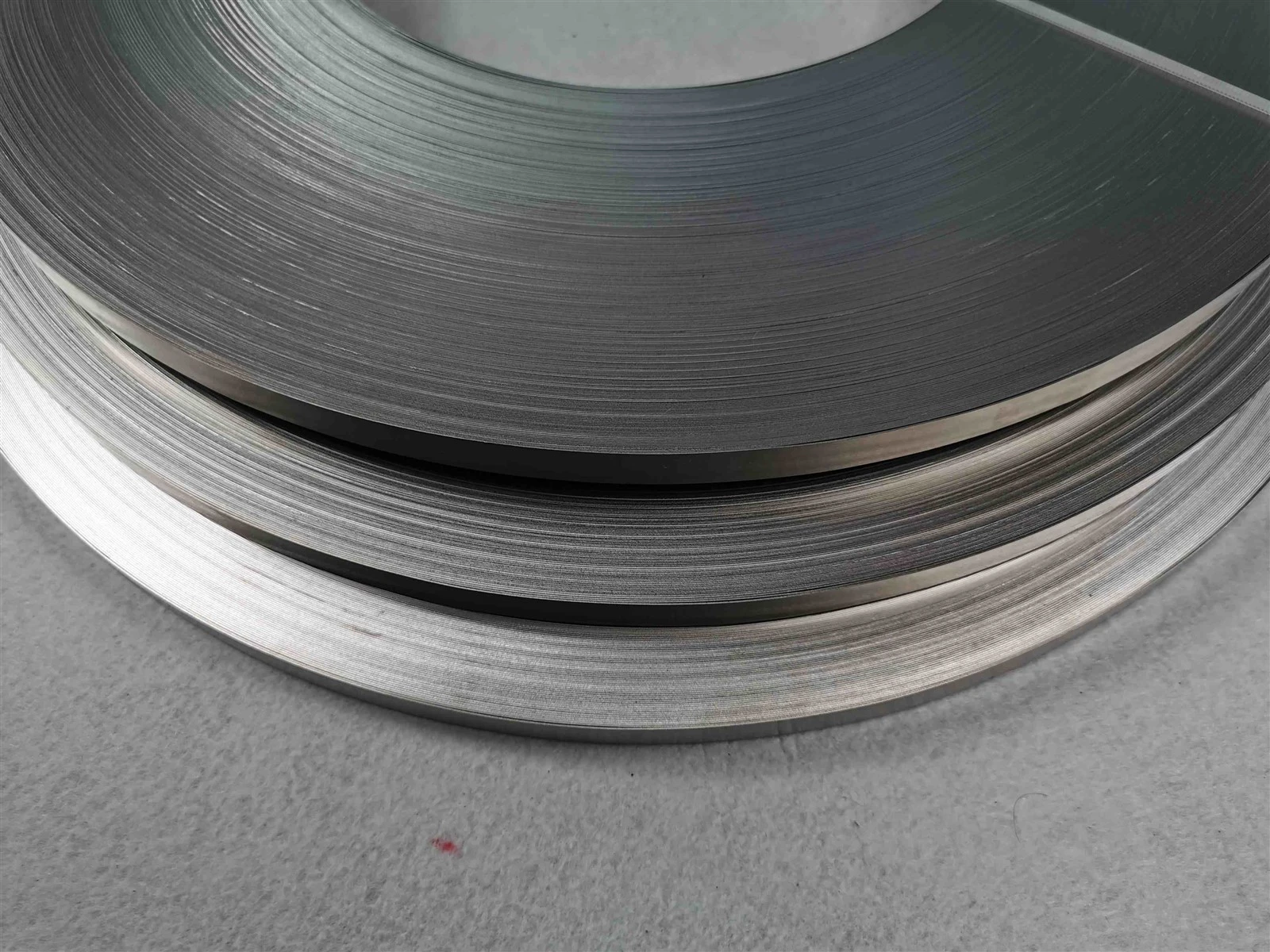
Titanium strip is commonly selected for applications that require:
- Excellent corrosion resistance
- High strength-to-weight ratio
- Good weldability
- Long service life
- Resistance to seawater and chemical environments
Compared with stainless steel and many other metals, titanium offers superior corrosion performance in many aggressive environments.
Common titanium strip applications include:
- Heat exchanger components
- Chemical processing equipment
- Marine systems
- Aerospace parts
- Medical devices
- Industrial fabrication components
For many engineers, titanium strip is not selected only because of its strength. It is selected because it can maintain performance in difficult operating conditions.
Can Titanium Strip Be Cold Rolled?
Yes, cold rolled titanium strip is a common product form used by manufacturers.
Cold rolling is a manufacturing process where titanium material passes through rollers at room temperature. The process reduces thickness and improves dimensional accuracy.
For titanium strip production, cold rolling helps manufacturers achieve:
- More accurate thickness control
- Better surface finish
- Improved dimensional consistency
- Customized strip sizes
Cold rolling is especially useful when customers need thin titanium strips with tight tolerances.
During cold rolling, the titanium material becomes harder because of work hardening. The metal structure changes as deformation increases. This can improve strength but may reduce ductility.
Because of this, manufacturers often combine cold rolling with annealing treatment.
A typical production process may include:
- Titanium slab or plate preparation
- Hot rolling
- Cold rolling
- Annealing
- Surface treatment
- Final inspection
The exact process depends on the required thickness, mechanical properties, and application requirements.
How Does Cold Rolling Affect Titanium Strip Properties?
Cold rolling changes several important characteristics of titanium strip.
Improved Thickness Accuracy
Many industrial customers require precise thickness control. Cold rolling allows manufacturers to produce titanium strip with consistent dimensions.
This is important for:
Heat exchangers
Precision components
Fabricated assemblies
Small thickness variations can affect product performance. Accurate rolling helps reduce manufacturing problems.
Better Surface Quality
Cold rolling can improve surface smoothness compared with hot rolled material.
A better surface finish may reduce additional processing requirements and improve the appearance of the final component.
Increased Strength
Cold deformation increases material strength through work hardening.
However, excessive cold reduction may reduce flexibility. Engineers should balance strength requirements with forming needs.
For applications requiring additional ductility, annealing after cold rolling is often considered.
Can Titanium Strip Be Heat Treated?
Yes, titanium strip can be heat treated, but the treatment method depends on the titanium grade and the required performance.
For commercially pure titanium such as Grade 2, heat treatment is mainly used for:
- Stress relief
- Restoring ductility
- Improving formability
- Reducing internal stress after cold working
Unlike some titanium alloys, commercially pure titanium does not rely on heat treatment to create major strength increases.
Grade 2 titanium strip is usually supplied in an annealed condition because annealing provides a good balance of mechanical properties and fabrication performance.
Annealing involves heating the material to a controlled temperature and then cooling it according to specific requirements.
The benefits include:
- Reduced residual stress
- Improved ductility
- Better forming performance
- More stable material properties
This makes annealed titanium strip suitable for applications involving bending, forming, or welding.
What Is the Difference Between Cold Rolled and Heat Treated Titanium Strip?
Cold rolling and heat treatment serve different purposes.
|
Processing Method |
Main Purpose |
Typical Benefits |
|
Cold rolling |
Reduce thickness and improve accuracy |
Better tolerance, smoother surface, increased strength |
|
Heat treatment |
Adjust material structure |
Improved ductility, reduced stress, better forming ability |
A customer choosing cold rolled titanium strip usually focuses on:
- Precise dimensions
- Thin thickness requirements
- Surface quality
- Production consistency
A customer choosing heat treated titanium strip usually focuses on:
- Better flexibility
- Reduced stress
- Improved fabrication performance
In many cases, manufacturers use both processes together. Cold rolling creates the required dimensions, while heat treatment restores the desired material properties.
Why Is Grade 2 Titanium Strip Commonly Cold Rolled?
Grade 2 titanium is popular for cold rolling because it has good ductility and excellent corrosion resistance.
It can be processed into thin strip products while maintaining reliable performance.
Typical advantages of Grade 2 titanium strip include:
- Strong resistance to seawater corrosion
- Good weldability
- Stable mechanical properties
- Good forming capability
Grade 2 titanium strip is often selected when engineers need a material that performs reliably without requiring a high-strength titanium alloy.
ASTM B265 covers titanium and titanium alloy strip, sheet, and plate products. Buyers should confirm the exact specification, thickness, and condition required for their application.
What Industries Use Cold Rolled and Heat Treated Titanium Strip?
The processing condition of titanium strip depends on the final application.
Heat Exchanger Industry
Titanium strip is widely used in heat exchanger applications because of its corrosion resistance.
It can handle many seawater and industrial cooling environments.
Important requirements include:
Uniform thickness
Good surface condition
Reliable corrosion resistance
Chemical Processing Industry
Chemical equipment often requires materials that can resist aggressive environments.
Grade 2 titanium strip may be used in:
Chemical tanks
Process equipment
Fabricated components
Material selection should always consider chemical concentration and operating temperature.
Marine Industry
Marine environments create corrosion challenges for many metals.
Titanium strip can provide long-term performance in suitable seawater applications.
Medical and Precision Applications
Titanium's biocompatibility and lightweight properties make it valuable for medical applications.
Thin titanium strip can support precision manufacturing requirements when supplied with proper specifications.
How to Select a Reliable Titanium Strip Supplier?
Finding the right titanium strip supplier is important for product quality and project reliability.
Before purchasing, consider these factors:
Material Certification
Ask for material test certificates.
Important information includes:
Chemical composition
Mechanical properties
Heat number traceability
Applicable standards
01
Manufacturing Capability
We are a solution provider to meet
A reliable titanium strip manufacturer should have experience with:
Rolling processes
Heat treatment
Surface finishing
Quality inspection
02
Size and Tolerance Control
Confirm:
Thickness range
Width requirements
Length or coil requirements
Surface condition
03
Quality Inspection
Depending on the application, customers may require:
Dimensional inspection
Chemical analysis
Mechanical testing
Non-destructive testing
Clear technical communication helps avoid production delays.
04
Why Choose TSM Technology for Titanium Strip Supply?
TSM Technology specializes in titanium products for global industrial customers. The company provides titanium plates, bars, strips, tubes, forgings, fasteners, and customized titanium solutions.
With more than 15 years of titanium manufacturing experience and a 60,000㎡ production facility, TSM Technology supports customers from material selection to final delivery.
The company focuses on:
- Titanium material traceability
- Strict quality control
- Customized production
- Professional technical support
For Grade 2 titanium strip, TSM Technology can support requirements related to:
- Material grade confirmation
- Thickness and width customization
- Surface requirements
- Inspection documentation
Working with an experienced manufacturer helps reduce purchasing risks and improves project reliability.
Final Thoughts: Is Titanium Strip Suitable for Cold Rolling and Heat Treatment?
Titanium strip can be both cold rolled and heat treated. These processes help manufacturers achieve different performance goals.
Cold rolling improves dimensional accuracy and surface quality. Heat treatment improves ductility and reduces stress after processing.
For many industrial applications, Grade 2 titanium strip provides the right balance of corrosion resistance, strength, and fabrication performance.
If you need a reliable titanium strip supplier for your project, contact TSM Technology at info@tsm-titanium.com. Our team can help you select the right titanium grade, processing condition, and product specification.
References
ASTM International. ASTM B265 Standard Specification for Titanium and Titanium Alloy Strip, Sheet, and Plate.
ASM International. ASM Handbook Volume 2: Properties and Selection of Nonferrous Alloys and Special-Purpose Materials.
Donachie, Matthew J. Titanium: A Technical Guide.
Leyens, Christoph and Manfred Peters. Titanium and Titanium Alloys: Fundamentals and Applications.
Boyer, Rodney, Gerhard Welsch, and E. W. Collings. Materials Properties Handbook: Titanium Alloys.
International Titanium Association. Titanium Applications and Industry Technical Information.

Let TSM Technology help you get your project off the ground
Since 2011, TSM Technology is a China-based titanium manufacturer specializing in titanium tubes, plates, bars, forgings, fasteners, flanges, and custom-machined titanium components for aerospace, medical, marine, and industrial applications.