Grade 2 Titanium offers a useful balance of strength, formability, and corrosion resistance. However, its performance in hydrochloric acid (HCl) depends heavily on acid concentration, temperature, and solution chemistry. If you plan to use Grade 2 Titanium in chemical processing equipment, assess these conditions before selecting a material.
This guide explains how hydrochloric acid affects Grade 2 Titanium, what published corrosion data tells us, and how to evaluate Grade 2 Titanium tube and Grade 2 Titanium plate for industrial applications.
What Makes Grade 2 Titanium Resistant to Corrosion?
Grade 2 Titanium is a commercially pure titanium grade widely used in industrial equipment. Its corrosion resistance comes mainly from a thin, protective oxide film that forms on its surface.
This passive film helps protect the metal in many environments, including seawater and several chloride-containing solutions. When the film remains stable, it slows the reaction between the metal and its surroundings.
However, good corrosion resistance in one environment does not guarantee good performance in every acid.
Hydrochloric acid is a non-oxidizing acid. It can attack titanium when conditions prevent the passive film from maintaining adequate protection. The risk generally increases as acid concentration and temperature rise.
- Corrosion resistance: Strong in many oxidizing and chloride-containing environments, but limited in hydrochloric acid under certain conditions.
- Formability: Suitable for forming many industrial components.
- Weldability: Useful for fabricating tubes, tanks, and process equipment when appropriate welding procedures are followed.
- Material traceability: Mill test reports help verify the supplied grade and chemical composition.
These properties make Grade 2 Titanium useful in many industrial applications. They do not replace a corrosion assessment for the actual process fluid.
How Does Hydrochloric Acid Concentration Affect Grade 2 Titanium?
Hydrochloric acid concentration is a key factor in titanium material selection. Low-concentration acid at a controlled temperature may produce different results from concentrated acid or hot acid.
Published research reports that titanium corrosion in hydrochloric acid generally increases with concentration and temperature. The exact response depends on test conditions, so engineers should not treat one published value as a universal service limit.
The following table summarizes general engineering implications of different concentration ranges. It is a screening guide, not a certified corrosion-rate chart for Grade 2 Titanium.
| HCl concentration | General concern for Grade 2 Titanium | Recommended approach |
|---|---|---|
| Below 1% | Temperature and solution chemistry can still cause significant attack. | Verify the actual operating temperature and obtain relevant test data. |
| 1–5% | Corrosion risk can increase, even at relatively low temperatures. | Review published data carefully and test under representative conditions. |
| 5–10% | Do not assume commercially pure titanium will provide reliable service. | Compare alternative materials and require application-specific evidence. |
| Above 10% | Hydrochloric acid can be highly aggressive toward titanium. | Seek specialist material-selection advice and evaluate alternative alloys. |
Important: These ranges are not guaranteed safe or unsafe boundaries. Some conditions can produce unacceptable corrosion even below the listed ranges.
Low-Concentration Hydrochloric Acid
Low concentration does not automatically mean low corrosion risk.
A study by Itō and Kitamura examined titanium in 0.10–1.00% HCl at temperatures between 100°C and 180°C. The researchers observed a sharp increase in corrosion around 0.8% HCl under their experimental conditions.
Key takeaway: Temperature can change the effect of acid concentration dramatically. If your process uses dilute hydrochloric acid, document operating temperature, exposure time, and solution composition. Do not approve Grade 2 Titanium based on concentration alone.
Medium-Concentration Hydrochloric Acid
As concentration increases, the protective oxide film may no longer provide sufficient protection under the process conditions.
For equipment exposed to medium-concentration HCl, engineers should investigate:
- Normal and maximum operating temperatures.
- Acid concentration during startup, shutdown, and cleaning.
- Dissolved oxygen and other oxidizing species.
- Metal contaminants and other dissolved chemicals.
- Flow conditions and exposure duration.
A Grade 2 Titanium component that performs adequately during normal operation may face different conditions during cleaning or process upsets.
High-Concentration Hydrochloric Acid
High-concentration HCl requires particular caution when considering commercially pure titanium.
Do not assume Grade 2 Titanium is suitable for concentrated hydrochloric acid simply because titanium performs well in seawater or other chloride environments. These environments have different chemical properties and corrosion mechanisms.
For demanding acid service, compare candidate materials using reliable corrosion data. Depending on the process, a nickel-based alloy or a nonmetallic material may deserve evaluation.
The best choice depends on the full operating environment, including temperature, impurities, mechanical requirements, and fabrication constraints.
Why Temperature and Solution Chemistry Matter
Acid concentration is only one part of the corrosion assessment. Two systems containing the same concentration of HCl can produce different results when their temperatures or chemical conditions differ.
Temperature
Higher temperatures commonly accelerate corrosion reactions and can reduce the ability of titanium to maintain protective passivity in hydrochloric acid.
Record both the normal operating temperature and the maximum credible temperature. Include heating during startup, unexpected process changes, and cleaning cycles.
A material decision based only on room-temperature data may not reflect actual plant conditions.
Dissolved Oxygen and Oxidizing Species
Oxygen and other oxidizing species can influence titanium passivity. Their effects are not always straightforward.
Technical reviews report that deaeration can increase corrosion at some lower HCl concentrations while reducing it under certain higher-concentration conditions. This demonstrates why engineers should not assume that removing oxygen will always improve corrosion resistance.
If the process uses aeration, chemical additives, or recirculated acid, include those details in the material assessment.
Impurities and Mixed Chemicals
Commercial hydrochloric acid may contain impurities. Other chemicals in the process can also change its corrosiveness.
Before selecting Grade 2 Titanium, identify the actual process fluid rather than relying only on the product name or nominal HCl concentration.
Is Grade 2 Titanium Tube Suitable for Hydrochloric Acid Service?
Grade 2 Titanium tube is used in industrial tubing and heat-exchange applications. However, its suitability for hydrochloric acid depends on the operating conditions and the quality of the supporting corrosion data.
Tube selection requires attention to both material performance and component design.
- Material grade: Confirm that the tube meets the required Grade 2 specification.
- Dimensions: Check outside diameter, wall thickness, and length against design requirements.
- Manufacturing route: Confirm whether seamless or welded tube is required.
- Weld quality: Evaluate weld procedures and inspection requirements where applicable.
- Inspection documents: Request the relevant mill test certificate and required inspection reports.
- Corrosion evidence: Verify performance under conditions that represent the actual process.
TSM Technology supplies Grade 2 Titanium tubes for industrial applications, with product information covering dimensions, manufacturing options, and material documentation.
View the Grade 2 Titanium Tube product page for available specifications and supply options.
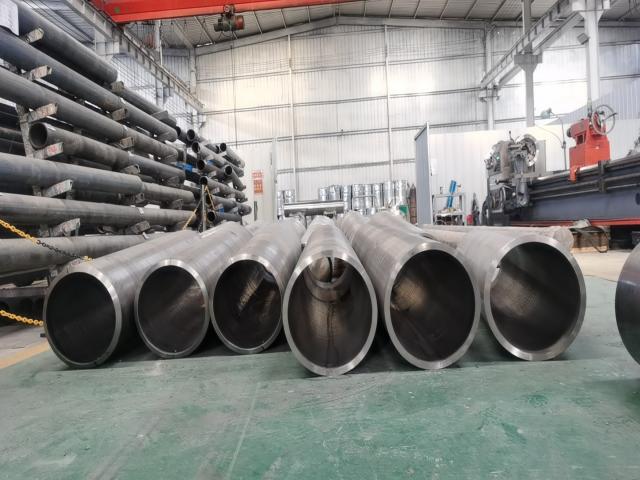
Can Grade 2 Titanium Plate Be Used in Hydrochloric Acid Equipment?
Grade 2 titanium plates can be fabricated into many industrial components. Potential uses include process equipment, vessel components, and fabricated structures where the selected material meets the service requirements.
However, a plate's suitability depends on the chemical environment, not simply its thickness or mechanical properties.
When evaluating Grade 2 titanium plate for acid-handling equipment, consider:
- The actual HCl concentration and temperature range.
- Plate thickness and corrosion allowance requirements.
- Welded joints, crevices, and other design details.
- Surface condition and fabrication procedures.
- Inspection and traceability documentation.
- Expected service life and maintenance requirements.
If corrosion testing identifies an unacceptable corrosion rate, increasing plate thickness alone may not solve the problem. The material itself may be unsuitable for the environment.
TSM Technology offers Grade 2 Titanium sheet and plate in different dimensions and thicknesses. Review the product specifications and confirm the requirements for your application.
Explore the Grade 2 Titanium Plate and Sheet product page to review product specifications.
For additional Grade 2 Titanium product options, visit the Grade 2 Titanium product search page.
How to Verify Corrosion Resistance Before Selecting a Material
When published data does not match your exact process, laboratory testing can help reduce uncertainty.
ASTM G31 provides guidance for laboratory immersion corrosion testing of metals. It covers factors such as specimen preparation, solution composition, temperature, exposure time, and corrosion-rate calculation. Corrosion tests can produce misleading results when important variables differ from actual service conditions.
- Define the process conditions. Record HCl concentration, minimum and maximum temperature, exposure duration, and relevant impurities.
- Choose representative specimens. Use material that reflects the intended grade, product form, and relevant surface or fabrication condition.
- Set the test conditions. Document solution volume, aeration, fluid movement, and test duration.
- Measure corrosion. Evaluate mass change and calculate corrosion rate using a suitable, documented method.
- Inspect the specimens. Look for surface attack and other damage that an average corrosion-rate value may not reveal.
- Review the results against design requirements. A corrosion engineer should assess the data before approving the material.
For critical equipment, consider additional evaluation of welds, localized attack, and other failure mechanisms that a basic immersion test may not capture.
Do not use an accelerated laboratory test as the sole basis for predicting years of service without understanding its limitations.
Frequently Asked Questions About Grade 2 Titanium and Hydrochloric Acid
Is Grade 2 Titanium resistant to hydrochloric acid?
Grade 2 Titanium has limited resistance to hydrochloric acid under many conditions. Its performance depends on acid concentration, temperature, and solution chemistry. Always verify suitability for the intended operating environment.
Does Grade 2 Titanium resist dilute HCl?
Not under all conditions. Research has documented substantial corrosion changes in dilute HCl at elevated temperatures. Engineers should evaluate both concentration and temperature before selecting the material.
Does increasing HCl concentration always increase corrosion?
Increasing concentration generally raises the corrosion risk, but the exact relationship depends on other variables. Temperature, dissolved oxygen, and impurities can also affect the result.
Is Grade 2 Titanium tube suitable for chemical processing?
Grade 2 Titanium tube can serve in many industrial systems. However, engineers must confirm compatibility with the actual process fluid before using it in hydrochloric acid service.
What is the difference between Grade 2 Titanium tube and Grade 2 Titanium plate?
The primary difference is product form and intended fabrication. Tubes serve piping and heat-transfer systems, while plates support fabricated equipment and structural components. Both require the correct material specification and a separate corrosion assessment for HCl service.
What information should I provide when requesting a Grade 2 Titanium quotation?
Provide the product form, required grade and standard, dimensions, thickness, quantity, HCl concentration, operating temperature, known impurities, required inspection documents, and delivery schedule.
These details help the supplier confirm product availability and documentation needs. They also help your engineering team determine whether the material is appropriate for the intended service.
Choose Grade 2 Titanium With the Right Technical Support
Selecting Grade 2 Titanium for hydrochloric acid service requires more than checking a material grade or comparing nominal acid concentrations. You need reliable product documentation and corrosion data that matches your operating conditions.
TSM Technology supplies titanium tubes, plates, bars, forgings, and other titanium products. Before purchasing, confirm the required specification, product dimensions, operating conditions, and inspection requirements with your engineering team.
Contact TSM Technology to discuss Grade 2 Titanium tube and Grade 2 Titanium plate requirements.
References
- Prando, Davide, et al. "Corrosion of Titanium: Part 1: Aggressive Environments and Main Forms of Degradation." Journal of Applied Biomaterials & Functional Materials, 2017.
- Itō, Jun-ichi, and Yoshiharu Kitamura. "Corrosion Resistance of Titanium in Hydrochloric Acid Solution at Elevated Temperature." Corrosion Engineering Digest, vol. 13, no. 9, 1964.
- Crum, J. R. "Corrosion by Hydrogen Chloride and Hydrochloric Acid." ASM Handbook, Volume 13C: Corrosion: Environments and Industries, ASM International, 2006.
- ASTM International. ASTM G31-21(2025): Standard Guide for Laboratory Immersion Corrosion Testing of Metals, 2025.
- Association for Materials Protection and Performance. NACE-ASTM TM0169-2021-ASTM G31-21-2025: Standard Guide for Laboratory Immersion Corrosion Testing of Metals, 2025.
- Japan Titanium Society. World of Titanium. Technical reference on titanium properties and chemical resistance.
Technical note: Concentration ranges in this article are preliminary screening guidance, not guaranteed service limits. Confirm material suitability using traceable data and representative testing for the actual operating conditions.