



ASTM B861 Grade 2 titanium pipe is a seamless pipe made from commercially pure grade 2 titanium, identified in ASTM B861 as UNS R50400. It is used where corrosion resistance, moderate strength, low weight, and clean fabrication matter, especially in chemical, marine, heat-transfer, and industrial piping systems. Although Grade 2 is technically unalloyed titanium, buyers often group it with titanium alloy pipe products when comparing titanium pipe grades for procurement.
TSM Technology supplies titanium tubes, pipes, plates, bars, forgings, flanges, fasteners, and machined components from Baoji, Shaanxi Province, China, and describes its manufacturing base as located in China's major titanium industry cluster. The company states that it has operated since 2011, serves customers in more than 70 countries, and supports ASTM, AMS, ASME, ISO, and EN-related documentation requirements for titanium products.
What is ASTM B861 Grade 2 titanium pipe?
ASTM B861 Grade 2 titanium pipe is seamless titanium pipe produced to the ASTM B861 specification for titanium and titanium alloy seamless pipe. ASTM identifies Grade 2 as UNS R50400 unalloyed titanium and states that the specification is intended for general corrosion-resisting and elevated-temperature service. The standard also requires chemical composition control and room-temperature mechanical property requirements, along with tests such as tension, flattening, bend, and hydrostatic testing.
In practical terms, ASTM B861 defines the pipe format and acceptance requirements, while Grade 2 defines the material. This distinction matters: a Grade 2 Titanium Pipe can be ordered under different standards depending on whether the product is seamless pipe, welded pipe, or condenser and heat-exchanger tube. For ASTM B861 Titanium Pipe, the key procurement wording is usually "ASTM B861 Grade 2, UNS R50400, seamless pipe," followed by size, wall thickness or schedule, condition, testing, certification, and delivery requirements.
Defining characteristics of grade 2 titanium
Grade 2 titanium is valued because it sits in the middle of the commercially pure titanium family. It is stronger than Grade 1 in many typical comparisons, easier to form than higher-strength titanium alloys such as Grade 5, and widely accepted for corrosion-service equipment. Its surface naturally forms a stable oxide film, which helps protect the metal in many chloride-bearing and seawater-related environments.
Key defining points include:

Commercially pure titanium: Grade 2 is unalloyed titanium rather than an aluminum-vanadium alloy.
UNS designation: ASTM B861 lists Grade 2 as UNS R50400.
Seamless pipe format: ASTM B861 applies to seamless pipe, not welded pipe or heat-exchanger tube by default.
Balanced performance: It combines corrosion resistance, ductility, weldability, and moderate mechanical strength.
Industrial usability: It is commonly selected for chemical processing, marine service, condensers, heat exchangers, desalination systems, and process pipelines when the design conditions suit titanium.
How does ASTM B861 differ from related titanium tube and pipe standards?
ASTM B861 is specifically for seamless titanium and titanium alloy pipe. ASTM B862 is the related specification for welded titanium and titanium alloy pipe, and ASTM identifies Grade 2 under that welded-pipe standard as UNS R50400 as well. ASTM B338, by contrast, is for seamless and welded titanium and titanium alloy tubes for condensers and heat exchangers, and it also includes Grade 2 UNS R50400.
This is why the words "pipe" and "tube" should not be treated as interchangeable in a purchase order. Pipe is usually specified around nominal pipe size, pressure design, schedule, and piping code needs. Tube is often specified by outside diameter, wall thickness, heat-transfer duty, and equipment drawings. A project may use Grade 2 Titanium Tubes in a condenser and ASTM B861 Grade 2 Titanium Pipe in adjacent process piping, but each item should follow the correct product standard.
Useful cross-references include:
ASTM B861 Grade 2: seamless titanium pipe for corrosion-resisting and elevated-temperature service.
ASME SB-861 Grade 2: ASME adoption commonly used in pressure equipment specifications for seamless titanium pipe.
UNS R50400: the material designation for Grade 2 unalloyed titanium.
ASTM B862 Grade 2: welded titanium pipe when a welded product form is specified.
ASTM B338 Grade 2: titanium tube for condenser, evaporator, and heat-exchanger service.
ASME SB338 Grade 2: ASME tube reference often used alongside ASTM B338 for heat-transfer equipment.
Main properties of ASTM B861 Grade 2 Titanium Pipe
The core value of grade 2 titanium is not one single property. It is the way corrosion resistance, weight savings, ductility, and clean surface behavior work together. For pipe systems, this can reduce material risk in corrosive environments where many stainless steels, copper alloys, or coated materials may require closer monitoring.
Typical property areas to review include:
- Corrosion resistance: Grade 2 titanium is often chosen for seawater, chlorides, oxidizing media, and many chemical-processing environments, provided the exact fluid chemistry and temperature are confirmed by the designer.
- Mechanical performance: ASTM B861 requires room-temperature values for tensile strength, yield strength, and elongation. TSM Technology's Grade 2 product data lists tensile strength of at least 345 MPa, yield strength of at least 275 MPa, and elongation of at least 20 percent for Grade 2 titanium pipe data associated with its tube and pipe offering.
- Chemical limits: TSM lists Grade 2 composition values including nitrogen 0.03, carbon 0.08, hydrogen 0.015, iron 0.30, oxygen 0.25, with titanium as the balance.
- Fabricability: Grade 2 is generally formable and weldable when proper titanium-cleanliness practices, shielding, and qualified procedures are used.
- Weight advantage: Titanium's low density compared with many conventional corrosion-resistant metals can help reduce structural load, especially in large assemblies.
The practical takeaway is simple: Grade 2 titanium is usually selected when the environment demands corrosion resistance but does not require the much higher strength of alpha-beta titanium alloys such as Grade 5.
Common applications and use cases
ASTM B861 Grade 2 Titanium Pipe appears in systems where fluid compatibility, long service life, and reliable documentation are more important than choosing the lowest initial material cost. In many projects, the pipe is only one part of a titanium package that may also include Grade 2 Titanium Tubes, fittings, flanges, plates, and fabricated components.
Common use cases include:
Chemical processing pipelines: for compatible acids, chlorides, oxidizing chemicals, and process streams where titanium is approved by the corrosion engineer.
Heat exchangers and condensers: often involving Grade 2 Titanium Tubes under ASTM B338 or ASME SB338, with pipework specified separately.
Desalination and seawater systems: including seawater transport, cooling water lines, evaporators, and reverse-osmosis-related equipment.
Power generation: especially condenser, cooling, and auxiliary systems exposed to aggressive water chemistry.
Marine and offshore equipment: where chloride resistance and weight reduction can be valuable.
Medical and pharmaceutical equipment: where clean, corrosion-resistant, non-toxic material behavior is required by the application.
Industrial equipment and architecture: where durability, formability, and a clean metallic surface are desired.
TSM Technology's Grade 2 Titanium Tubes product page lists applications including heat exchangers, condensers, water treatment, desalination, evaporators, pipelines, chemical processing, power generation, aerospace and automotive, medical and pharmaceutical equipment, and industrial equipment. It also lists product forms such as round, square, and coiling, with polishing, pickling, and sandblasting as surface options.
Product details buyers should confirm
A technically correct inquiry should do more than ask for "grade 2 titanium." It should define the standard, form, size, surface, inspection, and certification package. This reduces delays and helps the supplier quote the correct titanium pipe grades and manufacturing route.
For Grade 2 Titanium Tubes, TSM lists OD options from 3 mm to 219 mm with customized sizes available, thickness from 0.1 mm to 100 mm, and production techniques including seamless processing, cold rolling, hot rolling, annealing, and pickling. The same page also lists a product-description range of 6.0 mm to 114.3 mm diameter and maximum length of 18000 mm for Grade 2 tube and pipe, so buyers should confirm the exact size range for the required standard and product form before ordering.
A good purchase checklist includes:
- Required standard, such as ASTM B861, ASME SB-861, ASTM B862, or ASTM B338.
- Grade and UNS number, such as grade 2 titanium and UNS R50400.
- Seamless or welded construction.
- Outside diameter, nominal pipe size, wall thickness, schedule, and length.
- Condition, surface finish, and end preparation.
- Chemical, mechanical, dimensional, and surface inspection requirements.
- NDT requirements such as ultrasonic, eddy current, hydrostatic, X-ray, flaring, or flattening tests where applicable.
- Certification requirements, such as mill test reports or EN10204 3.1 or 3.2 certificates.
- Packaging, heat number marking, batch traceability, and shipping method.
Quality control and supplier documentation
Titanium pipe is often used in systems where replacement is costly, so documentation is part of the product value. TSM states that its inspection capabilities include ultrasonic testing, eddy current testing, positive material identification, mechanical testing, chemical composition analysis, dimensional inspection, and surface quality inspection. The company also states that products can be supplied with EN10204 3.1 certification, heat number and raw material traceability, mill test reports, ASTM or AMS compliance documentation, PMI reports, and NDT reports.
For its Grade 2 Titanium Tubes, TSM lists water pressure testing, ultrasonic testing, X-ray testing, eddy current testing, flaring, and flattening tests, along with MTC and SGS test report availability. It also notes wooden-case packaging and labels with product specifications, heat numbers, and batch codes for traceability.
TSM Technology as a titanium pipe and tube source
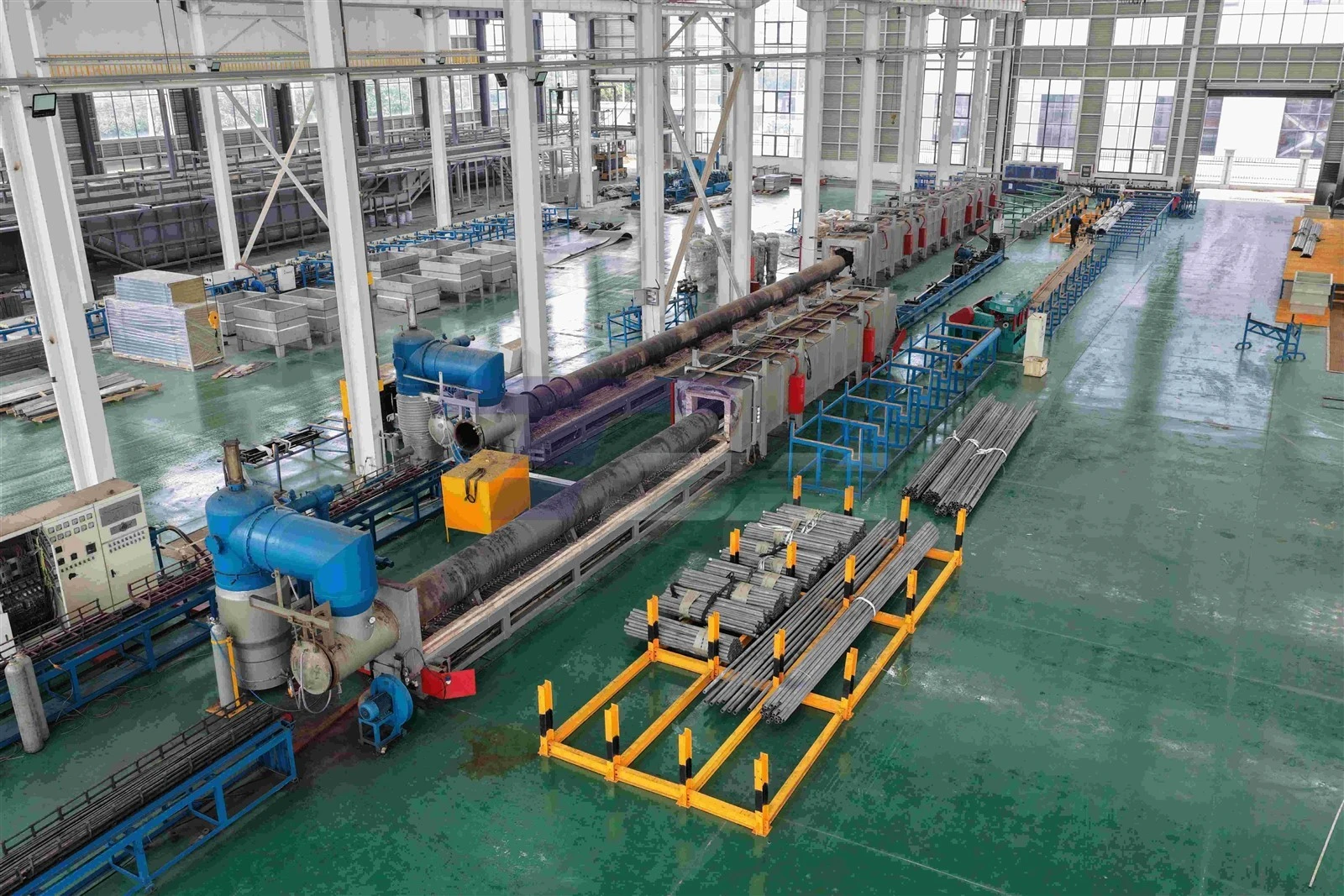
TSM Technology describes itself as a China-based titanium manufacturer specializing in titanium tubes, plates, bars, forgings, fasteners, flanges, and custom-machined titanium components for aerospace, medical, marine, and industrial applications. Its about page lists a 60,000 square meter production facility, more than 110 employees, annual production capacity above 1,200 tons, ISO 9001 and AS9100 certifications, and in-house capabilities such as titanium melting and forging, tube rolling and welding, CNC machining, fastener production, precision cutting, and finishing.
For buyers evaluating ASTM B861 Grade 2 Titanium Pipe: Properties, Applications, and Equivalent Standards, the safest approach is to match the standard to the product form, then verify Grade 2 chemistry, mechanical properties, testing, and certification before production. To discuss Grade 2 Titanium Pipe, Grade 2 Titanium Tubes, or a related titanium alloy pipe requirement, contact TSM Technology at info@tsm-titanium.com with drawings, sizes, quantities, and required standards.
We are always at your service when you need
TSM Technology, one of the leading Asian suppliers of high-performance titanium-based materials in China, specializes in factory-made products such as titanium tubes, welded titanium pipes and fittings, titanium flanges, titanium fasteners and nuts, titanium plates and rods, among others.
They are widely used in the construction of heat exchangers, condensers, power plants, seawater desalination facilities, oil and gas pipelines, chlor-alkali plants, and other related fields.
Number of Employees
years experience
Modern factory
Global Supply
We are here for you
To create the top brand in the field of titanium products


