

Titanium Nut Manufacturer & Supplier in China – Grade 5 Titanium Hex Nuts
Titanium nuts are widely used in aerospace, marine engineering, chemical processing, racing motorcycles, bicycles, medical equipment, and high-performance industrial fastening systems because they combine lightweight performance with excellent corrosion resistance and high mechanical strength. Compared with conventional stainless steel nuts, titanium nuts provide a significantly higher strength-to-weight ratio, superior resistance to seawater and chloride corrosion, and outstanding long-term durability in aggressive environments.
At TSM Technology, we manufacture and supply a complete range of titanium nuts including titanium hex nuts, titanium flange nuts, titanium lock nuts, titanium nylon insert nuts, titanium cap nuts, titanium castle nuts, and custom titanium fastening components according to DIN, ISO, ASTM, and JIS standards. Our titanium nuts are available in commercially pure titanium and titanium alloy grades, including Grade 2, Grade 5 (Ti-6Al-4V), Grade 7, and Grade 23, for various industrial applications.


What Are Titanium Nuts?
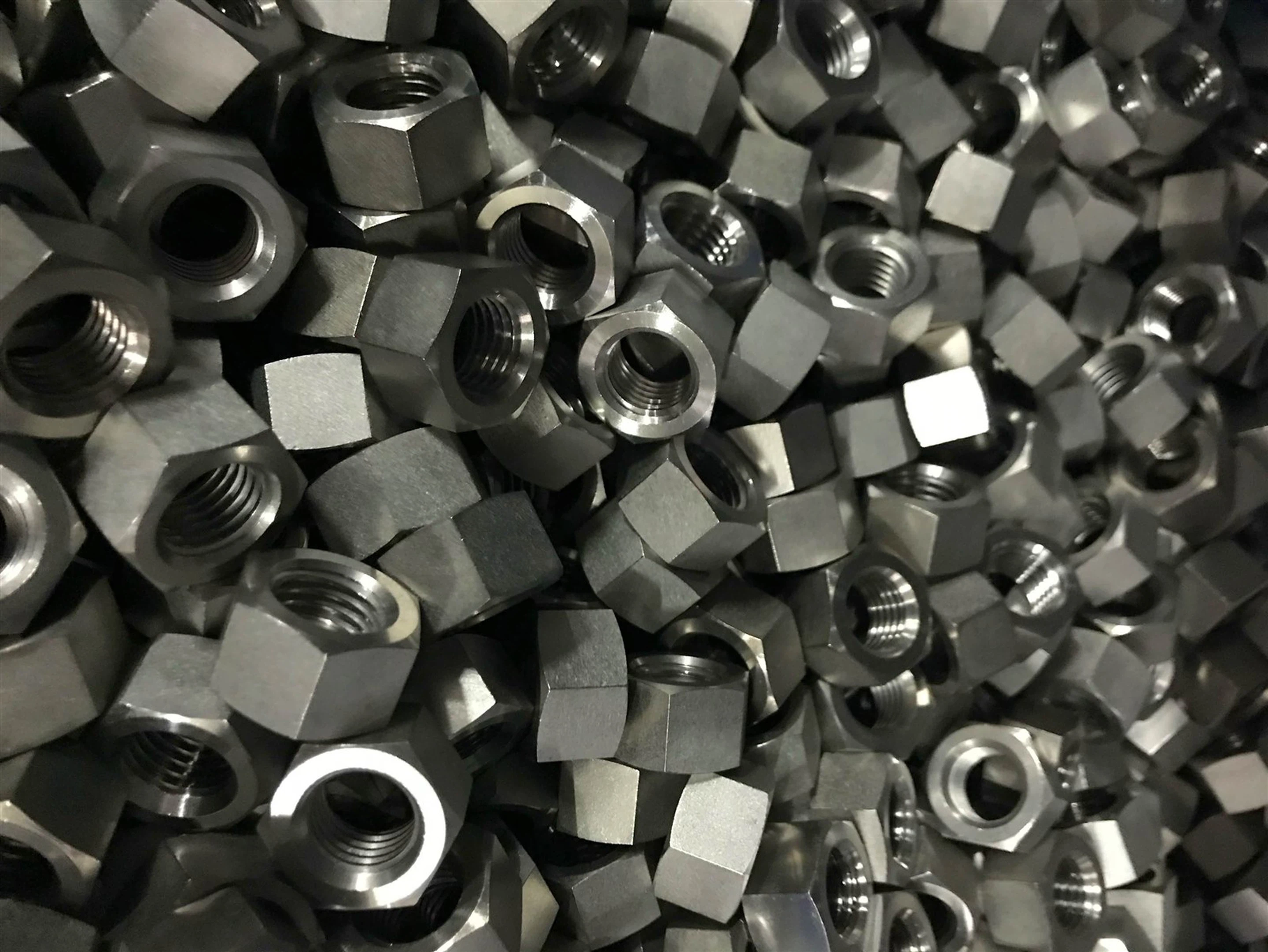
Titanium nuts are internally threaded fastening components manufactured from titanium or titanium alloy materials. These nuts are designed to work together with titanium bolts, titanium threaded rods, and titanium studs to create lightweight and corrosion-resistant fastening systems.
Titanium nuts are particularly suitable for environments where stainless steel fasteners may suffer from rust, pitting corrosion, or galvanic corrosion. Due to titanium's natural oxide film, titanium fasteners maintain excellent resistance against seawater, chloride ions, oxidizing acids, and industrial chemicals.
Grade 2 titanium nuts are commonly used in marine engineering and chemical equipment because of their superior corrosion resistance and excellent ductility. Grade 5 titanium nuts offer much higher mechanical strength and are widely used in aerospace structures, racing motorcycles, bicycles, and high-load industrial applications where lightweight fastening systems are required.
Compared with carbon steel fasteners, titanium nuts can reduce fastening system weight by approximately 40–45% while maintaining excellent mechanical performance and fatigue resistance. (tsmfasteners.com)
Types of Titanium Nuts
TSM Technology manufactures multiple types of titanium nuts for industrial fastening applications.
Titanium Hex Nuts
Titanium hex nuts are the most commonly used standard fastening nuts and are widely applied in aerospace, chemical processing, and marine equipment.
01
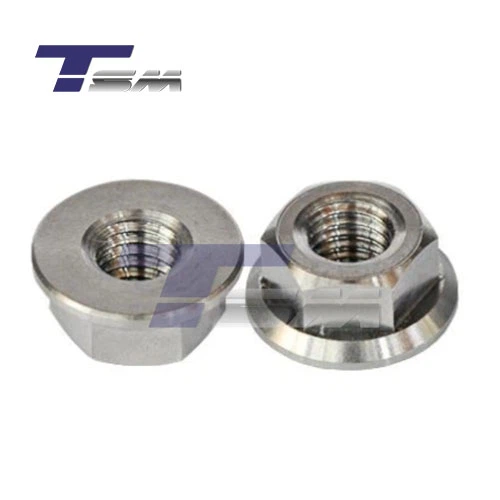
Titanium Flange Nuts
Titanium flange nuts feature an integrated flange that distributes tightening load over a larger surface area. These nuts are commonly used in vibration environments such as racing motorcycles, automotive systems, and industrial machinery.
02
Titanium Lock Nuts
Titanium lock nuts are designed to resist loosening under vibration and dynamic loading conditions. They are commonly used in aerospace structures and high-performance mechanical systems.
03
Titanium Cap Nuts
Titanium cap nuts provide additional thread protection and decorative appearance while preventing contamination and mechanical damage.
04
Titanium Castle Nuts
Titanium castle nuts are typically used together with cotter pins in critical fastening systems requiring additional locking security.
05

Titanium Nut Specifications
| Item | Details |
|---|---|
| Product Name | Titanium Nut |
| Standards | DIN934, DIN6923, DIN1587, ISO4032 |
| Material Grades | Gr1, Gr2, Gr5, Gr7, Gr23 |
| Material Type | Pure Titanium / Titanium Alloy |
| Size Range | M3 – M64 |
| Nut Types | Hex Nut, Flange Nut, Lock Nut, Cap Nut |
| Thread Type | Coarse Thread / Fine Thread |
| Surface Finish | Polished, Anodized, PVD, Sandblasted |
| Manufacturing Process | Cold Forging, CNC Machining, Precision Tapping |
| Certification | EN10204 3.1 / ISO / SGS |
| OEM & ODM | Available |
| MOQ | Negotiable |
TSM Technology provides customized titanium nuts per customer drawings, including special dimensions, thread tolerances, and industrial fastening requirements.
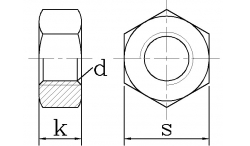
DIN934
|
nominal diameter(D) |
screw pitch(P) |
K |
S |
||
|
max |
min |
max |
min |
||
|
M3 |
0.5 |
2.4 |
2.15 |
5.5 |
5.32 |
|
M3.5 |
0.6 |
2.8 |
2.55 |
6 |
5.82 |
|
M4 |
0.7 |
3.2 |
2.9 |
7 |
6.78 |
|
M5 |
0.8 |
4 |
3.7 |
8 |
7.78 |
|
M6 |
1 |
5 |
4.7 |
10 |
9.78 |
|
M7 |
1 |
5.5 |
5.2 |
11 |
10.73 |
|
M8 |
1/1.25 |
6.5 |
6.14 |
13 |
12.73 |
|
M10 |
1/1.25/1.5 |
8 |
7.64 |
17 |
16.73 |
|
M12 |
1.25/1.5/1.75 |
10 |
9.64 |
19 |
18.67 |
|
M14 |
1.5/2 |
11 |
10.3 |
22 |
21.67 |
|
M16 |
1.5/2 |
13 |
12.3 |
24 |
23.67 |
|
M18 |
1.5/2/2.5 |
15 |
14.3 |
29 |
26.16 |
|
M20 |
1.5/2/2.5 |
16 |
14.9 |
30 |
29.16 |
|
M22 |
1.5/2/2.5 |
18 |
16.9 |
32 |
31 |
|
M24 |
2/3 |
19 |
17.7 |
36 |
39 |
Chemical Composition of Grade 5 Titanium Nuts
| Element | Content (%) |
|---|---|
| Aluminum (Al) | 5.5 – 6.75 |
| Vanadium (V) | 3.5 – 4.5 |
| Iron (Fe) | ≤ 0.40 |
| Oxygen (O) | ≤ 0.20 |
| Carbon (C) | ≤ 0.08 |
| Nitrogen (N) | ≤ 0.05 |
| Hydrogen (H) | ≤ 0.015 |
| Titanium (Ti) | Balance |
Grade 5 titanium alloy, also known as Ti-6Al-4V, is the most commonly used titanium alloy for high-strength fasteners because it provides excellent tensile strength, fatigue resistance, and high-temperature performance.
Mechanical Properties of Titanium Nuts
| Property | Grade 2 Titanium | Grade 5 Titanium |
|---|---|---|
| Tensile Strength | ≥ 345 MPa | ≥ 895 MPa |
| Yield Strength | ≥ 275 MPa | ≥ 828 MPa |
| Elongation | ≥ 20% | ≥ 10% |
| Density | 4.51 g/cm³ | 4.43 g/cm³ |
| Corrosion Resistance | Excellent | Excellent |
Grade 5 titanium nuts provide significantly higher strength compared with commercially pure titanium while maintaining excellent corrosion resistance and lightweight performance.
Titanium Nut vs Stainless Steel Nut
One of the most important advantages of titanium nuts is their excellent corrosion resistance in chloride and seawater environments. Stainless steel nuts may suffer from pitting corrosion, crevice corrosion, and rust formation in marine applications, while titanium maintains excellent long-term stability due to its protective oxide layer.
| Comparison | Titanium Nut | Stainless Steel Nut |
|---|---|---|
| Weight | Lightweight | Heavy |
| Corrosion Resistance | Excellent | Moderate |
| Seawater Resistance | Excellent | Limited |
| Strength-to-Weight Ratio | Excellent | Moderate |
| Magnetic Property | Non-Magnetic | Slightly Magnetic |
| Fatigue Resistance | Excellent | Moderate |
| Cost | Higher | Lower |
Titanium nuts are widely used in offshore engineering, racing vehicles, aerospace systems, and chemical processing equipment where performance and reliability are more important than material cost.
Why Titanium Nuts Gall and How to Prevent Thread Seizure
Galling is one of the most common engineering challenges associated with titanium fasteners. Titanium has a strong tendency toward adhesive wear during tightening, especially when titanium nuts and titanium bolts are assembled without lubrication.
During installation, friction and pressure may cause the thread surfaces to seize, resulting in thread damage or locking failure. This phenomenon is commonly referred to as titanium galling or thread seizure.
At TSM Technology, we recommend several methods to reduce galling risks in titanium fastening systems:
| Anti-Galling Method | Description |
|---|---|
| Anti-Seize Lubricant | Reduces friction during tightening |
| Rolled Threads | Improves surface hardness and fatigue resistance |
| Controlled Tightening Speed | Prevents excessive friction heat |
| Surface Coatings | PVD and anodizing reduce adhesive wear |
| Proper Torque Control | Prevents over-tightening |
Rolled threads are particularly important because thread rolling compresses the thread surface and improves fatigue strength compared with traditional machined threads. This process also reduces microscopic surface defects that may increase friction during installation.
Why Choose TSM Technology?
Founded in 2011, TSM Technology has become a leading manufacturer and supplier of titanium products, nickel alloy products, and industrial fasteners in China.
Our production base covers more than 60,000 square meters and includes advanced vacuum consumable arc furnaces, forging presses, CNC machining centers, and professional inspection laboratories.
Factory Strength
| Capability | Details |
|---|---|
| Founded | 2011 |
| Production Area | 60,000+ m² |
| Main Products | Titanium, Nickel Alloy, Fasteners |
| Machines | 70+ |
| Annual Capacity | 1200 Tons |
| Export Markets | Europe, USA, Middle East, Asia |
| OEM & ODM | Supported |
| Quality Certifications | ISO / SGS |
TSM Technology supplies titanium fasteners to customers in aerospace, chemical processing, marine engineering, automotive racing, and industrial manufacturing industries worldwide.


Manufacturing Process of Titanium Nuts
Manufacturing titanium nuts requires advanced processing technology because titanium alloys are difficult to machine and sensitive to cutting temperatures.
At TSM Technology, titanium nuts are produced using precision cold forging, CNC machining, tapping, and surface finishing equipment to ensure excellent dimensional accuracy and thread quality.
Titanium Nut Production Process
| Production Stage | Description |
|---|---|
| Raw Material Inspection | Titanium bar chemical verification |
| Cold Forging | Nut blank formation |
| CNC Machining | Precision dimensional machining |
| Precision Tapping | Internal thread machining |
| Heat Treatment | Mechanical property optimization |
| Surface Finishing | Polishing, anodizing, sandblasting |
| Inspection & Testing | Dimensional and mechanical inspection |
| Cleaning & Packaging | Export-standard packaging |
Our manufacturing process complies with DIN, ISO, ASTM, and international industrial fastening standards.
Titanium Nut Inspection & Quality Control
Each batch of titanium nuts manufactured by TSM Technology undergoes strict inspection procedures before shipment to ensure stable quality and dimensional accuracy.
Inspection Methods
| Inspection Item | Testing Method |
|---|---|
| Chemical Analysis | OES / XRF / ICP |
| Thread Inspection | Go/No-Go Gauge |
| PMI Testing | Positive Material Identification |
| Hardness Testing | Rockwell Hardness |
| Tensile Testing | Universal Testing Machine |
| Surface Inspection | Visual & Dimensional |
| Metallographic Examination | Grain Structure Analysis |
| Corrosion Testing | Salt Spray Test |
All products can be supplied with EN10204 3.1 material certificates, SGS reports, and third-party inspection documentation according to customer requirements.

Applications of Titanium Nuts
Titanium nuts are widely used in industries requiring corrosion resistance, lightweight performance, and high mechanical reliability.
Aerospace Industry
Aerospace manufacturers use Grade 5 titanium nuts in aircraft structural assemblies, engine systems, and landing gear components because titanium provides excellent fatigue resistance and lightweight performance.
Marine Engineering
Titanium nuts are highly resistant to seawater corrosion and chloride attack, making them ideal for offshore platforms, shipbuilding, desalination systems, and marine piping equipment.
Racing Motorcycles & Bicycles
Titanium fasteners are widely used in high-performance motorcycles and bicycles because reducing fastener weight improves acceleration, handling response, and vibration performance.
Chemical Processing
Titanium nuts are used in reactors, heat exchangers, pressure vessels, and acid-processing equipment because titanium resists oxidizing acids and aggressive chemical media.
Medical Equipment
Titanium is biocompatible and non-toxic, making titanium fastening systems suitable for medical implants and surgical equipment.
Packaging & Shipping
All titanium nuts are packed according to export standards to prevent thread damage and surface contamination during transportation.


FAQ
Q: What Is The Strongest Titanium Nut Material?
A: Grade 5 titanium (Ti-6Al-4V) is the most commonly used high-strength titanium alloy for industrial fastening systems.
Q: Are Titanium Nuts Corrosion Resistant?
A: Yes. Titanium nuts exhibit excellent corrosion resistance against seawater, chloride ions, oxidizing acids, and industrial chemicals.
Q: Why Do Titanium Nuts Gall?
A: Titanium fasteners may gall because titanium surfaces tend to adhere under friction during tightening. Proper lubrication and controlled torque can significantly reduce galling risks.
Q: Can Titanium Nuts Be Anodized?
A: Yes. Titanium nuts can be anodized into multiple colors including blue, gold, purple, black, and rainbow finishes for decorative and anti-galling purposes.
Q: What Standards Do Your Titanium Nuts Comply With?
A: Our titanium nuts comply with DIN, ISO, ASTM, JIS, and GB fastening standards.
Q: Can You Manufacture Custom Titanium Nuts?
A: Yes. TSM Technology supports OEM and ODM production according to customer drawings and technical requirements.
Contact Us
If you are looking for a reliable titanium nut manufacturer and supplier in China, TSM Technology can provide high-quality titanium fastening solutions with competitive prices, stable quality, and worldwide shipping support.
Email: info@tsm-titanium.com
Hot Tags: Titanium Nut, China, manufacturers, suppliers, factory, wholesale, price, stock