



For titanium pipe buyers, the standard is not a paperwork detail. It determines whether the product is specified as seamless pipe for general corrosion-resisting service or as tubing for condensers, evaporators, and heat exchangers. TSM Technology supplies titanium tubes and pipes for industrial projects, with Grade 2 Titanium Pipe and Grade 2 Titanium Tubes available for quotation, documentation review, and custom production support.
Which standard should you specify?
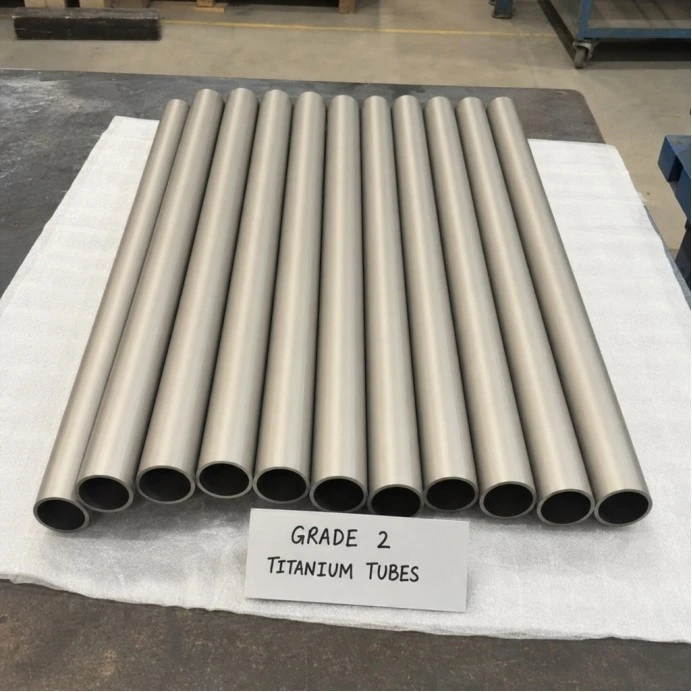
Specify ASTM B861 Titanium Pipe when your project calls for seamless titanium or titanium alloy pipe for general corrosion-resisting or elevated-temperature service. Specify ASTM B338 when the purchase requirement is titanium tube for surface condensers, evaporators, or heat exchangers, including seamless or welded tube forms. ASTM describes B861 as a seamless pipe specification covering 34 titanium and titanium alloy grades, while B338 is written for seamless and welded titanium alloy tubes used in condenser and heat exchanger equipment.
That is the practical answer to ASTM B861 vs. ASTM B338 Titanium Pipe: What's the Difference? B861 is pipe-focused and seamless-only. B338 is tube-focused and tied closely to heat transfer equipment, where diameter, wall thickness, surface condition, testing, and documentation must match the exchanger or condenser design.
Product options from TSM Technology
TSM Technology offers Grade 2 titanium tube and pipe products for buyers who need corrosion resistance, formability, traceability, and project-ready documentation. The company's Grade 2 Titanium Tubes product information lists TSM Technology as the brand, with Grade 2 commercially pure titanium, ASTM B338, ASME SB338, and AMS standards, and production techniques including seamless processing, cold rolling, hot rolling, annealing, and pickling.
Available options are designed for procurement teams, heat exchanger manufacturers, water treatment projects, chemical plants, and marine systems that need a dependable titanium supply route. Instead of forcing one stock format into every application, TSM can discuss drawings, application conditions, surface requirements, inspection needs, and certification requests before quotation.
Key product information includes:
- Material focus: Grade 2 commercially pure titanium.
- Standards listed: ASTM B338, ASME SB338, and AMS for the Grade 2 tube product.
- Size capability: OD 3 mm to 219 mm with customized sizes available on the listed product page.
- Thickness range: 0.1 mm to 100 mm as stated in the product summary.
- Processing routes: Seamless, cold rolling, hot rolling, annealing, and pickling.
- Certification support: MTC and SGS test reports available, with EN10204 3.1 or 3.2 certificates available as required.
- Typical delivery: Usually about 10 to 25 days, depending on order requirements.
B861 pipe and B338 tube serve different buying needs
The word "pipe" is often used loosely in purchasing conversations, but pipe material standards separate end use and product form. ASTM B861 is the stronger fit when the buyer is sourcing seamless titanium pipe for a piping system, corrosion-resistant line, or elevated-temperature service condition. B338 is the stronger fit when the buyer is sourcing titanium tubes for heat transfer equipment, especially condensers, evaporators, and heat exchangers.
This distinction matters because a heat exchanger tube order is usually driven by tube geometry, clean surface, tube sheet fit-up, and testing expectations. A seamless pipe order is more often driven by pressure line design, corrosion environment, grade selection, and pipe specification compliance. Both may use titanium alloy grades, but the correct standard helps avoid delays during engineering approval, inspection, and final documentation review.
Use this selection guide during RFQ preparation:
Choose ASTM B861 Titanium Pipe for seamless pipe requirements, corrosion-resisting piping, and general service conditions where the project specification names B861.
Choose ASTM B338 titanium tube for heat exchangers, condensers, evaporators, desalination units, and equipment where tube performance and inspection are central.
Choose Grade 2 Titanium Pipe or tubes when the design calls for commercially pure titanium with a practical balance of corrosion resistance, strength, and formability.
Confirm whether your drawing or bill of materials says pipe, tube, seamless, welded, ASTM B861, ASTM B338, ASME SB338, or another project standard.
Grade 2 titanium for corrosion-resisting systems
Grade 2 is one of the most widely specified commercially pure titanium grades because it offers a useful combination of strength, ductility, and corrosion resistance. TSM's Grade 2 product page positions the material for demanding industrial, marine, and chemical applications, including seawater, chlorides, and corrosive media.
For heat exchanger and condenser buyers, this means Grade 2 Titanium Tubes can be a practical option when stainless steel or copper alloy service life is limited by aggressive cooling water or chloride exposure. For process piping buyers, Grade 2 Titanium Pipe can help reduce corrosion-related maintenance risk when the service environment supports titanium selection. Final suitability should always be checked against the fluid, temperature, pressure, design code, and engineering specification.
TSM lists product applications including:
- Heat exchangers and condensers.
- Chemical processing pipelines and reactors.
- Desalination and marine systems.
- Power generation condensers and cooling systems.
- Aerospace and automotive applications where lightweight strength is valued.
- Medical and pharmaceutical equipment.
- Industrial equipment and architecture.
Specifications and documentation support
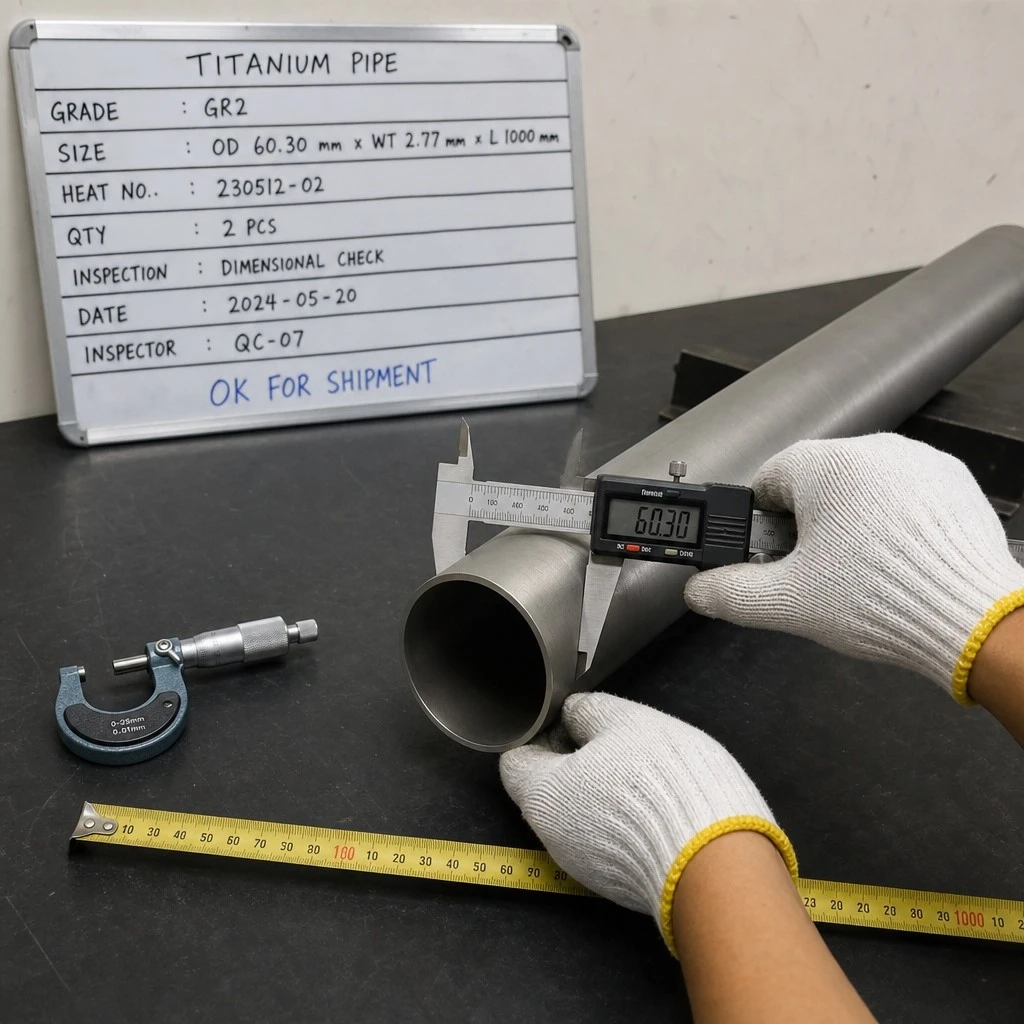
A titanium pipe or tube order is only as useful as the documentation behind it. TSM's Grade 2 product information lists chemical composition limits for Grade 2 titanium, mechanical properties including tensile strength, yield strength, and elongation, and testing methods such as water pressure testing, ultrasonic testing, X-ray testing, eddy current testing, flaring, and flattening tests.
For buyers comparing titanium pipe grades and titanium alloy grades, this documentation helps engineering and quality teams confirm that the supplied material matches the intended service. It also reduces back-and-forth during receiving inspection, third-party inspection, or client handover.
Typical order details to share with TSM Technology include:
Required standard, such as ASTM B861, ASTM B338, ASME SB338, AMS, or a customer-specific requirement.
Grade, such as Grade 2, Grade 7, Grade 9, Grade 12, Grade 23, or another titanium grade.
Outside diameter, wall thickness, length, quantity, and tolerance requirements.
Tube or pipe type, including seamless, welded, round, square, or coiling where applicable.
Surface finish, such as polishing, pickling, or sandblasting.
Required tests, certificates, third-party inspection, and packaging instructions.
Destination port, shipping method, and delivery schedule.
Manufacturing strength behind the supply
TSM Technology is a China-based titanium manufacturer supplying titanium tubes, plates, bars, forgings, fasteners, flanges, and custom-machined titanium components for aerospace, medical, marine, chemical processing, energy, and other industrial applications. The company states that it has 15+ years of manufacturing experience, a 60,000㎡ production facility, global supply to 70+ countries, ISO 9001 certification, AS9100 certification, and a manufacturing base in Baoji, Shaanxi Province, China.
Its manufacturing capabilities include titanium melting and forging, tube rolling and welding, CNC machining, titanium fastener production, precision cutting, and finishing. TSM Technology also lists inspection capabilities such as ultrasonic testing, eddy current testing, PMI, mechanical testing, chemical composition analysis, dimensional inspection, and surface quality inspection.
For procurement teams, this matters because titanium sourcing is not only about unit price. Reliable supply depends on material traceability, stable processing, inspection control, clear communication, and export-ready packaging. TSM's packaging information also notes that packages are labeled with product specifications, heat numbers, and batch codes for traceability.
Pricing and quotation process
Pricing for ASTM B861 Titanium Pipe or ASTM B338 Grade 2 Titanium Tubes depends on grade, size, wall thickness, quantity, surface finish, testing scope, certificate requirements, and delivery terms. Because these factors change from project to project, TSM provides quotations based on your actual specification rather than a generic public price.
To receive a focused quote, send the drawing, standard, grade, dimensions, quantity, inspection requirements, and delivery location. If you are unsure whether your project should use B861 or B338, include the equipment type and service environment so the team can help clarify the request before production review.
Request Grade 2 titanium pipe or tube support
If your team is comparing pipe material standards, selecting titanium pipe grades, or preparing a purchase specification for a heat exchanger, condenser, desalination plant, chemical line, or marine system, TSM Technology can help review the requirement and quote the matching product format. The right standard protects your project from mismatched material, incomplete inspection, and avoidable approval delays.
Email: info@tsm-titanium.com
We are always at your service when you need
TSM Technology, one of the leading Asian suppliers of high-performance titanium-based materials in China, specializes in factory-made products such as titanium tubes, welded titanium pipes and fittings, titanium flanges, titanium fasteners and nuts, titanium plates and rods, among others.
They are widely used in the construction of heat exchangers, condensers, power plants, seawater desalination facilities, oil and gas pipelines, chlor-alkali plants, and other related fields.
100% Eddy Current Testing for Titanium Tubes | Non-Destructive Inspection
Number of Employees
years experience
Modern factory
Global Supply


