



ASTM B861 Titanium Pipe is seamless titanium or titanium-alloy pipe manufactured to an ASTM standard for corrosion-resistant and elevated-temperature service. In practical terms, it tells buyers, engineers, and fabricators what grade, chemistry, mechanical properties, testing, condition, and documentation a titanium pipe order should meet. Understanding ASTM B861 Titanium Pipe: Specifications, Dimensions & Grades helps prevent costly mismatches between the drawing, purchase order, and delivered material.
TSM Technology supplies titanium mill products and custom components from Baoji, Shaanxi Province, China, including titanium tubes, plates, bars, forgings, flanges, fasteners, and machined parts for industrial, marine, medical, chemical, energy, and aerospace applications. The company states that it operates a 60,000㎡ facility, supports full material traceability, and provides inspection documentation such as MTRs, EN10204 3.1 certification, PMI reports, and NDT reports.
What is ASTM B861 Titanium Pipe?
ASTM B861 is the Standard Specification for Titanium and Titanium Alloy Seamless Pipe. It covers seamless titanium pipe across multiple grades for general corrosion resistance and elevated-temperature service, including commercially pure grades and titanium alloys. ASTM's current B861 listing describes requirements for 34 grades and includes chemical composition, mechanical properties, and test requirements such as tension, flattening, bend, and hydrostatic testing.
The key word is seamless. ASTM B861 applies to pipe made without a welded seam, which is often preferred where pressure integrity, corrosion performance, or critical service conditions matter. It should not be confused with every titanium tube specification; for example, condenser and heat exchanger tubing may be ordered to ASTM B338 depending on the application and drawing requirements.
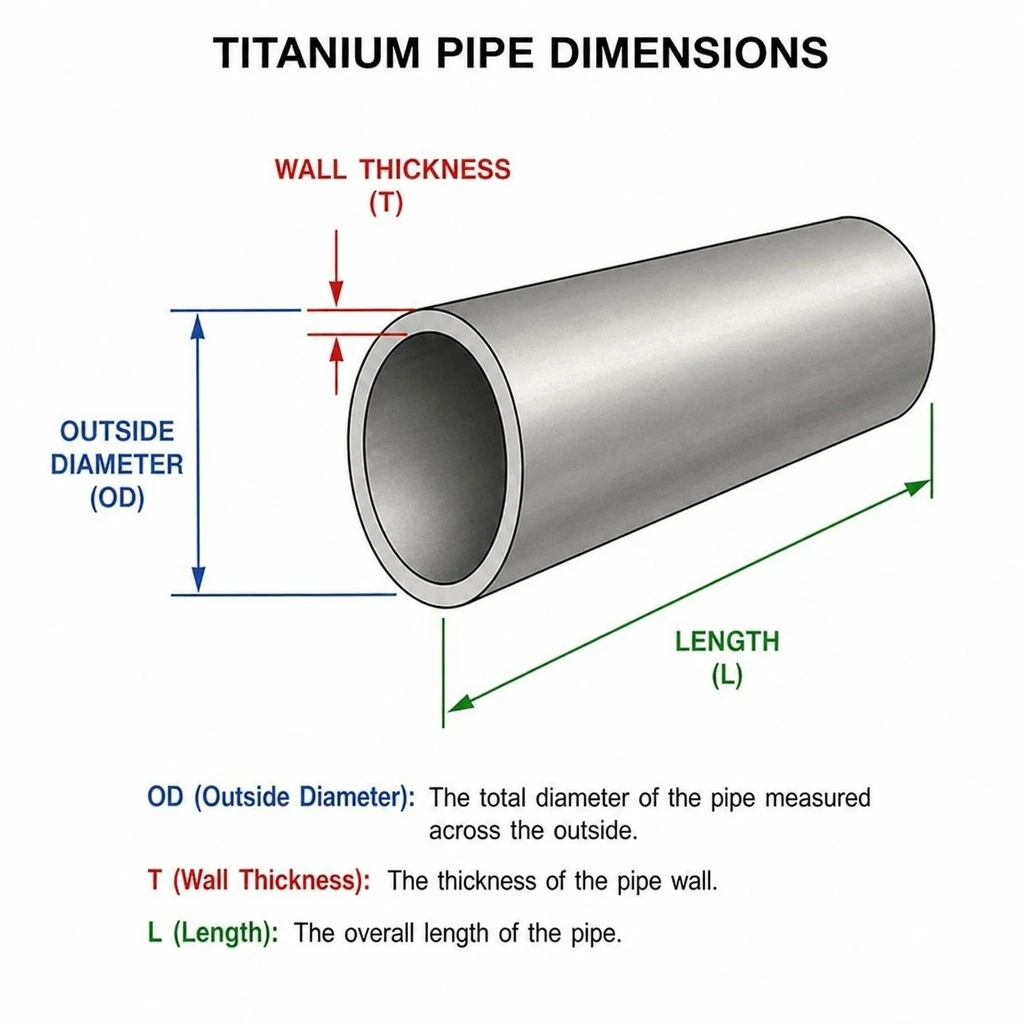
Defining characteristics of ASTM B861 Titanium Pipe include:
- Seamless construction: produced without a longitudinal weld seam.
- Specified grade: the purchase order must identify the titanium grade, such as Grade 2 Titanium Pipe or alloy grades.
- Controlled chemistry: grade limits oxygen, nitrogen, carbon, hydrogen, iron, and alloying additions.
- Mechanical requirements: tensile strength, yield strength, and elongation must meet the standard's grade-specific values.
- Verification testing: required tests may include mechanical and pressure-related inspections.
- Documentation: buyers usually request mill test reports and traceability to confirm compliance.
How do ASTM B861 specifications work?
ASTM B861 specifications work by connecting the intended service environment to a defined material grade, manufacturing route, condition, dimensions, and inspection plan. A buyer does not simply ask for "titanium pipe"; the order should state ASTM B861, the grade, size, wall thickness or schedule, length, quantity, finish, certification requirements, and any supplementary inspection needs.
For example, a chemical processing pipeline may prioritize corrosion resistance and weldability, while a high-temperature industrial line may require a grade and condition with different strength behavior. ASTM B861 gives the framework, but the engineering drawing and purchase order complete the requirement. That is why clear titanium pipe specifications are essential before production begins.
A practical ASTM B861 order checklist should include:
Standard and revision: ASTM B861, with the required year or project-approved version if specified.
Grade: Grade 2, Grade 5, Grade 7, Grade 12, or another approved grade.
Dimensions: outside diameter, wall thickness or pipe schedule, and length.
Manufacturing condition: annealed, stress-relieved, aged, or other permitted condition where applicable.
Testing: hydrostatic, ultrasonic, eddy current, flattening, bend, tensile, or project-specific tests.
Surface condition: pickled, polished, blasted, or as agreed.
Certification: MTR, heat number traceability, EN10204 3.1 or 3.2, SGS, or third-party inspection if required.
Packing and logistics: labeling, wooden cases, port, and shipping method.
Dimensions define fit, flow, and fabrication
Titanium pipe dimensions matter because they affect pressure rating, flow capacity, welding preparation, installation clearance, and compatibility with fittings or flanges. The most important dimensions are outside diameter, wall thickness, inside diameter, and length. Even a small mismatch can affect fit-up, especially in heat exchanger connections, process piping, and prefabricated assemblies.
ASTM B861 identifies the material standard, but project drawings usually define the actual dimensions. Buyers commonly specify pipe by nominal pipe size and schedule, or by exact OD and wall thickness. When custom production is involved, tolerances, straightness, end condition, and surface finish should be confirmed before manufacturing.
TSM's Grade 2 Titanium Tubes product information lists Grade 2 commercially pure titanium, techniques including seamless processing, cold rolling, hot rolling, annealing, and pickling, and customized sizes. The page lists OD 3 mm–219 mm and thickness 0.1 mm–100 mm in its summary, while the product description also notes diameter 6.0 mm–114.3 mm with maximum length up to 18000 mm for the listed Grade 2 tube and pipe product range.
Common titanium pipe grades
Titanium pipe grades are selected by balancing corrosion resistance, strength, formability, temperature exposure, and cost. Commercially pure titanium is often chosen for corrosion resistance and workability, while alloy grades are selected when higher strength or special service performance is required.
Common grade considerations include:
Grade 1: very ductile commercially pure titanium, often used where formability is critical.
Grade 2: the most widely used commercially pure titanium grade because it offers a practical balance of strength, ductility, weldability, and corrosion resistance.
Grade 2H: similar to Grade 2 but with higher minimum tensile strength under ASTM B861.
Grade 5: Ti-6Al-4V alloy, chosen when higher strength-to-weight performance is required.
Grade 7: palladium-bearing commercially pure titanium for enhanced corrosion resistance in selected reducing environments.
Grade 9: Ti-3Al-2.5V alloy, often considered where moderate strength and good fabricability are needed.
Grade 12: titanium alloyed for improved corrosion and heat-resisting performance in certain industrial environments.
Grade 2 Titanium Pipe is a frequent choice for chemical processing, marine systems, desalination, condensers, water treatment, evaporators, and pipeline applications because it combines corrosion resistance with practical fabrication behavior. TSM's product page describes Grade 2 Titanium Tubes as suitable for heat exchangers, condensers, water treatment, desalination, evaporators, pipelines, marine systems, power generation, aerospace, automotive, medical, pharmaceutical, industrial equipment, and architecture.
How is Grade 2 Titanium Pipe different from Grade 2 Titanium Tubes?
Grade 2 Titanium Pipe and Grade 2 Titanium Tubes can use the same base material, but they are often specified under different standards and dimensional systems. Pipe is commonly associated with pressure piping and nominal pipe sizes, while tube is often specified by exact outside diameter and wall thickness for heat exchangers, condensers, instruments, and fabricated equipment.
This distinction matters during procurement. A product page or supplier inventory may use "tube" and "pipe" together, but the final purchase order should identify the controlling standard. TSM's Grade 2 page references ASTM B338, ASME SB338, and AMS for its listed tube product, so buyers needing ASTM B861 seamless pipe should explicitly request ASTM B861 compliance, grade, dimensions, and documentation before ordering.
Practical applications and common misunderstandings
ASTM B861 Titanium Pipe is typically considered where corrosion, weight, cleanliness, or long-term reliability matter more than lowest initial material cost. It is especially useful in environments where stainless steels may face chloride attack or where equipment life is affected by aggressive media.
Practical use cases include:
Chemical process piping carrying corrosive fluids.
Marine and offshore pipework exposed to seawater or chloride-rich conditions.
Desalination and water treatment systems.
Heat exchanger and condenser connections where titanium compatibility is required.
Power generation cooling and auxiliary systems.
High-performance industrial equipment where strength-to-weight ratio matters.
Common misconceptions to avoid:
"All titanium pipe is ASTM B861." It is not; welded pipe, tube, plate, bar, and fittings use different standards.
"Grade 2 fits every application." Grade 2 is versatile, but service chemistry, temperature, pressure, and design code still control selection.
"Dimensions are automatic." ASTM B861 does not replace the need for exact OD, wall thickness, schedule, and length.
"Certification is optional for critical projects." In regulated or high-risk applications, traceability and test reports are often essential.
Choosing a supplier for ASTM B861 Titanium Pipe
A reliable supplier should help translate the engineering requirement into a clear, manufacturable order. That support includes grade confirmation, dimension review, inspection planning, traceability, packaging, and export documentation. TSM Technology states that its inspection capabilities include ultrasonic testing, eddy current testing, PMI, mechanical testing, chemical composition analysis, dimensional inspection, and surface quality inspection, with customer-designated third-party inspections supported when required.
For ASTM B861 Titanium Pipe, the safest next step is to send the drawing, grade, quantity, dimensions, required certificates, and service conditions for review. TSM Technology can support titanium material selection and quotation requests through its team.
Email: info@tsm-titanium.com
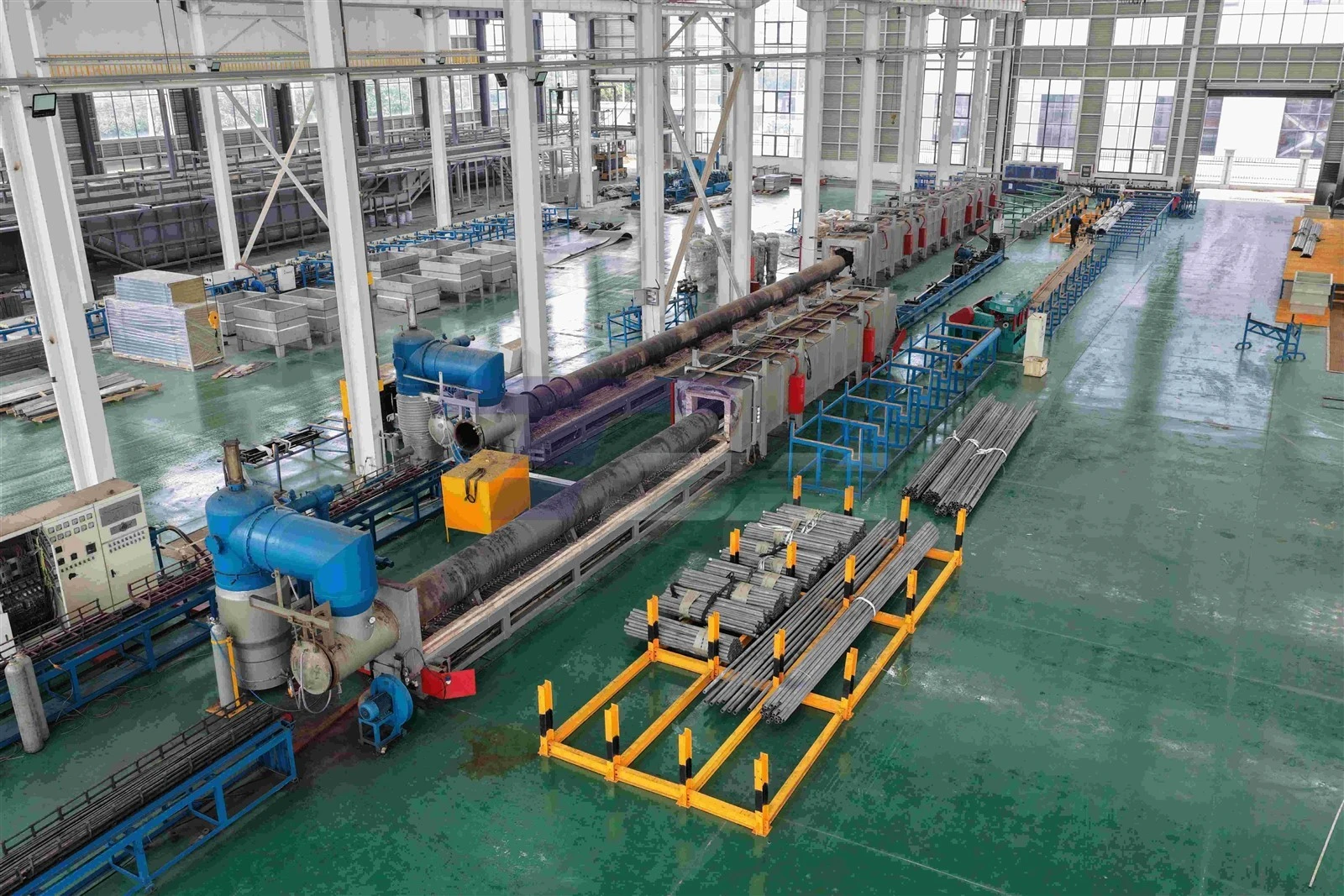
We are always at your service when you need
TSM Technology, one of the leading Asian suppliers of high-performance titanium-based materials in China, specializes in factory-made products such as titanium tubes, welded titanium pipes and fittings, titanium flanges, titanium fasteners and nuts, titanium plates and rods, among others.
They are widely used in the construction of heat exchangers, condensers, power plants, seawater desalination facilities, oil and gas pipelines, chlor-alkali plants, and other related fields.
Number of Employees
years experience
Modern factory
Global Supply


