Chemical Composition and Microstructure
Ti-6Al-4V's exceptional properties stem from its precise chemical composition and unique microstructure:
Aluminum (Al): 5.5% - 6.75%. Aluminum acts as an alpha stabilizer, enhancing the alloy's strength through solid solution strengthening and improving its high-temperature performance.
Vanadium (V): 3.5% - 4.5%. Vanadium serves as a beta stabilizer, promoting the formation of the beta phase at higher temperatures. This enhances the alloy's ductility and formability.
Titanium (Ti): Balance. The titanium base provides the fundamental matrix for the alloy, contributing to its overall corrosion resistance and lightweight nature.
Interstitial Elements (O, Fe, C, N, H): These elements are strictly controlled in trace amounts as they significantly impact mechanical properties and embrittlement. For instance, oxygen (O) content is often carefully managed, sometimes in the range of 0.10%–0.16%, to influence strength.
The microstructure of Ti-6Al-4V is a dual-phase (α+β) structure. This means it contains a mixture of the hexagonal close-packed (HCP) alpha phase and the body-centered cubic (BCC) beta phase. The specific morphology and distribution of these phases-whether lamellar, equiaxed, or bimodal-depend heavily on the thermomechanical processing (e.g., forging, rolling) and heat treatment (e.g., annealing, solution treating, and aging) the alloy undergoes.
Physical Properties
Ti-6Al-4V exhibits a combination of physical properties that make it suitable for advanced engineering applications.
| Property | Value | Unit/Condition |
|---|---|---|
| Density | 4.43 - 4.51 | g/cm³ |
| Melting Temperature Range | 1604 - 1650 | °C |
| Thermal Conductivity | 6.6 - 7.9 (at 20°C) | W/(m·°C) |
| Specific Heat Capacity | 523 - 611 (at 20°C) | J/(kg·°C) |
| Coefficient of Thermal Expansion | 9.1×10⁻⁶ | °C⁻¹ (20-100°C) |
| Elastic Modulus | 110 - 113 | GPa |
Table 1: Key Physical Properties of Ti-6Al-4V.
Its low density (about 60% that of steel) is a key advantage for weight-critical applications. The alloy's low thermal conductivity and low elastic modulus (approximately half that of steel) present unique considerations during machining and design. The thermal expansion coefficient is relatively low, similar to some grades of stainless steel, which can be beneficial in applications involving temperature fluctuations.
Mechanical Properties
The mechanical properties of Ti-6Al-4V can be tailored through various heat treatments, with the annealed condition being the most common.
High Strength and Ductility: In the annealed condition, Ti-6Al-4V typically exhibits a tensile strength (Rm) of ≥895 MPa and a yield strength (Rp0.2) of ≥828 MPa, with an elongation (A) of ≥10-14%. This combination provides excellent load-bearing capacity and toughness.
Enhanced Strength via Heat Treatment: Through solution treatment and aging processes, the strength can be significantly increased. Tensile strength can reach 1100-1300 MPa and yield strength can reach 1000-1200 MPa, albeit with a potential slight reduction in ductility (elongation of 6-10%).
Excellent Fatigue Performance: The alloy demonstrates good resistance to cyclic loading, which is crucial for components like aircraft landing gear and engine parts that experience repeated stress cycles.
High Fracture Toughness: Ti-6Al-4V effectively resists crack propagation, contributing to its reliability in critical structural applications.
Favorable Elevated Temperature Performance: It retains useful mechanical properties at temperatures up to approximately 400°C (752°F), with reported strength values of 520 MPa after 1000 hours at this temperature, making it suitable for jet engine and airframe components.
Corrosion Resistance
Ti-6Al-4V is renowned for its exceptional corrosion resistance, which arises from a stable, adherent, and protective oxide layer (primarily TiO₂) that forms on its surface upon exposure to air or moisture.
Marine Environments: It demonstrates outstanding resistance to seawater corrosion, with a negligible corrosion rate of 0.0005 mm/a after 30 years of full immersion, reportedly 100 times better than 316L stainless steel.
Industrial Chemicals: The alloy resists attack in a wide range of aggressive media, including 70% nitric acid (HNO₃) at room temperature and wet chlorine gas at 80°C, where it shows no pitting or stress corrosion cracking (SCC).
Biocompatibility: In human body environments, Ti-6Al-4V exhibits excellent biocompatibility and is considered bio-inert. It shows minimal ion release and is approved under standards like FDA/ISO 10993 for medical implants.
Processing and Manufacturing
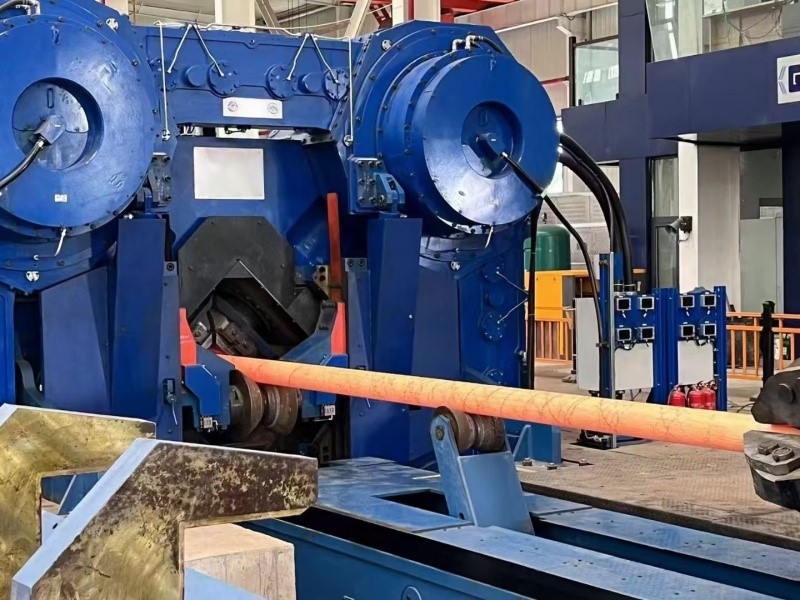
Working with Ti-6Al-4V requires specialized techniques due to its unique properties.
Machining: It is considered a difficult-to-machine material due to its low thermal conductivity (which causes heat to concentrate at the cutting tool edge), high chemical reactivity (which can lead to galling and tool wear), and low elastic modulus (which can cause springback and chatter). Successful machining requires sharp, positive rake angle tools (often carbide), lower cutting speeds, higher feed rates, and generous use of high-pressure coolant.
Forming: While it can be cold formed, its springback is significant. Hot forming operations are often performed in the range of 900-750°C.
Welding: Ti-6Al-4V is readily weldable using various techniques like Gas Tungsten Arc Welding (GTAW/TIG) and Electron Beam Welding (EBW). Proper shielding with inert gas (argon or helium) is critical to prevent atmospheric contamination (oxygen, nitrogen) which embrittles the weld. Filler metals like ERTi-5 are commonly used. Post-weld heat treatment (e.g., aging or stress relieving) is often employed to optimize the properties of the weld zone.
Heat Treatment: Common heat treatments include:
Annealing: Performed at 730-850°C to relieve internal stresses, improve ductility, and stabilize microstructure.
Solution Treating and Aging (STA): Involves heating into the beta phase field (e.g., 955-1010°C), quenching, and then aging at a lower temperature (e.g., 480-650°C) to precipitate fine particles that increase strength.
Applications of Ti-6Al-4V
Ti-6Al-4V's property profile makes it indispensable across multiple high-performance industries.
Aerospace: This is the largest application sector. Uses include engine compressor blades, discs, casings, rocket motor cases, spacecraft pressure vessels, and airframe components (like landing gear and wing boxes). Its high strength-to-weight ratio directly improves fuel efficiency and payload capacity.
Medical and Biomedical: Its biocompatibility, corrosion resistance in body fluids, and strength make it ideal for orthopedic implants (hip and knee replacements, bone screws, plates), dental implants, and surgical instruments. Special grades with controlled interstitial elements like oxygen and iron are developed for enhanced strength in medical wire applications.
Marine and Offshore: Used in deep-sea wellheads, subsea manifolds, propulsion systems, and components for desalination plants due to its exceptional resistance to seawater and sour service environments.
Industrial and Chemical Processing: Applications include reactors, vessels, heat exchangers, and piping systems handling corrosive chemicals like chlorides, nitric acid, and organic chlorides.
Automotive and Racing: Found in high-performance engine components (connecting rods, valves), exhaust systems, and turbocharger wheels where reducing rotating mass is critical for performance.
Consumer Goods: Used in high-end sports equipment like bicycle frames, golf club heads, and mountaineering equipment where lightweight and strength are premium features.
Ti-6Al-4V Pricing and Market Considerations
The price per kilogram for Ti-6Al-4V can vary significantly based on several factors:
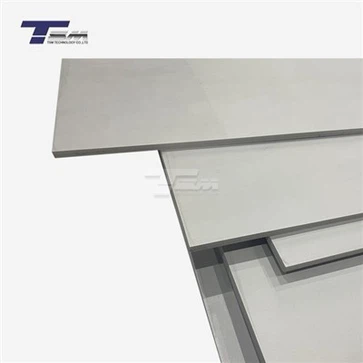
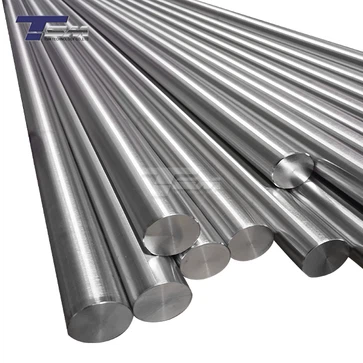
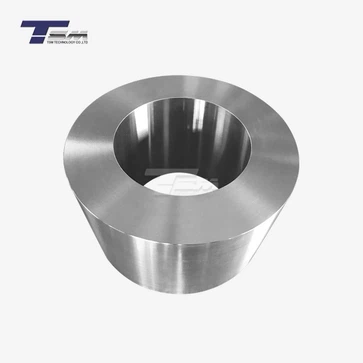
Product Form: Bar, wire, sheet, plate, and billet have different processing costs.
Quantity: Larger orders typically command a lower price per unit weight.
Mill Test Reports (MTRs) / Certification: Aerospace (e.g., AMS 4911) or medical-grade material with stringent certification adds cost.
Market Dynamics: Prices for titanium sponge (raw material) and overall demand, particularly from the aerospace sector, fluctuate.
Recent indicative prices from suppliers have been noted around ¥200-326 per kilogram. It's crucial to consult directly with suppliers like TSM Technology Co., Ltd for precise and up-to-date quotations based on your specific requirements.
Standards and Specifications
Standards and Specifications
Ti-6Al-4V is governed by numerous international standards to ensure quality and performance consistency across different applications and product forms. Key specifications include:
AMS 4911: This Aerospace Material Specification covers the requirements for titanium alloy sheet, strip, and plate (6Al-4V, annealed). It dictates strict chemical and mechanical property limits.
ASTM B348: Standard Specification for Titanium and Titanium Alloy Bars and Billets.
ASTM B265: Standard Specification for Titanium and Titanium Alloy Strip, Sheet, and Plate.
ASTM F136: Standard Specification for Wrought Titanium-6Aluminum-4Vanadium ELI (Extra Low Interstitial) Alloy for surgical implant applications.
ISO 5832-3: Implants for surgery - Wrought titanium 6-aluminum 4-vanadium alloy.
View our titanium product series
Why Choose TSM Technology Co., Ltd for Your Ti-6Al-4V Needs?
At TSM Technology Co., Ltd, we understand the critical nature of the components made from Ti-6Al-4V. We are more than just a supplier; we are your technical partner.
Expertise and Precision: Our deep knowledge of the material's processing challenges ensures your parts are manufactured to the highest standards of accuracy and quality.
Quality Assurance: We source material from reputable mills and provide full traceability and certification (e.g., to AMS, ASTM standards) to meet the demands of aerospace, medical, and other regulated industries.
Advanced Manufacturing Capabilities: Our state-of-the-art machining, forming, and welding facilities are equipped to handle the unique challenges of machining Ti-6Al-4V efficiently and effectively.
Collaborative Approach: We work closely with our clients from design to finished product, offering technical support to optimize designs for manufacturability and performance.
Conclusion
Ti-6Al-4V (Grade 5 titanium) stands as a testament to materials engineering excellence. Its unparalleled combination of high strength, low density, exceptional corrosion resistance, and excellent biocompatibility has secured its position as the most dominant titanium alloy for over half a century.
From enabling advanced aerospace systems to improving quality of life through medical implants, its applications are as diverse as they are critical. While its processing requires specialized expertise and its cost is higher than conventional alloys, its performance benefits and life-cycle cost savings in demanding applications make it an indispensable engineering material.
Partner with TSM Technology Co., Ltd for your next project requiring Ti-6Al-4V components. Let our expertise in processing this advanced alloy ensure your designs achieve optimal performance, reliability, and efficiency. Contact us today for a consultation and quotation.