


Introduction to ASTM B265 Standard
ASTM B265 is the definitive technical standard established by ASTM International that governs the requirements for titanium and titanium alloy strip, sheet, and plate. This specification serves as the fundamental benchmark for manufacturers, engineers, and procurement specialists across numerous industries that rely on titanium's exceptional properties. As a cornerstone document in the titanium industry, ASTM B265 provides comprehensive guidelines for chemical composition, mechanical properties, dimensional tolerances, and testing requirements for various titanium grades.
At TSM TECHNOLOGY CO, we recognize that thorough understanding of ASTM B265 is essential for proper material selection, design optimization, and compliance with project specifications. This comprehensive guide explores the technical details, applications, and practical implications of this critical titanium standard.
What Material is ASTM B265?
ASTM B265 is not a material itself but rather a technical specification that covers titanium and titanium alloy strip, sheet, and plate in the annealed condition. This standard establishes the requirements for various grades of unalloyed titanium and titanium alloys, providing manufacturers, engineers, and users with consistent guidelines for chemical composition, mechanical properties, and dimensional tolerances .
The specification encompasses a wide range of titanium materials, including:
Commercially pure titanium grades (Grades 1-4, 7, 11, 16, 17, 26, 27)
Titanium alloys (such as Grade 5: Ti-6Al-4V and Grade 9: Ti-3Al-2.5V)
Specialty titanium alloys with palladium, ruthenium, or other alloying elements for enhanced corrosion resistance
According to the specification's classification system, products are categorized based on their dimensions: material with thickness equal to and less than 0.187 inches (4.75 mm) with width less than 24 inches (610 mm) is classified as strip; the same thickness with width equal to or greater than 24 inches is sheet; while material with thickness greater than 10 inches (254 mm) is classified as plate .

ASTM B265 Grades and Their Classifications
ASTM B265 organizes titanium materials into a comprehensive numbering system that identifies specific chemical compositions and corresponding mechanical properties. This classification system enables precise material specification and ensures consistent performance across different production batches and manufacturers.
Commercially Pure Titanium Grades
Grade 1-4 represent unalloyed titanium with varying levels of interstitial elements, primarily oxygen and iron, which directly influence mechanical properties:
Grade 1 (UNS R50250): The softest and most ductile grade with excellent formability
Grade 2 (UNS R50400): The most widely used commercial pure titanium with optimal balance of strength and ductility
Grade 3 (UNS R50550): Higher strength than Grade 2 while maintaining good formability
Grade 4 (UNS R50700): The strongest commercially pure grade with moderate formability
Titanium Alloys
Grade 5 (UNS R56400): Also known as Ti-6Al-4V, this is the most widely used titanium alloy, consisting of approximately 6% aluminum and 4% vanadium . It offers significantly higher strength than commercially pure grades while maintaining good corrosion resistance and manufacturability.
Other Important Alloy Grades:
Grade 6 (UNS R54520): Titanium alloy with 5% aluminum and 2.5% tin
Grade 7 (UNS R52400): Unalloyed titanium plus 0.12-0.25% palladium for enhanced corrosion resistance
Grade 9 (UNS R56320): Titanium alloy with 3.0% aluminum and 2.5% vanadium
Grade 12 (UNS R53400): Titanium alloy with 0.3% molybdenum and 0.8% nickel
H-Grade Variants
The specification also includes "H" grades (such as 2H, 7H, 16H, and 26H) that correspond to their numeric equivalents but with higher guaranteed minimum tensile strength, primarily developed for pressure vessel applications .
Chemical Composition Requirements
ASTM B265 establishes precise chemical composition limits for each titanium grade, ensuring consistent material performance and processing characteristics. The standard specifies requirements for both alloying elements and interstitial elements that significantly impact mechanical properties and corrosion resistance.
Commercially Pure Titanium Composition
For unalloyed titanium grades, the specification primarily controls interstitial elements that directly affect strength and ductility:
Grade 2 Typical Composition :
Iron (Fe): ≤ 0.20%
Oxygen (O): ≤ 0.15%
Carbon (C): ≤ 0.08%
Nitrogen (N): ≤ 0.03%
Hydrogen (H): ≤ 0.013%
Titanium (Ti): Balance
The increasing strength from Grade 1 to Grade 4 is primarily achieved through controlled oxygen content, which acts as an interstitial strengthener while gradually reducing ductility.
Titanium Alloy Compositions
Grade 5 (Ti-6Al-4V) Composition :
Aluminum (Al): 5.50-6.75%
Vanadium (V): 3.50-4.50%
Iron (Fe): ≤ 0.25%
Oxygen (O): ≤ 0.20%
Carbon (C): ≤ 0.08%
Nitrogen (N): ≤ 0.05%
Titanium (Ti): Balance
The aluminum content stabilizes the alpha phase, enhancing elevated temperature strength and modulus, while vanadium stabilizes the beta phase, improving room-temperature strength and formability.
Special Alloying Elements
Grades containing palladium (7, 11, 16, 17, 24, 25) or ruthenium (26, 27, 28, 29) include these precious metals to significantly enhance corrosion resistance in reducing acid environments, making them suitable for demanding chemical processing applications .
Mechanical Properties of Key Grades
ASTM B265 establishes minimum mechanical property requirements for each titanium grade in the annealed condition, ensuring consistent performance across different product forms and manufacturers.
Commercially Pure Titanium Properties
Grade 2 Mechanical Properties :
Tensile Strength: 340-410 MPa (50-60 ksi)
Yield Strength: ≥ 165 MPa (24 ksi)
Elongation: Varies based on product form and thickness
Grade 2 offers an optimal balance of strength, ductility, and formability, making it the most widely used commercially pure titanium grade for industrial applications.
Titanium Alloy Properties
Grade 5 (Ti-6Al-4V) Typical Properties:
Tensile Strength: ≥ 895 MPa (130 ksi)
Yield Strength: ≥ 825 MPa (120 ksi)
Elongation: ≥ 10% (varies with thickness)
Grade 5 provides approximately twice the strength of commercially pure grades while maintaining good fracture toughness and moderate formability.
Property Variations by Product Form
The standard recognizes that mechanical properties can vary with product form and thickness, providing appropriate adjustments for strip, sheet, and plate products. Generally, thinner sections tend to exhibit slightly higher strength and lower elongation compared to thicker sections due to differences in processing and grain structure.
Mechanical testing ensures titanium materials meet ASTM B265 requirements
Difference Between ASTM F67 and ASTM B265
Understanding the distinction between ASTM F67 and ASTM B265 is crucial for proper material selection, particularly for medical applications with stringent regulatory requirements.
Scope and Application Differences
ASTM F67 is specifically titled "Standard Specification for Unalloyed Titanium, for Surgical Implant Applications" and is explicitly designed for titanium used in surgical implants and medical devices. This standard focuses exclusively on commercially pure titanium (Grades 1-4) with additional requirements for biocompatibility and material consistency suitable for human implantation .
ASTM B265 has a broader industrial scope, covering both unalloyed titanium and titanium alloys for general industrial applications including aerospace, chemical processing, marine, and other non-medical industries .
Key Technical Distinctions
Material Grades: ASTM F67 covers only Grades 1-4 unalloyed titanium, while ASTM B265 includes these plus numerous titanium alloys.
Additional Testing: ASTM F67 typically includes more stringent chemical analysis and additional testing requirements to ensure biocompatibility.
Traceability: Medical-grade titanium often requires more extensive lot traceability and documentation.
Surface Conditions: ASTM F67 may specify additional requirements for surface conditions critical to implant performance.
Practical Implications for Selection
Choose ASTM F67 when manufacturing surgical implants or medical devices that will contact bodily tissues or fluids.
Select ASTM B265 for industrial applications where biocompatibility is not a concern, such as chemical processing equipment, aerospace components, or marine hardware.
Note: Material meeting ASTM F67 requirements may also conform to ASTM B265, but the reverse is not necessarily true.
ASTM B265 Equivalent Standards
ASTM B265 has numerous international equivalents that facilitate global trade and specification across different regions and industries. Understanding these equivalents is essential for multinational projects and international supply chain management.
International Standard Equivalents
Table: ASTM B265 Equivalent Standards
| Standard Organization | Equivalent Specification | Notes |
|---|---|---|
| ISO | ISO 18272 | International standard for titanium sheet, strip, and plate |
| European Norm | EN 1657 | European standard for titanium materials |
| SAE International | AMS 4911 | Aerospace material specification for Ti-6Al-4V sheet |
| ASME | ASME SB265 | ASME version for pressure vessel applications |
| China | GB/T 3621-2007 | Chinese standard for titanium and titanium alloy plates |
Industry and Application-Specific Equivalents
Various industries maintain their own specifications that often cross-reference or incorporate ASTM B265 requirements:
Aerospace: AMS 4911 specifically covers Ti-6Al-4V alloy (equivalent to Grade 5) with additional requirements for aerospace applications
Medical: ASTM F136 covers Ti-6Al-4V for surgical implant applications with additional cleanliness requirements
Pressure Vessels: ASME SB265 is the ASME version for pressure vessel applications, essentially identical to ASTM B265 but with additional code compliance requirements
The Grade 5 designation and Ti-6Al-4V nomenclature are widely recognized across standardization systems, providing a common language for engineers and procurement specialists specifying this versatile titanium alloy.
Manufacturing and Quality Assurance
Production Processes
ASTM B265 covers titanium products manufactured through various processes, including:
Hot Rolling: Typically performed above the beta transus temperature to break down cast structure
Cold Rolling: Conducted at room temperature to achieve final dimensions and surface finish
Annealing: Required by the specification to relieve stresses and ensure consistent properties
Quality Assurance Requirements
The standard includes comprehensive quality assurance provisions:
Chemical Analysis: Verification of composition from each heat or lot
Mechanical Testing: Tension tests from each lot in longitudinal and transverse directions
Non-Destructive Testing: Optional ultrasonic inspection for critical applications
Dimensional Verification: Confirmation that products meet specified thickness, width, and length tolerances
Certification and Traceability
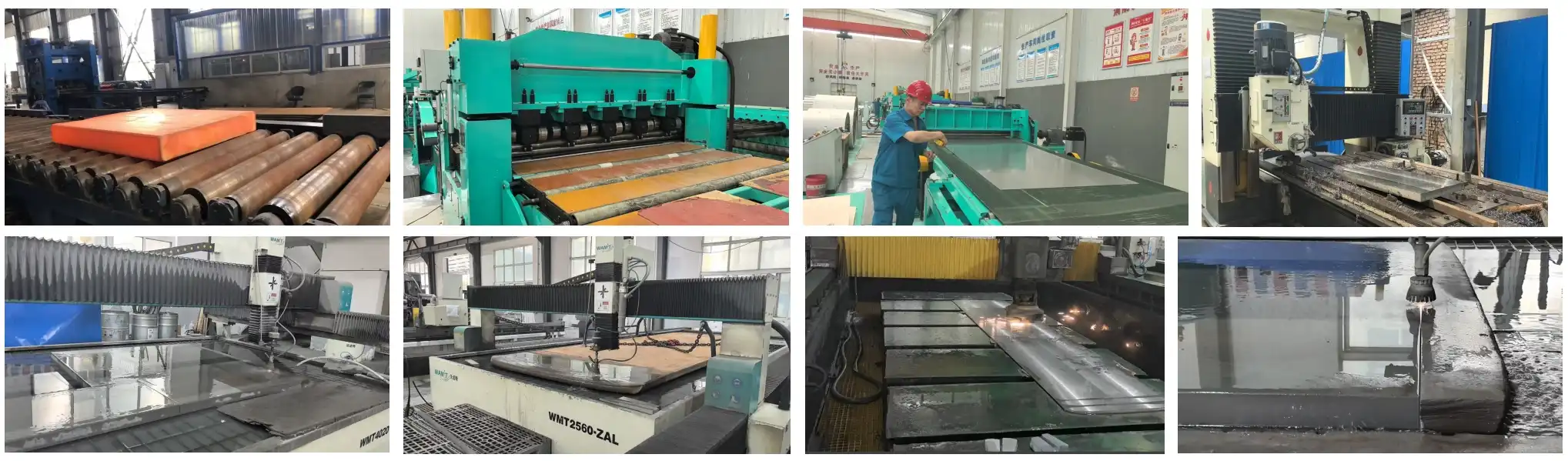
ASTM B265 requires manufacturers to supply test reports certifying that materials meet all specification requirements. For critical applications, additional traceability to melt heat may be specified to ensure complete material history.

titanium sheet and plate Factory in China
TSM TECHNOLOGY CO – Your trusted manufacturer & supplier of ASTM B265 titanium sheet. Premium quality, competitive price, ready for global delivery!
faq
Q:1.What material is ASTM B265?
A:ASTM B265 is not a material but a technical specification that covers titanium and titanium alloy strip, sheet, and plate in the annealed condition. The standard includes various grades of unalloyed titanium and titanium alloys with specific chemical and mechanical property requirements.
Q:2.What is the difference between ASTM F67 and B265?
A:ASTM F67 is specifically for unalloyed titanium for surgical implant applications with additional biocompatibility requirements, while ASTM B265 covers both unalloyed titanium and titanium alloys for general industrial applications. ASTM F67 has more stringent requirements for medical applications.
Q:3.What is ASTM B265 Grade 2 used for?
A:ASTM B265 Grade 2 is commercially pure titanium with an optimal balance of strength and ductility. It's widely used in chemical processing equipment, marine applications, heat exchangers, and other industrial applications where excellent corrosion resistance and formability are required.
Q:4.What is ASTM B265 Grade 5?
A:ASTM B265 Grade 5 is titanium alloy Ti-6Al-4V containing approximately 6% aluminum and 4% vanadium. It offers significantly higher strength than commercially pure grades while maintaining good corrosion resistance and is widely used in aerospace, medical, and high-performance industrial applications.
Q:5.What are the ASTM B265 equivalent standards?
A:ASTM B265 has several international equivalents, including AMS 4911 (aerospace), ASME SB265 (pressure vessels), GB/T 3621-2007 (China), and JIS H4600 (Japan).
Q:6.What thickness range does ASTM B265 cover?
A:ASTM B265 covers a wide thickness range from thin strip and sheet to plate products. The specification provides different requirements based on product form: strip (thickness ≤4.75 mm, width <610 mm), sheet (thickness ≤4.75 mm, width ≥610 mm), and plate (thickness >4.75 mm).


