


Introduction to AMS 4911 Titanium Alloy
AMS 4911 is a foundational technical standard published by SAE International that governs the requirements for titanium alloy sheet, strip, and plate made from Ti-6Al-4V (Grade 5 titanium) in the annealed condition. As a cornerstone specification in the aerospace and defense industries, AMS 4911 establishes rigorous benchmarks for chemical composition, mechanical properties, manufacturing processes, and quality assurance that materials must meet to achieve certification.
The specification covers titanium products with thicknesses up to 4.000 inches (101.60 mm), providing a comprehensive framework for manufacturers, engineers, and procurement specialists across various high-performance sectors. AMS 4911 represents more than just a material specification-it embodies a commitment to reliability, consistency, and performance in the most demanding applications where failure is not an option.
At TSM Technology, we recognize that understanding the nuances of AMS 4911 is essential for proper material selection, design optimization, and ensuring compliance with project requirements. This comprehensive guide explores the technical details, applications, and advantages of this remarkable aerospace-grade titanium alloy.
What Material is AMS 4911?
AMS 4911 specifies Ti-6Al-4V titanium alloy, commonly known as Grade 5 titanium, in the annealed condition. This alpha-beta alloy consists of a titanium base with aluminum (approximately 6%) and vanadium (approximately 4%) as the primary alloying elements, making it arguably the most widely used titanium alloy worldwide.
The "annealed" condition specified in AMS 4911 indicates that the material has undergone a specific heat treatment process, typically between 1300-1650°F (704-899°C)-followed by controlled cooling to relieve internal stresses, stabilize microstructure, and optimize mechanical properties for manufacturing and service. This thermal processing ensures consistent performance and enhances the material's workability during fabrication operations.

AMS 4911 Chemical Composition
The chemical composition of AMS 4911 titanium alloy is tightly controlled to ensure consistent performance and mechanical properties. The standard specifies precise limits for alloying elements and impurities that must be maintained for certification.
Table: AMS 4911 Chemical Composition Requirements
| Element | Composition Range (%) | Function/Effect |
|---|---|---|
| Aluminum | 5.50 - 6.75 | Alpha stabilizer increases strength, reduces density |
| Vanadium | 3.50 - 4.50 | Beta stabilizer improves ductility and toughness |
| Iron (max) | 0.25 | Impurity reduces ductility and toughness |
| Oxygen (max) | 0.20 | Interstitial strengthener, increases strength |
| Carbon (max) | 0.08 | Interstitial element forms carbides |
| Nitrogen (max) | 0.05 | Interstitial element increases strength, reduces ductility |
| Titanium | Balance | Base metal |
The composition is meticulously balanced to achieve optimal material performance. Aluminum content is maintained between 5.50-6.75% to strengthen and lighten the alloy through solid-solution strengthening, while vanadium content between 3.50-4.50% enhances workability and heat-treatment response. Strict controls on interstitial elements (oxygen, carbon, nitrogen) ensure consistent mechanical properties and prevent embrittlement.
It's worth noting that even minor variations within these specified ranges can significantly impact mechanical properties, weldability, and corrosion resistance. Therefore, AMS 4911 requires rigorous verification of chemical composition through standardized analytical methods, typically spectrochemical analysis.
Mechanical Properties and Hardness of AMS 4911
The mechanical properties of AMS 4911 titanium alloy vary based on product form and thickness, with the specification providing minimum requirements for tensile strength, yield strength, elongation, and other critical characteristics.
Hardness Characteristics
While AMS 4911 does not explicitly specify hardness requirements, Ti-6Al-4V in the annealed condition typically exhibits a Rockwell C hardness of approximately 36-40 HRC. This places it in a favorable position-hard enough to resist wear and deformation yet sufficiently soft to permit machining and forming operations without excessive tool wear.
The actual hardness can vary slightly based on several factors:
Exact heat treatment parameters during annealing
Section thickness and cooling rates
Final finishing operations (grinding, polishing, etc.)
Strength and Ductility Properties
Table: Typical Mechanical Properties of AMS 4911 Titanium Alloy
| Product Form | Thickness Range | Tensile Strength (min) | Yield Strength (min) | Elongation (min) |
|---|---|---|---|---|
| Sheet | ≤4.76 mm (0.187 in) | 895 MPa (130 ksi) | 825 MPa (120 ksi) | 10% |
| Plate | 4.76-50.8 mm | 895 MPa (130 ksi) | 825 MPa (120 ksi) | 8% |
| Plate | 50.8-101.6 mm | 895 MPa (130 ksi) | 825 MPa (120 ksi) | 6% |
The specification includes both A-basis (minimum value expected for 99% of samples with 95% confidence) and B-basis (minimum value expected for 90% of samples with 95% confidence) mechanical property values to ensure statistical reliability. This statistical approach to property certification is particularly important for aerospace applications where material consistency directly impacts structural integrity and safety.
Mechanical testing ensures AMS 4911 titanium meets stringent aerospace requirements
Key Specifications of AMS 4911 Sheet and Plate
AMS 4911 establishes comprehensive requirements beyond basic composition and mechanical properties, covering manufacturing processes, dimensional tolerances, and quality assurance protocols.
Product Forms and Dimensions
The specification covers three primary product forms:
Sheet: Flat material with thickness ≤4.76 mm (0.187 in)
Strip: Flat material with thickness ≤4.76 mm (0.187 in) and width <610 mm (24 in)
Plate: Flat material with thickness >4.76 mm (0.187 in) up to 101.6 mm (4.000 in)
The standard includes detailed tolerance tables for thickness, width, length, and flatness based on product dimensions. These tolerances become progressively tighter for thinner materials and smaller widths, reflecting the increased capability for precision in manufacturing these product forms.
Manufacturing Requirements
AMS 4911 mandates specific manufacturing controls to ensure consistent quality:
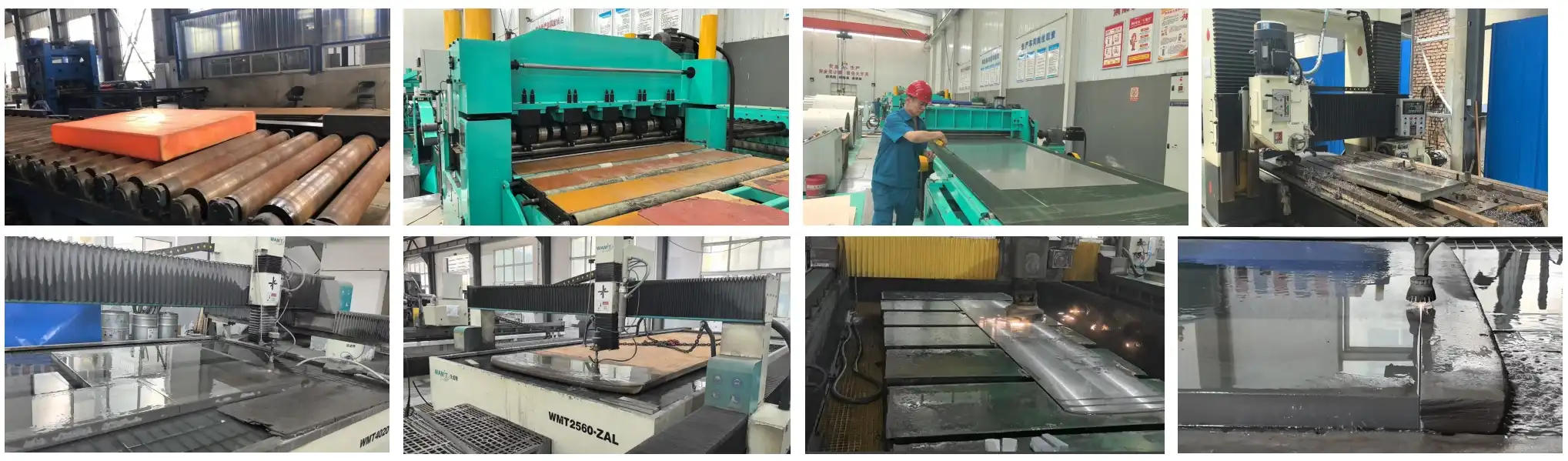
Melting Practice: Requires multiple melting processes (typically vacuum arc remelting or electron beam melting) to ensure chemical homogeneity and reduce defects
Heat Treatment: Specifies annealing within the temperature range of 1300-1650°F (704-899°C) to achieve optimal microstructure and properties
Microstructural Controls: Includes requirements for microstructure to prevent continuous grain boundary alpha, which can adversely affect mechanical properties and fatigue performance
Quality Assurance Provisions
The standard incorporates rigorous quality assurance requirements:
Chemical Analysis: Verification of composition from each heat or lot
Mechanical Testing: Tension tests from each lot in longitudinal and transverse directions
Non-Destructive Testing: Optional ultrasonic inspection for critical applications
Certification: Requirement for manufacturer to supply test reports verifying compliance
AMS 4901 vs AMS 4911: Key Differences
Understanding the distinction between AMS 4901 and AMS 4911 is crucial for proper material selection and specification. While both standards cover titanium alloys, they address different materials with distinct characteristics.
Fundamental Composition Differences
AMS 4901 specifies commercially pure titanium (Grades 1-4), which contains minimal alloying elements beyond the base titanium. The varying oxygen content primarily differentiates these grades, with increasing oxygen resulting in higher strength but reduced ductility.
AMS 4911 covers Ti-6Al-4V alloy (Grade 5 titanium), which contains significant aluminum and vanadium additions that create a fundamentally different material with substantially higher strength through alloy strengthening mechanisms.
Property Comparisons
Table: Comparison Between AMS 4901 and AMS 4911
| Property | AMS 4901 (CP Grade 2) | AMS 4911 (Ti-6Al-4V) |
|---|---|---|
| Tensile Strength | 345 MPa (50 ksi) | 895 MPa (130 ksi) |
| Yield Strength | 275 MPa (40 ksi) | 825 MPa (120 ksi) |
| Elongation | 20% | 10% |
| Primary Advantage | Superior formability and corrosion resistance | High strength-to-weight ratio |
| Typical Applications | Chemical processing equipment, marine components | Aerospace structures, medical implants |
Selection Considerations
The choice between AMS 4901 and AMS 4911 depends on application requirements:
Select AMS 4901 when optimal corrosion resistance, formability, and weldability are primary concerns, and the higher strength of alloyed titanium is not required
Choose AMS 4911 when high strength-to-weight ratio, excellent fatigue performance, and moderate elevated temperature capability are essential
The decision often involves trade-offs between strength, ductility, corrosion resistance, manufacturability, and cost, with AMS 4911 commanding a premium price justified by its enhanced performance characteristics.
AMS 4911 Equivalents and Related Specifications
AMS 4911 is part of a broader ecosystem of international standards specifying Ti-6Al-4V titanium alloy, with various equivalents across different standardization bodies.
Industry and Application-Specific Specifications
Various industries maintain their own specifications that often cross-reference or incorporate AMS 4911 requirements:
- Aerospace: Boeing, Airbus, Lockheed Martin, and other aerospace manufacturers often reference AMS 4911 in their material specifications
- Medical: ASTM F136 covers Ti-6Al-4V for surgical implant applications with additional cleanliness requirements
- Defense: Military specifications frequently invoke AMS 4911 with additional testing or documentation requirements
The Grade 5 designation is widely recognized across standardization systems, providing a common language for engineers, designers, and procurement specialists specifying Ti-6Al-4V titanium alloy.
Why Choose AMS 4911 Titanium Alloy?
Exceptional Strength-to-Weight Ratio
AMS 4911 titanium alloy offers approximately 30% higher strength than steel at about half the weight, making it the material of choice for weight-sensitive applications. This exceptional strength-to-weight ratio enables significant performance improvements in aerospace applications, where every kilogram reduced translates to enhanced payload capacity, improved fuel efficiency, or extended range.
Outstanding Corrosion Resistance
The inherent corrosion resistance of titanium, particularly in the Ti-6Al-4V formulation, matches or exceeds that of stainless steels in many environments. The stable, protective oxide film that forms spontaneously on exposure to air or moisture provides exceptional resistance to:
High Temperature Performance
AMS 4911 titanium alloy maintains excellent strength retention at elevated temperatures up to approximately 399°C (750°F), making it suitable for applications such as aircraft engine components and high-temperature processing equipment. While not a superalloy, its capability in this temperature range exceeds that of aluminum alloys and many steels on a density-compensated basis.
Biocompatibility
The excellent biocompatibility of AMS 4911 titanium alloy, coupled with its absence of nickel, makes it suitable for medical implants and devices. The human body readily accepts titanium, with bone growth directly adhering to the surface oxide layer in a process called osseointegration.
Fatigue Performance
AMS 4911 exhibits superior fatigue resistance compared to many structural materials, a critical property for components subjected to cyclic loading in aerospace applications. The specification's controls on microstructure, particularly the limitation on continuous grain boundary alpha, ensure optimal fatigue performance.

One-stop titanium sheet Factory in China
As a knowledgeable supplier or manufacturer, TSM Technology is ready to support you in the procurement and supply of AMS 4911 materials for critical applications.
fAQ
Q:1.What material is AMS 4911?
A:AMS 4911 specifies titanium alloy Ti-6Al-4V (also known as Grade 5 titanium) in the annealed condition. It consists of a titanium base with approximately 6% aluminum and 4% vanadium as primary alloying elements, creating an alpha-beta alloy with an exceptional balance of properties.
Q:2.What is the hardness of AMS 4911?
A:While AMS 4911 does not explicitly specify hardness requirements, Ti-6Al-4V in the annealed condition typically exhibits a Rockwell C hardness of approximately 36-40 HRC. Actual hardness may vary based on specific heat treatment parameters and section thickness.
Q:3.What is the difference between AMS 4901 and AMS 4911?
A:AMS 4901 covers commercially pure titanium (Grades 1-4) with lower strength but superior formability and corrosion resistance, while AMS 4911 specifies Ti-6Al-4V alloy (Grade 5) with significantly higher strength but reduced ductility. The choice depends on whether priority lies with strength (AMS 4911) or formability/corrosion resistance (AMS 4901).
Q:4.Is AMS 4911 equivalent to Grade 5 titanium?
A:Yes, AMS 4911 specifies Ti-6Al-4V alloy, which is commercially known as Grade 5 titanium. The AMS designation indicates it meets the additional aerospace quality and processing requirements beyond the basic ASTM B265 Grade 5 specification.
Q:5.What are the maximum service temperatures for AMS 4911?
A:AMS 4911 titanium alloy is typically used for applications requiring strength at temperatures up to 399°C (750°F). Beyond this temperature, significant strength reduction occurs, and specialized elevated-temperature titanium alloys would be more appropriate.
Q:6.Can AMS 4911 be welded?
A:Yes, AMS 4911 Ti-6Al-4V can be successfully welded using various techniques including gas tungsten arc welding (GTAW/TIG), gas metal arc welding (GMAW/MIG), and electron beam welding (EBW). Proper procedures and post-weld heat treatment may be necessary to restore properties in the heat-affected zone.


