


While Titanium Grade 5 (Ti-6Al-4V) is widely celebrated for its exceptional strength-to-weight ratio and corrosion resistance, it is not without limitations. For engineers and procurement specialists evaluating Grade 5 Titanium Seamless Tubes for demanding applications, understanding these drawbacks is as critical as knowing the advantages. Below, we explore the key disadvantages of the gr5 titanium tube to help you make an informed decision.

1. High Material Cost
One of the most significant barriers to using titanium grade 5 seamless tube is its high initial cost. Compared to stainless steel (e.g., 316L) or even other titanium grades like Grade 2, Ti-6Al-4V is more expensive due to:
- Complex alloying with aluminum and vanadium
- High-purity requirements and specialized melting processes (e.g., vacuum arc remelting)
- Lower production volumes than commodity metals
For large-scale industrial projects, the upfront cost of Grade 5 seamless titanium tubing can be two to three times higher than equivalent stainless steel tubing, impacting overall project budgets.
2. Difficult Machining and Fabrication
Gr5 titanium tube is known for its poor machinability. The alloy's low thermal conductivity and high strength at elevated temperatures cause rapid tool wear, work hardening, and heat buildup during cutting or drilling. Specific challenges include:
Short tool life requiring expensive carbide or diamond-coated tools
Need for very low cutting speeds and rigid setups
High risk of galling or surface smearing during threading or drilling
This makes customizing 5 titanium tubes more time consuming and costly compared to working with steel or aluminum.

3. Low Thermal Conductivity
Ti-6Al-4V has poor thermal conductivity (about 6.7 W/m·K at room temperature), which is roughly 1/4th that of steel and 1/15th that of aluminum. This property leads to:
Heat concentration during welding or machining, potentially causing distortion or microstructural damage
Reduced efficiency in heat exchanger applications where rapid heat transfer is required
For this reason, Titanium Grade 5 Pipes are rarely used in applications like boiler tubing or other heat transfer equipment unless a specific performance trade off is acceptable.
4. Susceptibility to Hydrogen Embrittlement
While titanium alloys are generally corrosion resistant, Grade 5 seamless titanium tubing can absorb hydrogen in certain environments (e.g., high temperature acidic solutions, cathodic protection systems). Hydrogen absorption may lead to embrittlement, reducing ductility and potentially causing cracking under stress. This risk requires careful control of:
Pickling and cleaning processes (to avoid acid over exposure)
Operating environments where hydrogen is present (e.g., certain chemical reactors)
5. Limited Availability of Large-Diameter Seamless Tubes
Manufacturing Grade 5 seamless titanium tubing in large diameters or very long lengths is technically challenging due to the alloy's high strength and low ductility at processing temperatures. This results in:
Longer lead times for custom large diameter tubes
Higher costs for seamless vs. welded tubes in large sizes
Fewer suppliers capable of producing heavy wall or extra long seamless tubes
For projects requiring large bore piping, customers often need to consider welded tubes or alternative materials.
6. Specialized Welding Requirements
Welding gr5 titanium pipe demands strict control of shielding gas and cleanliness to prevent contamination by oxygen, nitrogen, or hydrogen. Typical issues include:
Need for dedicated welding equipment (e.g., trailing shields, back purging systems)
Skilled welders with specific titanium training
Post weld heat treatment (PWHT) in some cases to relieve residual stresses
These requirements increase fabrication costs and can limit the number of qualified welding shops available for on site or shop fabrication.
7. Not Suitable for High-Temperature Creep Service
Although Ti-6Al-4V offers good high temperature strength up to about 400°C (752°F), it is not recommended for long term creep service above 300-350°C. Under sustained loads at elevated temperatures, the alloy may undergo dimensional changes or microstructural degradation. For applications such as gas turbine engine components operating above 500°C, other nickel based superalloys or refractory metals would be more appropriate.
8. Risk of Galvanic Corrosion When Coupled with Dissimilar Metals
While 5 titanium tubes are highly corrosion resistant in isolation, they can experience accelerated galvanic corrosion when directly connected to less noble metals (e.g., carbon steel, aluminum) in a conductive electrolyte (e.g., seawater). Proper electrical isolation or coating strategies must be implemented to avoid bimetallic corrosion in mixed material assemblies.
How TSM Technology Mitigates These Disadvantages
At TSM Technology, we help customers navigate the drawbacks of Titanium Grade 5 Pipes by offering:
|
Disadvantage |
TSM Solution |
|
High cost |
Free samples, flexible MOQ, and competitive pricing through our 3-factory network (100+ machines, 300 tons/month capacity) |
|
Difficult machining |
Custom cutting, threading, and bending services using titanium specific tooling and techniques |
|
Low thermal conductivity |
Design assistance to optimize wall thickness and flow geometry for your heat transfer application |
|
Hydrogen embrittlement risk |
Full material traceability (MTC) and optional hydrogen content testing per ASTM E1447 |
|
Large diameter seamless limited |
Offer both seamless (up to 114mm OD) and welded & drawn (W&D) tubes with radiographic inspection |
|
Specialized welding |
Provide pre welded fittings, flanges, and fabrication support; share qualified welding procedures |
|
High temperature creep limit |
Guide material selection to Grade 7 or other alloys for applications >400°C |
|
Galvanic corrosion |
Supply isolation kits (gaskets, sleeves) and coating recommendations |
When Should You Choose Grade 5 Titanium Tubes Despite the Disadvantages?
Despite the above limitations, Grade 5 seamless titanium tubing remains the material of choice when:
High strength-to-weight ratio is critical (aerospace, rocket tubing)
Exceptional corrosion resistance in seawater or chloride environments is required (offshore, desalination)
Biocompatibility is mandatory (medical implants, surgical instruments)
For applications where these benefits outweigh the disadvantages, TSM Technology provides certified Grade 5 titanium tubes with full traceability and fast delivery (10 25 days).
Conclusion
No material is perfect. The disadvantages of Titanium Grade 5 Pipes-higher cost, difficult fabrication, low thermal conductivity, and specialized handling-must be balanced against their exceptional strength, light weight, and corrosion resistance. By partnering with an experienced supplier like TSM Technology, you can mitigate these drawbacks through expert design support, custom fabrication, and rigorous quality control.
Contact us at info@tsm-titanium.com to discuss your specific requirements or request a quote for gr5 titanium tube.
References
ASTM B861 – Standard Specification for Titanium and Titanium Alloy Seamless Pipe. ASTM International.
Donachie, M. J. (2000). Titanium: A Technical Guide. ASM International.
Boyer, R., Welsch, G., & Collings, E. W. (1994). Materials Properties Handbook: Titanium Alloys. ASM International.
Leyens, C., & Peters, M. (2003). Titanium and Titanium Alloys: Fundamentals and Applications. Wiley-VCH.
ASM Handbook, Volume 16: Machining. ASM International.
Schutz, R. W., & Watkins, H. B. (1998). Recent developments in titanium alloy application in the energy industry. Materials Science and Engineering: A, 243(1-2), 305-315.
TSM Technology Internal Quality Manual and Product Specifications (2025).
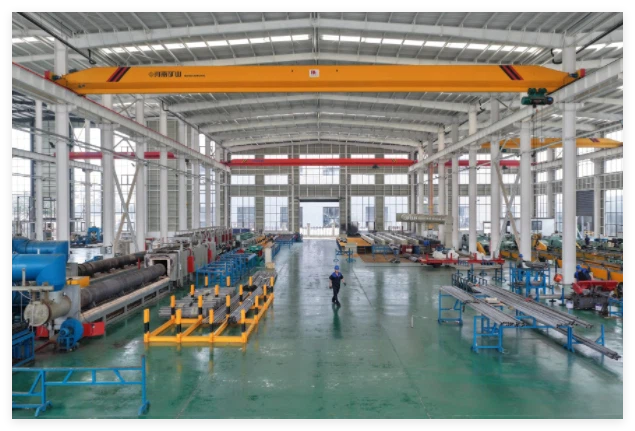
We are always at your service when you need
TSM Technology, one of the leading Asian suppliers of high-performance titanium-based materials in China, specializes in factory-made products such as titanium tubes, welded titanium pipes and fittings, titanium flanges, titanium fasteners and nuts, titanium plates and rods, among others.
They are widely used in the construction of heat exchangers, condensers, power plants, seawater desalination facilities, oil and gas pipelines, chlor-alkali plants, and other related fields.
Number of Employees
years experience
Modern factory
Global Supply


