


Why Titanium Sheet Thickness and Tolerances Matter
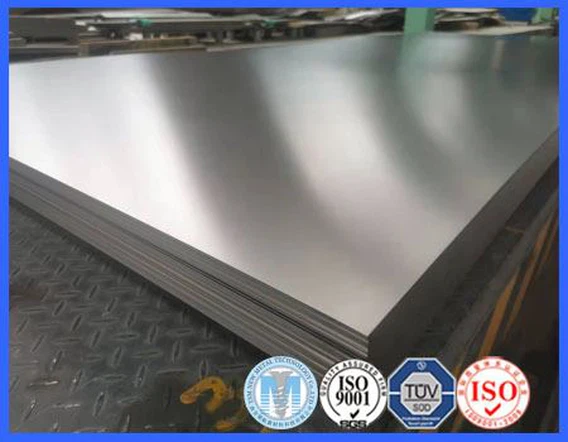
In engineering and manufacturing, precision is everything. Whether designing aerospace components, heat exchangers, or medical implants, the thickness and tolerance of titanium sheet determine performance, durability, and safety. At TSM TECHNOLOGY, we specialize in titanium sheets manufactured under strict international standards such as ASTM B265 and AMS4911, ensuring dimensional accuracy, uniform grain structure, and excellent mechanical performance.
Industry Standards Governing Titanium Sheet Tolerances
ASTM B265 - Standard Specification
ASTM B265 establishes the primary tolerance requirements for titanium sheet, strip, and plate in the United States and internationally. This specification provides comprehensive tables specifying acceptable thickness variations based on product width and nominal thickness.
Key Provisions of ASTM B265:
Different tolerance tables for sheet (width ≥ 24") and strip (width < 24")
Tolerance generally expressed as ± values from nominal thickness
Tighter tolerances available through "precision tolerance" purchase agreements
Separate flatness, straightness, and dimensional tolerance requirements
AMS 4911 - Aerospace Specification
AMS 4911 imposes tolerances that are generally similar but occasionally more restrictive for aerospace-grade titanium alloy sheets, particularly for critical aircraft applications where weight control and dimensional consistency are paramount.
Understanding Titanium Sheet Thickness
Titanium sheet thickness typically ranges from 0.5 mm to 4.0 mm, depending on grade and application. Anything thinner is classified as titanium foil, and thicker material is considered titanium plate.
| Category | Thickness Range | Common Applications |
|---|---|---|
| Titanium Foil | ≤ 0.5 mm | Electronics, chemical membranes |
| Titanium Sheet | 0.5 mm – 4.0 mm | Heat exchangers, medical parts |
| Titanium Plate | ≥ 4.0 mm | Aerospace, marine structures |
This categorization ensures the right balance among strength, formability, and weight, which is crucial in performance-critical industries.
Titanium Sheet Tolerance: What It Means
Tolerance defines the permissible variation in the sheet's thickness, width, length, and flatness.
Tight tolerances ensure better fit, sealing, and performance in assembly and fabrication.
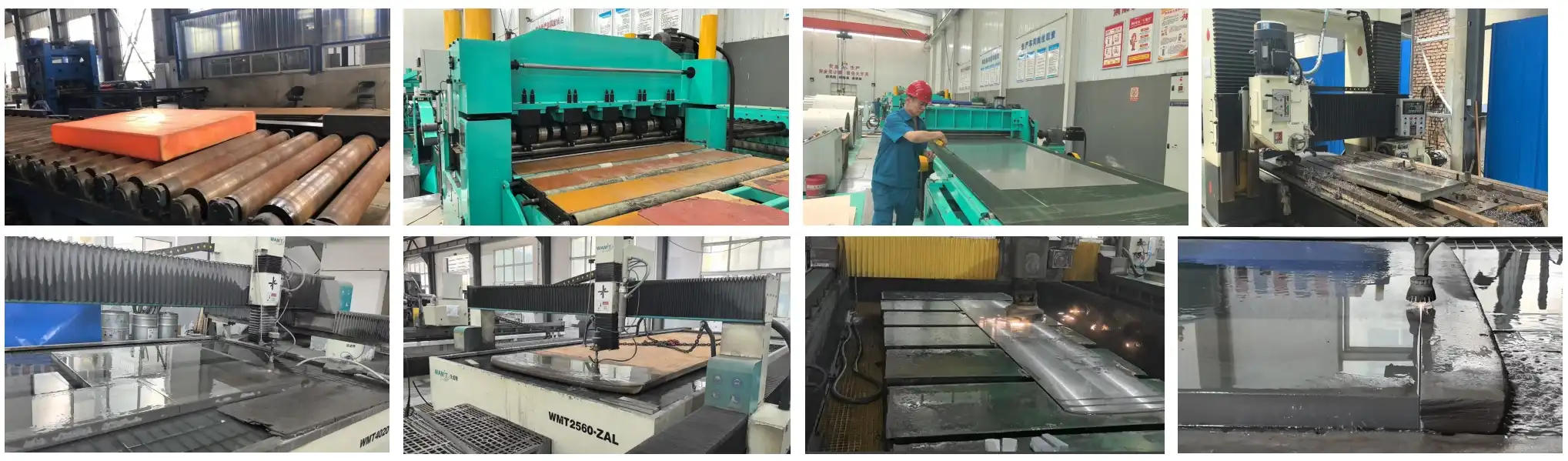
At TSM TECHNOLOGY, titanium sheets are produced with tight dimensional control, minimizing deviation during rolling, annealing, and surface finishing.
Thickness Tolerance Tables and Specifications
Standard Thickness Tolerances for Titanium Sheet
The following table illustrates typical thickness tolerances according to ASTM B265 for sheets 48 inches (1219mm) wide and under:
| Nominal Thickness (inch) | Nominal Thickness (mm) | Standard Tolerance ± (inch) | Standard Tolerance ± (mm) |
|---|---|---|---|
| 0.010 - 0.025 | 0.25 - 0.64 | 0.002 | 0.05 |
| 0.026 - 0.040 | 0.66 - 1.02 | 0.003 | 0.08 |
| 0.041 - 0.065 | 1.04 - 1.65 | 0.004 | 0.10 |
| 0.066 - 0.125 | 1.68 - 3.18 | 0.006 | 0.15 |
| 0.126 - 0.188 | 3.20 - 4.78 | 0.008 | 0.20 |
| 0.189 - 0.250 | 4.80 - 6.35 | 0.010 | 0.25 |
Factors That Affect Titanium Sheet Tolerance
Several manufacturing variables influence final tolerances:
Rolling Process: Hot or cold rolling precision impacts flatness.
Annealing Conditions: Uniform heating improves microstructure consistency.
Surface Finish: Pickling, polishing, or sandblasting can slightly alter dimensions.
Grade Composition: Alloyed titanium (e.g., Ti-6Al-4V) behaves differently than CP titanium during rolling.
Quality Standards: Adherence to ASTM B265, AMS 4902, or ISO 5832 ensures predictable outcomes.
Titanium Sheet Grades and Mechanical Strength
Each titanium grade has unique strength and forming properties, influencing the suitable sheet thickness for specific applications.
| Grade | Type | Yield Strength (MPa) | Elongation (%) | Typical Use |
|---|---|---|---|---|
| Grade 1 | CP Titanium | 170 | 24 | Chemical, marine use |
| Grade 2 | CP Titanium | 275 | 20 | Heat exchangers, general use |
| Grade 5 (Ti-6Al-4V) | Alloyed | 880 | 10 | Aerospace, automotive |
| Grade 7 | Ti-Pd Alloy | 275 | 20 | Chlorine resistance |
| Grade 12 | Ti-Ni-Mo Alloy | 485 | 18 | High temperature systems |
How to Choose the Right Titanium Sheet Thickness
Heat Exchangers (0.020" - 0.060" | 0.51mm - 1.52mm): Thin walls maximize thermal transfer efficiency while maintaining corrosion resistance.
Pressure Vessels (0.125" - 0.500" | 3.18mm - 12.70mm): Thickness determined by pressure requirements and corrosion allowances.
Reactor Linings (0.060" - 0.125" | 1.52mm - 3.18mm): Sufficient thickness to withstand abrasion while minimizing material costs.
Medical Applications
Implants (0.100" - 0.500" | 2.54mm - 12.70mm): Thickness determined by anatomical requirements and mechanical loading.
Instrument Housings (0.030" - 0.125" | 0.76mm - 3.18mm): Balance between durability and weight considerations.
Titanium Sheet Flatness and Surface Finish Tolerances
Flatness affects how well sheets fit in assemblies, especially for welded and laminated structures.
TSM TECHNOLOGY ensures a flatness deviation of ≤2 mm per meter for most sheet sizes.
Available finishes:
- Pickled: Clean, oxide-free surface for welding
- Polished: Smooth surface for medical or architectural applications
- Sandblasted: Matte finish for industrial use
Inspection and Quality Testing at TSM TECHNOLOGY
Each titanium sheet undergoes rigorous inspection:
- Dimensional measurement (laser micrometer)
- Surface roughness analysis
- Ultrasonic flaw detection
- Chemical composition verification (spectrometer)
All results comply with ASTM B265 and are traceable via Mill Test Certificates (MTC).
TSM TECHNOLOGY's Manufacturing Capabilities
Available Thickness: 0.5 – 60 mm
Width: up to 2000 mm
Length: up to 6000 mm
Grades: 1, 2, 5, 7, 9, 12
Standards: ASTM B265, AMS 4911, ISO 5832
We support custom tolerance requests, surface treatments, and pre-cut services for OEM and industrial projects.
fAQ
Q:1. What is the standard thickness tolerance for 0.125" titanium sheet?
A:For 0.125" (3.18mm) titanium sheet under ASTM B265, the standard thickness tolerance is typically ±0.006" (±0.15mm) for material under 48 inches (1219mm) in width. Precision tolerances would be approximately ±0.003" (±0.08mm).
Q:2.How does titanium sheet thickness tolerance compare to stainless steel?
A:Titanium generally has slightly wider thickness tolerances than stainless steel of equivalent thickness due to titanium's higher strength and springback characteristics during rolling. However, precision tolerance titanium can achieve similar dimensional control to standard tolerance stainless steel.
Q:3.Can I get titanium sheet with custom thickness tolerances?
A:Yes, most titanium manufacturers, including TSM TECHNOLOGY CO, can produce material with custom tolerance requirements. These typically involve additional cost and minimum order quantities, with feasibility dependent on the specific thickness and tolerance combination.
Q:4.How does sheet width affect thickness tolerances?
A:Generally, wider sheets have slightly wider thickness tolerances due to the increased difficulty in maintaining perfect roll alignment across the entire width. ASTM B265 provides separate tolerance tables based on width ranges.
Q:5.What is the thinnest titanium sheet commercially available?
A:Commercially pure titanium sheet is regularly available in thicknesses down to 0.010" (0.25mm), with specialty producers offering material as thin as 0.005" (0.13mm) for specific applications. Availability decreases and cost increases significantly below 0.020" (0.51mm).
Q:6.How are thickness tolerances verified by manufacturers?
A:Manufacturers typically use calibrated micrometers or non-contact measurement systems at multiple points across the sheet surface. Statistical process control methods often supplement individual sheet verification, particularly for large production runs.
We are here for you
To create the top brand in the field of titanium products


