


Ti-6Al-4V titanium is a popular alloy in many industries. Known for its strength and corrosion resistance, it is widely used in aerospace, medical, and marine applications. But can it be welded or formed easily? Welding Ti-6Al-4V titanium sheets requires specific techniques. The alloy is sensitive to contamination, which can lead to defects. Proper shielding and cleaning are crucial for successful welding.
Forming this titanium alloy also presents challenges. It requires careful control of temperature and strain rates to prevent cracking. Both cold and hot forming methods are used, depending on the complexity of the shape. This guide explores the properties, challenges, and best practices for working with Ti-6Al-4V titanium sheets.

Understanding Ti-6Al-4V Titanium Sheet Metal
Ti-6Al-4V is the most widely used titanium alloy. Its unique composition provides high strength and excellent corrosion resistance. This makes it a top choice for demanding environments.
The alloy is composed of 6% aluminum, 4% vanadium, with the remainder being titanium. This balance offers impressive mechanical properties. Ti-6Al-4V is favored in industries where performance and reliability are critical.
Here are the key factors that make this alloy popular:
High strength-to-weight ratio
Excellent corrosion resistance
Compatibility with other titanium alloys
Good fatigue resistance
Despite its benefits, working with Ti-6Al-4V can be challenging. It is a reactive material, especially at high temperatures. This requires precise handling techniques to maintain its structural integrity.
Availability in various forms adds to its versatility. From sheets to bars, this alloy suits many applications. Understanding its properties helps leverage its advantages in different engineering contexts.
Key Properties of Ti-6Al-4V Alloy
Ti-6Al-4V alloy stands out due to its impressive mechanical properties. Its high strength is notable, exceeding 1000 MPa under certain conditions. This makes it ideal for structural applications where durability is paramount.
One of its remarkable attributes is its melting point, which is approximately 1660°C (3020°F). This high melting point contributes to its suitability in high-temperature environments. Additionally, its resistance to corrosion enhances its longevity in harsh settings.
Several factors contribute to the alloy's popularity:
Excellent strength-to-weight ratio
High tensile strength
Resistance to chemical erosion
The density of Ti-6Al-4V is relatively low, roughly 4.43 g/cm³. This contributes to its lightweight nature, which is beneficial in aerospace and automotive industries. Furthermore, its non-magnetic nature is advantageous in certain applications, reducing interference.
The alloy's ability to withstand cyclic loads makes it suited for applications involving repeated stress. These properties make Ti-6Al-4V a versatile choice across various sectors, from medical to marine industries. Understanding these characteristics is crucial for its effective application.
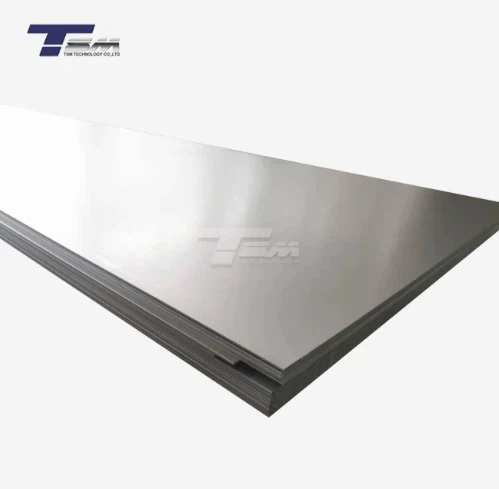
Challenges in Welding Ti-6Al-4V Titanium Sheet
Welding Ti-6Al-4V sheets presents unique challenges that require specialized techniques. One major issue is its high reactivity at elevated temperatures. This reactivity can lead to contamination if not properly controlled.
The alloy is particularly sensitive to gases such as oxygen, nitrogen, and hydrogen. Exposure can result in embrittlement, weakening the weld. Therefore, maintaining a clean and controlled environment is crucial.
There are several potential pitfalls to avoid during the welding process:
Contamination from atmospheric gases
Inadequate shielding techniques
Improper heat control
Argon or helium shielding gases are essential. They protect the weld area, ensuring the joint remains uncontaminated. Additionally, careful pre-weld cleaning is vital to remove surface contaminants.
Another challenge is the need for precise heat control. Ti-6Al-4V has low thermal conductivity, making heat distribution a potential problem. Improper heat management can lead to defects and compromised weld integrity.
Furthermore, welders must be adequately trained in titanium-specific techniques. Without specialized training, achieving high-quality welds can be difficult. The right knowledge and skills are fundamental for successful Ti-6Al-4V titanium sheet welding.
Best Practices for Ti-6Al-4V Titanium Sheet Welding
Achieving successful welds with Ti-6Al-4V requires adherence to specific best practices. One critical step is selecting the right welding process. TIG (Tungsten Inert Gas) and MIG (Metal Inert Gas) are preferred for their precision and control.
Pre-weld preparation is equally essential. Ensure the work area and materials are spotless. Contaminants can severely affect weld quality and durability.
Utilize proper shielding gases during welding. Argon or helium are optimal choices to protect the weld zone. They keep the area free from atmospheric interference.
Controlling welding parameters is vital. Monitor current, voltage, and travel speed. These must be finely tuned for consistency and superior outcomes.
Consider post-weld heat treatment if needed. It can relieve stress and enhance mechanical properties, ensuring optimal joint performance.
Finally, ensure welders have received specialized training. Expert knowledge in titanium welding is indispensable. Maintaining high safety standards is also crucial for overall success.
Titanium Welding Tips for High-Quality Joints
Achieving high-quality titanium joints requires several strategic tips. First, remember the importance of using clean, dry materials. Cleanliness reduces chances of defects and contamination.
Next, consistently maintain an inert gas shield. A stable shield ensures the weld is not exposed to harmful elements.
Key points to remember include:
Pre-clean all surfaces meticulously
Use high-quality, compatible filler materials
Maintain precise shielding gas flow
Additionally, consider using backing bars or trailing shields. These tools help create a consistent inert atmosphere, improving weld quality.
Finally, always perform regular checks on equipment and settings. This minimizes unexpected issues during the welding process. Following these tips will help ensure reliable, high-quality titanium weld joints.
Forming Ti-6Al-4V Titanium Sheet: Cold and Hot Methods
Forming Ti-6Al-4V titanium sheets demands careful attention to techniques. Depending on the desired shape and application, both cold and hot forming methods can be effective.
Cold forming occurs at or near room temperature. It's suitable for simple shapes and minor deformation. However, the alloy's high strength can lead to cracking if not properly managed. Intermediate annealing might be needed to restore ductility during cold forming.
Hot forming offers more flexibility for complex shapes. It involves heating the titanium sheet between 700°C and 900°C. This reduces the risk of cracking by allowing more plastic deformation.
Choosing between cold and hot methods depends on several factors. Consider the alloy's properties, the complexity of the shape, and final application requirements.
Benefits of hot forming often outweigh the challenges. The process requires careful control but results in superior formability and shape precision.
To summarize, understanding the intricacies of each forming method is crucial. It ensures the successful shaping of Ti-6Al-4V titanium sheets to meet diverse industrial needs.
Common Forming Techniques and Their Suitability
Various forming techniques are available for Ti-6Al-4V, each with its benefits. Stamping is common for simple parts, offering cost-effective, high-speed production.
Press braking is suitable for precise bends. It delivers accuracy but might require multiple steps for thicker sheets.
Key forming techniques include:
Stamping for straightforward, fast production
Press braking for controlled, precise bending
Roll forming for continuous, uniform shapes
Roll forming is optimal for uniform, continuous shapes, working well for long lengths. This method ensures consistency and is ideal for producing large volumes of identical profiles. Each technique presents unique advantages depending on the application's demands.
Applications and Industry Use Cases
Ti-6Al-4V titanium sheets find extensive applications across diverse sectors. Their unique blend of properties ensures high demand in specialized fields.
In the aerospace industry, they are used for lightweight structural components. The alloy's strength-to-weight ratio is unmatched, which is ideal for this field.
Medical applications also benefit from Ti-6Al-4V due to its biocompatibility. It is commonly used in implants and surgical devices, enhancing patient outcomes.
Marine and energy sectors favor its resistance to corrosion. This makes it a top choice for components exposed to harsh environments.
Common use cases include:
- Aerospace structural components
- Medical implants and devices
- Marine hardware and components
Its versatility extends to sporting goods and high-performance vehicles, showcasing the material's wide-ranging capabilities.
Conclusion: Is Ti-6Al-4V Titanium Sheet Easy to Weld or Form?
Ti-6Al-4V titanium sheet offers excellent versatility, but its welding and forming require specific techniques. Mastery of these methods ensures high-quality outcomes.
While not the easiest material to work with, understanding its properties is vital. The right practices make it manageable. For those in relevant industries, investing time in learning these techniques pays off significantly.
Contact Us:
Contact us today to discuss your specific requirements and discover how our high-quality Ti-6Al-4V titanium sheet can enhance your next project.
Email: info@tsm-titanium.com

Let TSM help you get your project off the ground
Since 2011, TSM has served over 1,000 clients all over the world, especially in Europe, the USA.TSM has its distributor in the Netherlands and Romania. The market distribution of TSM will shown as follows: North America: 10%, South America: 12%, Europe: 60%, Southeast Asia: 8%, Lcoal market: 10%.


