


If you work in cycling, aerospace, or industrial manufacturing, you have likely seen growing demand for Grade 9 Titanium Tubes. This titanium alloy offers an excellent balance of strength, weight reduction, corrosion resistance, and formability. Many engineers choose it when pure titanium feels too soft and Grade 5 titanium becomes too difficult to shape.
In both bicycle and aerospace tubing, manufacturers need materials that can handle stress without adding unnecessary weight. Grade 9 titanium meets that need very well. It combines high mechanical performance with easier fabrication, making it one of the most practical titanium alloys for seamless tubes. At TSM Technology, we supply titanium tubing solutions for global B2B customers across aerospace, medical, industrial, and sports equipment industries. Our experience with titanium tube production helps us understand why this alloy continues to gain attention worldwide.
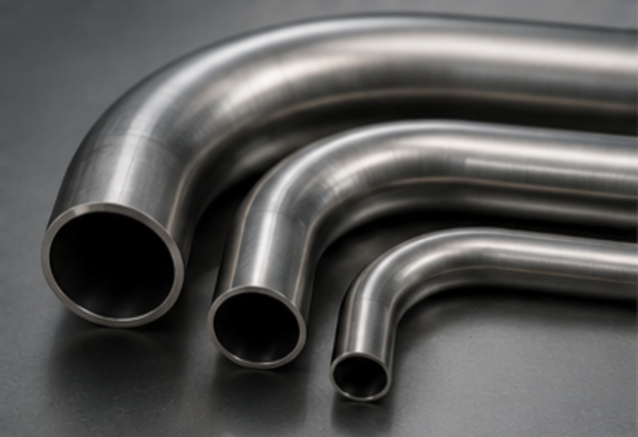
What Is Grade 9 Titanium?
Grade 9 titanium, also called Ti-3Al-2.5V, contains:
3% aluminum
2.5% vanadium
Balance titanium
This alloy belongs to the alpha-beta titanium family. It offers moderate strength, excellent corrosion resistance, and very good cold formability.
Compared with commercially pure titanium, Grade 9 provides much higher strength. Compared with Grade 5 titanium, it offers better ductility and easier tube manufacturing.
These properties make it ideal for:
- Bicycle frames
- Aerospace hydraulic tubing
- Heat exchangers
- Sporting equipment
- Marine applications
- Chemical processing systems
Many engineers choose ASTM B338 Grade 9 titanium seamless tubes because they combine lightweight performance with reliable mechanical stability.
Why Bicycle Manufacturers Prefer Grade 9 Titanium Tubes
Modern bicycle companies constantly search for materials that improve riding performance without sacrificing comfort. Grade 9 titanium has become one of the best choices for premium bicycle tubing.
Lightweight but Strong
Weight matters in cycling. Riders want fast acceleration and easier climbing. Steel offers strength but increases weight. Aluminum reduces weight but may feel stiff during long rides.
Grade 9 titanium provides a balanced solution.
Its high strength-to-weight ratio allows manufacturers to build thinner tube walls while maintaining structural integrity. This helps reduce total frame weight.
Many high-end bicycle brands use titanium alloy tubing to create frames that feel responsive yet comfortable.
Better Ride Comfort
Cyclists often describe titanium bikes as smooth and stable. Grade 9 titanium absorbs road vibration better than aluminum.
This creates several benefits:
Reduced rider fatigue
Improved long-distance comfort
Better handling on rough roads
Less harsh vibration transfer
These advantages matter greatly for endurance bikes, gravel bikes, and mountain bikes.
Excellent Corrosion Resistance
Bicycles face rain, mud, humidity, sweat, and road salt. Some metals corrode quickly in these environments.
Grade 9 titanium naturally forms a protective oxide layer. This layer helps prevent rust and corrosion.
Because of this property:
Frames require less maintenance
Surface appearance lasts longer
Bikes perform well in coastal regions
Service life increases significantly
Many cyclists keep titanium bikes for decades.
Easier Tube Fabrication
Tube forming plays a critical role in bicycle frame manufacturing. Grade 5 titanium offers higher strength but becomes harder to bend and weld.
Grade 9 titanium tubes provide:
Better cold working performance
Easier bending capability
More stable welding behavior
Reduced cracking risk during forming
This allows manufacturers to create complex tube geometries more efficiently.
Why Aerospace Companies Use Grade 9 Titanium Tubing
The aerospace industry demands materials that deliver high reliability under extreme conditions. Weight reduction also remains a major priority because lighter aircraft improve fuel efficiency.
Grade 9 titanium tubing meets both requirements.
High Strength-to-Weight Ratio
Aircraft systems must remain lightweight while handling pressure, vibration, and thermal stress.
Grade 9 titanium offers:
Lower density than steel
Strong mechanical performance
Good fatigue resistance
Reliable structural stability
This makes it suitable for aerospace hydraulic lines and structural tubing systems.
Strong Corrosion Resistance in Harsh Environments
Aircraft operate in challenging conditions:
High humidity
Temperature fluctuations
Chemical exposure
Salt-rich atmospheres
Grade 9 titanium performs very well under these conditions. Its corrosion resistance helps reduce maintenance costs and extend service life.
This property becomes especially important in aerospace tubing systems that handle fluids or operate near corrosive environments.
Reliable Weldability
Welding quality matters greatly in aerospace production. Poor weld consistency can create safety risks.
Grade 9 titanium offers better weldability than many stronger titanium alloys. Skilled fabricators can achieve clean and stable weld joints when proper shielding procedures are used.
This improves production reliability and consistency of quality.
Good Fatigue Performance
Aircraft tubing experiences repeated stress cycles during operation. Materials must resist cracking over time.
Grade 9 titanium demonstrates strong fatigue resistance. This helps aerospace engineers maintain long-term performance and safety.
Grade 9 Titanium vs Grade 5 Titanium
Many buyers compare Grade 9 and Grade 5 titanium before choosing tubing materials.
Here is a simplified comparison:
|
Property |
Grade 9 Titanium |
Grade 5 Titanium |
|
Strength |
Medium-High |
Very High |
|
Formability |
Excellent |
Moderate |
|
Weldability |
Very Good |
Good |
|
Tube Manufacturing |
Easier |
More Difficult |
|
Weight |
Lightweight |
Lightweight |
|
Common Use |
Tubes and piping |
Structural components |
Grade 5 titanium works well for highly loaded structural parts. Grade 9 often becomes the better option for tubing applications because manufacturers can form and weld it more easily.
This balance explains why many bicycle and aerospace companies prefer Grade 9 seamless titanium tubes.
Key Properties of Grade 9 Titanium Tubes
The popularity of Grade 9 titanium comes from its combination of properties rather than one single advantage.
Mechanical Strength
Grade 9 titanium offers higher strength than commercially pure titanium while maintaining good ductility.
This balance supports demanding tubing applications.
Corrosion Resistance
The alloy resists:
Saltwater corrosion
Industrial chemicals
Atmospheric oxidation
Moisture exposure
This improves durability across many industries.
Low Density
Titanium remains much lighter than steel. Reduced system weight improves efficiency in transportation and aerospace applications.
Thermal Stability
Grade 9 titanium performs well across varying temperatures. This helps maintain stability in aerospace systems and industrial environments.
Long Service Life
Titanium tubes often deliver long operational life with limited maintenance requirements.
This lowers total ownership costs over time.
Manufacturing Considerations for Grade 9 Titanium Seamless Tubes
Tube quality depends heavily on manufacturing control. Reliable suppliers focus on raw material consistency, dimensional accuracy, and inspection standards.
At TSM Technology Titanium Tube Division, we manufacture seamless titanium tubes in accordance with international standards.
Our production process includes:
- Vacuum melting technology
- Precision hot working
- Cold rolling and cold drawing
- Ultrasonic testing
- Eddy current inspection
- Mechanical property testing
- Dimensional inspection
These procedures help ensure stable quality for demanding industrial applications.
What B2B Buyers Usually Look for
Procurement managers and engineering teams often focus on more than material grade alone.
When sourcing Grade 9 titanium tubing, buyers usually evaluate:
Certification Standards
Common standards include:
ASTM B338
ASTM B861
AMS specifications
Certifications help verify quality consistency and material compliance.
Dimensional Tolerances
Precision tubing applications require tight tolerances for:
Outer diameter
Wall thickness
Straightness
Surface finish
Supply Stability
Reliable delivery matters greatly for industrial projects. Buyers prefer suppliers with stable production capacity and quality control systems.
Testing Capability
Professional suppliers should provide:
Chemical composition reports
Mechanical testing data
Nondestructive testing results
Traceability documentation
Custom Manufacturing
Many projects require customized dimensions or special processing.
Experienced titanium tube manufacturers can support:
Cut-to-length tubes
Special tolerances
Polished surfaces
Custom packaging
How Grade 9 Titanium Supports Sustainable Manufacturing
Many industries now prioritize sustainability and long-term efficiency.
Grade 9 titanium contributes in several ways:
Long service life reduces replacement frequency
Lightweight structures improve fuel efficiency
Corrosion resistance lowers maintenance needs
Recyclable material supports environmental goals
In aerospace and cycling industries, reducing weight can significantly improve energy efficiency over time.
Choosing the Right Grade 9 Titanium Tube Supplier
Not all titanium tube suppliers offer the same manufacturing capability.
Before choosing a supplier, buyers should review:
Production equipment
Quality certifications
Industry experience
Inspection systems
Export capability
Technical support
An experienced supplier can help reduce procurement risk and improve long-term project reliability.
At TSM Technology, we focus on titanium alloys, nickel alloys, and precision metal products for global industrial customers. Our team supports OEM projects, custom tube requirements, and international quality standards. If you need technical support or pricing information for Grade 9 titanium tubing, you can contact us at info@tsm-titanium.com.
References
Donachie, Matthew J. Titanium: A Technical Guide. ASM International.
Boyer, Rodney, Gerhard Welsch, and E. W. Collings. Materials Properties Handbook: Titanium Alloys. ASM International.
Lutjering, Gerd, and James C. Williams. Titanium. Springer.
ASTM International. ASTM B338 Standard Specification for Seamless and Welded Titanium and Titanium Alloy Tubes.
Peters, Martin, and Claudia Leyens. Titanium and Titanium Alloys: Fundamentals and Applications. Wiley-VCH.
Jha, Amit Kumar, and B. Ravi Kumar. Titanium Alloys in Aerospace Applications. Elsevier.


