


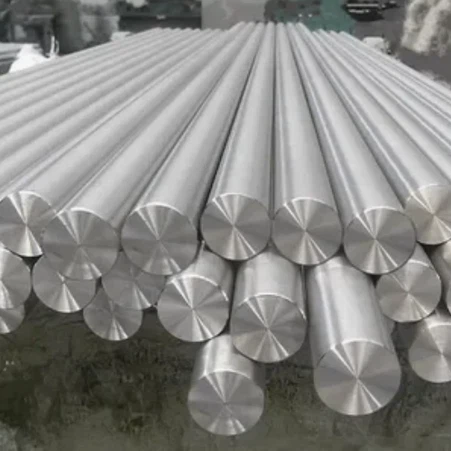
Titanium alloy bars, especially those manufactured to ASTM B348 standards, are widely used in numerous industries due to their unique combination of high strength, low weight, and exceptional corrosion resistance. From aerospace to medical, chemical processing to automotive, titanium alloys have become the go-to material for applications where performance and reliability are critical. This article explores the common uses of titanium alloy bars in various industries, examines their high strength-to-weight ratio, and discusses their ability to be welded and forged, making them versatile in industrial applications.
Titanium Alloy Bars in Aerospace
Titanium alloy bars are particularly well-suited for aerospace applications due to their high strength-to-weight ratio and exceptional resistance to corrosion. Aircraft, spacecraft, and satellite components require materials that can withstand extreme temperatures, pressures, and environmental conditions while maintaining structural integrity. Titanium alloys such as Grade 5 (Ti-6Al-4V) are commonly used in these applications for critical components like engine parts, airframes, landing gears, and fasteners.
The high strength-to-weight ratio of titanium allows it to provide the necessary structural strength while minimizing the overall weight of the aircraft. This is especially important in aerospace, where every kilogram of weight saved translates into increased fuel efficiency and overall performance. Titanium alloy bars are often used to manufacture critical components in both commercial and military aircraft, as well as spacecraft and satellite parts.
Titanium Alloy Bars in the Medical Industry
Titanium alloy bars are also widely used in the medical industry, especially for implants and prosthetics. Titanium's biocompatibility, meaning it does not cause adverse reactions when implanted in the human body, makes it the preferred material for orthopedic implants, dental implants, and surgical instruments. Titanium alloy bars are used to create components such as joint replacements, dental screws, and bone plates.
Grade 5 titanium, specifically Ti-6Al-4V, is commonly used in these medical applications due to its strength, corrosion resistance, and compatibility with human tissue. The corrosion resistance of titanium alloy bars is crucial in medical applications as it ensures that the implants will remain intact and functional over the long term, even when exposed to bodily fluids.

Titanium Alloy Bars in the Chemical and Marine Industries
Titanium alloys are known for their exceptional resistance to corrosion, particularly in harsh chemical and marine environments. This makes them highly sought after in industries such as chemical processing, desalination, and marine applications. Titanium alloy bars are often used to manufacture parts for heat exchangers, reactors, valves, and pumps, which are exposed to aggressive chemicals like acids and chlorides.
In marine applications, titanium alloy bars are used in components such as propeller shafts, hulls, and desalination equipment due to their resistance to seawater corrosion. The alloy's resistance to both pitting and crevice corrosion ensures long-lasting performance even in the most corrosive environments.
Titanium Alloy Bars in Automotive Engineering
In the automotive industry, titanium alloy bars are increasingly used for high-performance parts due to their high strength-to-weight ratio and resistance to heat. Components such as exhaust systems, suspension parts, and engine components benefit from titanium's ability to withstand high temperatures and corrosive exhaust gases. Using titanium alloy bars in these parts can reduce the overall weight of the vehicle, improving fuel efficiency and overall performance.
Titanium alloy bars are also used in racing cars and performance vehicles, where weight reduction is essential for maximizing speed and maneuverability. The use of titanium in these applications allows for stronger, lighter, and more durable parts that can withstand the stresses of high-performance driving.
Does Titanium Alloy Bar Offer a High Strength-to-Weight Ratio?
One of the primary reasons titanium alloy bars are so widely used across industries is their exceptional strength-to-weight ratio. Titanium alloys are known for their high tensile strength, which means they can withstand significant loads without deforming or breaking. At the same time, titanium is much lighter than many other metals, including steel, making it an ideal material for applications where weight reduction is crucial without sacrificing strength.
For example, Grade 5 titanium alloy bars (Ti-6Al-4V) are much lighter than steel but can provide equal or even superior strength in many applications. This makes titanium alloy bars ideal for aerospace, automotive, and marine applications, where reducing weight while maintaining strength leads to improved performance and fuel efficiency.
The strength-to-weight ratio of titanium alloys is also a key factor in medical and orthopedic applications. Titanium implants need to be strong enough to withstand the forces they are subjected to in the human body, yet light enough to minimize any impact on the patient's mobility or comfort. Titanium alloy bars, especially those made from Ti-6Al-4V, provide the perfect balance of strength and weight, making them ideal for implants like hip replacements and dental implants.
Can Titanium Alloy Bars Be Welded or Forged?
Titanium alloy bars, including those manufactured to ASTM B348 standards, are highly versatile materials that can be welded and forged to meet the specific requirements of various applications.
Welding Titanium Alloy Bars:
Titanium alloy bars can be welded using specialized techniques, such as gas tungsten arc welding (GTAW or TIG welding), which provides a clean and precise weld. Welding titanium requires careful control of heat and the welding environment to prevent contamination and preserve the material's strength and corrosion resistance. Titanium is highly reactive at high temperatures, so welding is typically done in a controlled environment, such as a vacuum or an inert gas atmosphere, to prevent oxidation.
Titanium alloy bars are commonly welded in the aerospace and medical industries to create strong, reliable joints for critical components. For example, welded titanium bars are used in aircraft engine components and medical implants, where strength, reliability, and corrosion resistance are paramount.
Forging Titanium Alloy Bars:
Titanium alloy bars can also be forged into complex shapes and sizes for specific industrial applications. Forging involves heating the titanium alloy bar and then shaping it using compressive force. This process improves the material's grain structure, resulting in enhanced strength and resistance to fatigue. Forged titanium alloys are widely used in aerospace and automotive applications, where components are subjected to high stress and need to be strong, lightweight, and durable.
Forged titanium parts are commonly used in the manufacture of turbine blades, structural components, and engine parts, all of which require superior strength and fatigue resistance. The ability to forge titanium alloy bars into complex shapes allows manufacturers to create customized solutions for demanding applications.
Conclusion
Titanium alloy bars, especially those made to ASTM B348 standards, are integral components in a wide range of industries due to their exceptional strength-to-weight ratio, resistance to corrosion, and versatility. From aerospace and medical implants to marine and chemical processing, titanium alloy bars provide reliable, high-performance solutions for some of the most demanding applications.
Titanium's ability to be welded and forged makes it highly adaptable, allowing it to be tailored for specific applications where strength, durability, and lightweight design are essential. Whether used in high-performance racing cars, marine equipment, or critical aerospace components, titanium alloy bars continue to prove their worth across industries.
Contact Us:
If you are looking for high-quality titanium alloy bars for your project, contact TSM Technology today. Our team of experts can help you select the right materials and ensure that your project meets all the necessary standards and specifications for optimal performance.
Email: info@tsm-titanium.com

Let TSM help you get your project off the ground
Since 2011, TSM has served over 1,000 clients all over the world, especially in Europe, the USA.TSM has its distributor in the Netherlands and Romania. The market distribution of TSM will shown as follows: North America: 10%, South America: 12%, Europe: 60%, Southeast Asia: 8%, Lcoal market: 10%.


