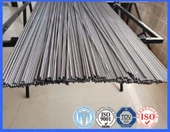
1.What is titanium welding wire?
Titanium welding wire is a specialized filler metal used to join titanium components through various welding processes, most notably TIG (Tungsten Inert Gas) and MIG (Metal Inert Gas) welding. Unlike standard steel or aluminum wires, titanium wire is manufactured under stringent conditions to maintain the metal's purity and mechanical properties.
The Composition and Manufacturing
Titanium filler wire is produced from high-purity titanium sponges or ingots. These are drawn into fine wires, ranging from 0.8mm to 4.0mm in diameter, depending on the application. The manufacturing process involves multiple stages of vacuum melting, rolling, and drawing. At TSM, our wire undergoes rigorous surface cleaning-often involving chemical pickling-to ensure it is free from lubricants, oxides, and carbon residues that could compromise weld quality.

2. Why Titanium? Understanding the "Titan" of Metals
To understand why titanium welding wire matters, we must first look at the unique properties of titanium itself. Titanium is renowned for:
Exceptional Strength-to-Weight Ratio: It is as strong as steel but 45% lighter.
Corrosion Resistance: It is virtually immune to atmospheric corrosion and seawater.
Biocompatibility: It is non-toxic and accepted by the human body.
Temperature Stability: It maintains its mechanical properties at both cryogenic and elevated temperatures.
When you weld titanium, you are looking to transfer these properties to the joint. If the filler wire is inferior, the joint becomes the "weak link," leading to cracking or corrosion.
3. Common Grades of Titanium Welding Wire (AWS A5.16 Standards)
The American Welding Society (AWS) A5.16 specification governs the requirements for titanium and titanium-alloy welding electrodes and rods. Choosing the correct grade is paramount.
Commercially Pure (CP) Grades
ERTi-1 (Grade 1): The softest and most ductile grade. It offers the highest corrosion resistance and is primarily used in chemical processing where formability is key.
ERTi-2 (Grade 2): The "workhorse" of the industry. It strikes an ideal balance between strength and ductility. Most industrial heat exchangers and piping systems utilize Grade 2 titanium welding wire.
ERTi-3 and ERTi-4: Used for higher strength requirements in marine and airframe components.
Alloyed Grades
ERTi-5 (Grade 5 / Ti-6Al-4V): The most popular titanium alloy. Known as an "alpha-beta" alloy, it includes 6% aluminum and 4% vanadium. It offers incredible tensile strength and is the gold standard for aerospace and medical implants.
ERTi-7: Contains palladium, providing enhanced corrosion resistance in mildly reducing media or where crevice corrosion is a concern.
ERTi-23 (Ti-6Al-4V ELI): "Extra Low Interstitials." This is a high-purity version of Grade 5, used extensively in the medical field for surgical implants due to its superior toughness and biocompatibility.
4. The Critical Role of Shielding Gas and Cleanliness
One of the reasons titanium welding wire is so specialized is the metal's high reactivity. At temperatures above 400∘C (750∘F), titanium becomes a "chemical sponge," absorbing oxygen, nitrogen, and hydrogen from the atmosphere.
The Importance of Argon
When using titanium TIG welding wire, a 100% pure Argon shielding gas is required. This gas must protect not only the weld pool but also the cooling weld bead and the backside of the joint (back-purging).
The "Color" Test
In the titanium world, the color of the weld tells a story:
Silver/Straw: Excellent shield; high-quality weld.
Blue/Purple: Slight contamination; may be acceptable depending on the spec.
Grey/White (Dull): Heavy oxidation; the weld is brittle and must be rejected.
5. Industrial Applications: Where It Truly Matters
Aerospace and Defense
In jet engines and airframes, weight is the enemy. Titanium filler wire is used to weld turbine blades, exhaust ducts, and structural frames. The ability of the weld to withstand fatigue and high heat is non-negotiable.
Chemical and Petrochemical
Titanium's resistance to chlorides and acids makes it perfect for pressure vessels, heat exchangers, and bleaching equipment in the paper industry. Here, the longevity of the weld directly impacts the safety and ROI of the plant.
Medical Technology
From bone screws to pacemakers, the medical industry relies on the purity of ERTi-23 wire. The vacuum-melting process ensures that no contaminants enter the patient's body, allowing for long-term implant success.
Marine and Offshore
Desalination plants and offshore oil rigs use titanium piping to combat the relentless corrosion of salt water. Using high-quality titanium welding wire ensures these systems last for decades without costly maintenance.
Titanium Welding Wire
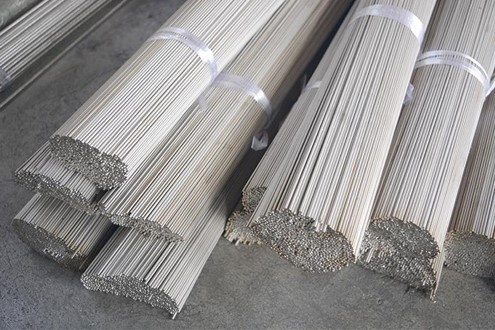
Would you like me to provide a specific quote for your project's titanium wire needs or send you our latest technical data sheets? --- TSM TECHNOLOGY CO. is a global leader in the supply of Titanium and Nickel alloy solutions. For more technical guides and product information, visit our resource center.
6. How TSM Technology Co. Ensures Quality
At TSM Technology Co., we don't just sell wire; we sell reliability. Our Titanium Welding Wire undergoes:
Ultrasonic Cleaning: To remove all surface impurities.
Strict Chemical Analysis: Each batch is tested to ensure it meets or exceeds AWS and AMS (Aerospace Material Specifications) standards.
Precision Spooling: To ensure smooth feeding in automated MIG processes, preventing "bird-nesting" and downtime.
7. The Economic Impact: Why Cheap Wire Costs More
Purchasing managers are often tempted by lower-priced filler metals. However, in titanium welding, the "true cost" includes the risk of rework. A single contaminated weld in a Grade 5 pressure vessel can lead to:
Material Waste: Titanium is an expensive substrate.
Labor Loss: Grinding out and re-welding titanium is incredibly time-consuming.
Reputational Damage: In aerospace or medical sectors, a failed weld is a catastrophic failure of trust.
Investing in premium Titanium Welding Wire from a trusted supplier like TSM is an insurance policy for your engineering integrity.
FAQ: Everything You Need to Know About Titanium Welding Wire
1. Can I use Grade 2 wire to weld Grade 5 titanium?
Technically, yes, you can use a lower-strength filler (like Grade 2) on a higher-strength base (like Grade 5) for better ductility, but the joint will not have the same strength as the base metal. For most structural applications, we recommend matching the filler to the base metal or using a specialized alloy.
2. Why does my titanium weld look dull and grey?
A dull, grey, or flaky surface indicates severe oxidation (contamination). This usually means your shielding gas coverage was insufficient or the metal was exposed to air while still above 400∘C. This weld is brittle and likely to crack; it should be removed.
3. What is the difference between TIG and MIG titanium wire?
TIG wire comes in straight "cut lengths" (usually 36 inches or 1000mm) and is fed manually. MIG wire is wound on spools (like D300 or D100) and is designed for continuous feeding through a welding gun. MIG welding titanium is faster but requires much more sophisticated gas shielding.
4. How should I store titanium welding wire?
Titanium wire should be stored in a cool, dry environment in its original packaging. Once opened, it should be kept in a cabinet to prevent dust and moisture from settling on the surface. If the wire has been sitting for a long time, it may require solvent cleaning before use.
5. Is Argon-CO2 mix okay for welding titanium?
No. Never use CO2 or Oxygen-mixed gases with titanium. Titanium has a high affinity for oxygen and carbon. You must use 100% high-purity Argon or Helium (or an Argon-Helium mix for thicker sections).
6. What does "ELI" stand for in ERTi-23 wire?
ELI stands for Extra Low Interstitials. This means the levels of oxygen, nitrogen, and carbon are kept extremely low to improve the fracture toughness and ductility of the metal, which is critical for medical implants.
7. Do I need to preheat titanium before welding?
Generally, no. Unlike steel, titanium does not require preheating. In fact, keeping the "interpass temperature" low is often preferred to prevent excessive heat buildup, which can lead to grain growth and reduced toughness.
8. Why is TSM Technology Co. a preferred supplier for titanium wire?
We combine global reach with technical expertise. Our wire is manufactured to the highest EN, ASTM, and AWS standards, and we provide full traceability with Mill Test Reports (MTRs) for every shipment.
The Future of Titanium Welding
As industries push the boundaries of what's possible-from deeper subsea exploration to faster-than-sound travel-the demand for high-quality Titanium Welding Wire will only grow. It is a material that demands respect, precision, and a deep understanding of metallurgy.
When you choose your welding consumables, remember that you aren't just buying wire; you are buying the safety of an aircraft, the longevity of a chemical plant, and the success of a medical procedure.