Titanium welding is a highly specialized process that demands strict control over materials, standards, and procedures. Among all international specifications, AWS A5.16 is the most widely referenced standard for titanium and titanium alloy welding wire and electrodes. However, many buyers, engineers, and welding professionals still find the details confusing. The current price of AWS A5.16 titanium welding wire typically ranges depending on grade (ERTi-2, ERTi-5) and purity levels.
This in-depth guide will clearly explain AWS A5.16 Titanium Welding Wire specifications, covering classifications, chemical composition, mechanical properties, application scenarios, and selection tips, helping you make confident purchasing and engineering decisions.
What is the AWS A5.16 Specification?
AWS A5.16/A5.16M is a specification issued by the American Welding Society (AWS) titled:
Specification for Titanium and Titanium-Alloy Welding Electrodes and Rods
It defines:
- Titanium welding wire classifications
- Chemical composition limits
- Product forms (wire, rods, coils)
- Identification and marking rules
- Quality and testing requirements
This standard applies to GTAW (TIG), GMAW (MIG), and plasma welding processes.

Recommended Titanium Welding Materials & Supply Availability
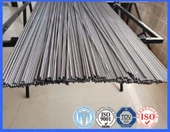
In practical GTAW (Gas Tungsten Arc Welding) applications, selecting the right titanium welding materials is just as critical as understanding AWS A5.16 specifications. Among industry standards, the most common length for GTAW filler metal is 36″ (915 mm), which provides optimal handling, arc stability, and efficiency during manual welding operations.
As global demand continues to rise, many buyers are actively searching for reliable AWS A516 titanium welding wire manufacturers that can ensure consistent chemical composition, low interstitial elements, and strict quality control. For urgent project requirements, working with suppliers that offer AWS A516 titanium welding wire in stock can significantly reduce lead time and improve project timelines-especially in aerospace, marine, and chemical processing sectors.
At TSM Technology, we maintain a stable inventory of titanium filler wires, including ERTi-2, ERTi-5, and customized grades, ensuring fast delivery and compliance with international standards.
Get a competitive quotation for titanium welding wire.
Common AWS A5.16 Titanium Grades and Their Applications
Choosing the right grade is the most critical step in your procurement process. Below are the most frequently used grades supplied by TSM Technology.
Commercially Pure (CP) Grades (ERTi-1, 2, 3, 4)
These grades are unalloyed and categorized by their oxygen content.
- ERTi-1: The lowest strength but highest ductility. Used where maximum formability is required.
- ERTi-2: The "workhorse" of the industry. It offers a perfect balance of strength, weldability, and corrosion resistance. Ideal for heat exchangers and chemical piping.
- ERTi-4: The strongest of the CP grades, used in applications requiring higher mechanical loads without the need for complex alloying.
Alloyed Grades (ERTi-5, 7, 12, 23)
- ERTi-5 (Ti-6Al-4V): The most popular titanium alloy globally. It features high tensile strength and is extensively used in aerospace components and sporting goods.
- ERTi-7: Contains Palladium (Pd) to provide enhanced corrosion resistance in mildly reducing media or where crevice corrosion is a concern.
- ERTi-12: Alloyed with Nickel (Ni) and Molybdenum (Mo). It offers better strength than CP grades and superior corrosion resistance at high temperatures.
- ERTi-23 (Ti-6Al-4V ELI): The medical-grade choice. It is used for surgical implants due to its high biocompatibility and fracture toughness.
AWS A5.16 Titanium Welding Wire

At TSM Technology, we specialize in manufacturing and supplying AWS A5.16 certified titanium welding wire for global industries. With years of experience in titanium metallurgy, we deliver high-purity ERTi-1, ERTi-2, ERTi-5, ERTi-9, and ERTi-12 welding wire in rods, coils, and spools. Our products are trusted by aerospace, chemical, marine, and medical manufacturers worldwide.
From strict raw material control to advanced inspection and clean packaging, every step ensures stable welding performance and consistent quality. Whether you need standard grades or customized solutions, TSM Technology is your reliable partner for titanium welding wire that meets international standards and exceeds expectations.
Chemical Composition Requirements
The AWS A5.16 standard sets rigorous limits on chemical elements. Even a minor deviation in oxygen or hydrogen levels can render a weld useless.
Table 1: Chemical Composition of Common AWS A5.16 Grades (%)
| Grade | Carbon (C) max | Oxygen (O) | Nitrogen (N) max | Hydrogen (H) max | Iron (Fe) max | Aluminum (Al) | Vanadium (V) | Others |
| ERTi-1 | 0.03 | 0.03–0.10 | 0.015 | 0.008 | 0.08 | - | - | Ti Balance |
| ERTi-2 | 0.03 | 0.08–0.16 | 0.015 | 0.008 | 0.12 | - | - | Ti Balance |
| ERTi-5 | 0.05 | 0.12–0.20 | 0.03 | 0.015 | 0.22 | 5.5–6.7 | 3.5–4.5 | Ti Balance |
| ERTi-7 | 0.03 | 0.08–0.16 | 0.015 | 0.008 | 0.12 | - | - | 0.12–0.25 Pd |
| ERTi-12 | 0.03 | 0.10–0.20 | 0.015 | 0.008 | 0.15 | - | - | 0.6–0.9 Ni |
Sizes, Packaging, and Identification
1. Titanium welding wire is available in various forms to suit different welding processes:
- Standard Diameters: Common sizes include 1.2mm, 1.6mm, 2.0mm, 2.4mm, and 3.2mm.
- Surface Finish: Wire is supplied with a clean finish, often acid cleaned, pickled, or polished to remove contaminants and ensure consistent feeding and arc performance.
2. Packaging Forms:
- Straight Lengths: Typically 915mm (36") or 1000mm long.
- Spools & Coils: For automated or MIG welding. Spool weights vary (e.g., 5kg, 8kg, 10-20kg per coil).
3. Marking: The standard requires clear identification. Each unit (spool, bundle) must be marked with the AWS classification, manufacturer, size, and lot/heat number. Proper packaging in sealed, contamination-free containers is critical.
Technical Insights: Managing Interstitial Elements
The "Interstitials"-Oxygen, Nitrogen, Carbon, and Hydrogen-are the enemies of titanium welding. AWS A5.16 focuses heavily on these because they reside in the spaces between the metal atoms.
Hydrogen: Leads to delayed cracking and embrittlement. AWS A5.16 limits hydrogen to as low as 0.005% for some grades.
Oxygen: Increases strength but drastically reduces ductility. If the weld bead turns blue or grey during welding, it indicates oxygen contamination, likely violating the AWS standard's intent.
Frequently Asked Questions
Can I use ERTi-2 filler wire to weld Grade 5 titanium?
+
-
Technically, you can, but it is generally not recommended. While the weld will be ductile, it will be significantly weaker than the Grade 5 base metal. Always match the filler metal to the base metal unless specified otherwise by a welding engineer.
What is the difference between AWS A5.16 and ASTM B863?
+
-
AWS A5.16 is specifically for welding filler metal, focusing on weldability and interstitial control. ASTM B863 is a general specification for titanium and titanium alloy wire used for non-welding applications like fasteners, springs, or jewellery.
How should I store titanium welding wire?
+
-
Store in a clean, dry, climate-controlled environment. Keep the wire in its original sealed packaging until ready for use to prevent dust and moisture accumulation.
Does TSM Technology provide custom lengths for TIG rods?
+
-
Yes, while 914mm and 1000mm are standard, TSM can provide custom cut lengths and specific packaging to meet your production line requirements.
Is a trailing shield always necessary for AWS A5.16 compliance?
+
-
While the AWS A5.16 standard covers the wire itself, achieving a code-compliant weld (like AWS D1.9) almost always requires a trailing shield when welding titanium in an open environment.
We are here for you
To create the top brand in the field of titanium products