


Titanium Tubing vs Stainless Steel: Which One Wins in Corrosion Resistance?
When selecting materials for critical applications in aerospace, marine, chemical processing, or medical devices, the debate between titanium tubing and stainless steel tubing often takes center stage. Both metals are lauded for their strength and durability, but they exhibit significant differences in corrosion resistance, weight, cost, and performance under extreme conditions.
In this comprehensive guide, we dive into the scientific and practical aspects of titanium and stainless steel tubing, helping you determine which material is better suited for your projects. From corrosion mechanisms to real-world applications, we break down the key factors that influence your decision.
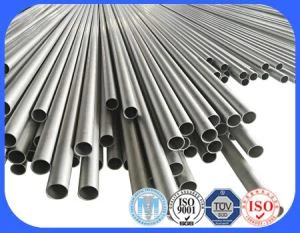
1. How Corrosion Resistance Differs Between Titanium and Stainless Steel
Corrosion resistance is a make-or-break property in industries where materials face moisture, chemicals, or saline environments. Here's how the two metals compare:
Titanium's Corrosion Defense
Titanium excels in resisting corrosion due to its protective oxide layer. When exposed to air or moisture, titanium instantly forms a thin, adherent layer of titanium oxide (TiO₂). This passive film:
Self-repairs when damaged.
Resists pitting and crevice corrosion in chloride-rich settings (e.g., seawater).
Performs exceptionally in oxidizing media like nitric acid, wet chlorine, and marine atmospheres .
Studies show titanium's corrosion rate remains below 0.127 mm/year in most acidic and alkaline environments, outperforming stainless steel in aggressive chemical exposures .
Stainless Steel's Limitations
Stainless steel relies on a chromium-rich oxide layer for corrosion resistance. While effective in mild environments, it is vulnerable to:
Chloride-induced pitting (e.g., in seawater or salt-laden air).
Stress corrosion cracking in high-temperature chloride solutions.
General corrosion in reducing acids (e.g., hydrochloric or sulfuric acid) .
Stainless steel alloys like 304 can corrode rapidly when exposed to harsh chemicals, whereas titanium maintains stability .
2. Key Properties Compared: Strength, Weight, and Temperature Tolerance
To answer "How strong is titanium tubing?" and "Is titanium stronger than 304 stainless steel?", let's examine their mechanical and thermal traits.
Mechanical and Physical Properties
| Property | Titanium Tubing | Stainless Steel (304) Tubing |
|---|---|---|
| Tensile Strength | 686–1176 MPa | 505–860 MPa |
| Density | 4.43 g/cm³ (≈60% of steel) | 7.9–8.0 g/cm³ |
| Hardness (Annealed) | HRC 32–38 | HRB 70–90 (softer) |
| Elastic Modulus | 107.8–117.6 GPa (≈50% of steel) | 190–210 GPa |
| Melting Point | 1668°C | 1400–1450°C |
Highlights:
Titanium's strength-to-weight ratio is superior, making it ideal for weight-sensitive applications (e.g., aerospace).
Stainless steel has a higher elastic modulus, providing greater stiffness in structural supports.
Titanium tubing retains strength from cryogenic temperatures (-253°C) up to 600°C, whereas stainless steel may lose integrity above 400°C .
3. Advantages and Disadvantages of Titanium Tubing
✅ Pros of Titanium
Exceptional corrosion resistance in oxidizing and chloride-rich environments.
High fatigue strength and toughness over a wide temperature range.
Lightweight, reducing system weight in transportation and machinery.
Biocompatibility, suitable for medical implants and food processing.
❌ Cons of Titanium
High cost due to complex extraction and processing .
Poor wear resistance (e.g., galling and abrasion) without surface treatments .
Lower stiffness can necessitate design modifications.
Challenges in welding and machining, requiring specialized techniques .
4. Do Titanium and Stainless Steel Rust?
Does titanium rust?
No. Titanium does not rust like steel because it forms a non-porous, stable oxide layer that blocks oxygen diffusion. Even in seawater, it resists pitting and erosion .
Does stainless steel rust?
Yes, under certain conditions. Exposure to chlorides, acids, or prolonged humidity can break down its passive layer, leading to rust spots or pitting .
5. Titanium vs. Stainless Steel in High-Temperature Applications
A common question is, "Does titanium overheat easily?" While titanium performs well in sustained high-temperature service (up to 600°C), it has limitations:
Oxidation resistance drops above 700°C, leading to surface embrittlement .
In contrast, stainless steel can withstand higher temperatures but may suffer from scaling and loss of corrosion resistance.
For heat exchangers or exhaust systems, titanium is preferred for moderate temperatures and corrosive settings, while specialized stainless steels (e.g., 310S) suit higher-temperature, non-corrosive environments.
6. Applications: Where Each Material Excels
Titanium Tubing Is Ideal For:
Aerospace and aviation (lightweight hydraulic systems).
Marine and offshore engineering (heat exchangers, seawater piping).
Chemical processing (reactors, linings for aggressive media).
Medical devices (implants, surgical tools).
Stainless Steel Tubing Is Preferred For:
Food and beverage equipment (sanitary, cost-effective tubing).
Architectural and structural applications (handrails, support frames).
Automotive exhausts (high-temperature resistance with moderate cost).
General industrial piping (non-chloride environments).
7. Cost Analysis and Lifespan
| Factor | Titanium | Stainless Steel |
|---|---|---|
| Initial Cost | High (mining/processing challenges) | Moderate |
| Lifespan in Corrosive Settings | 20+ years (low degradation) | 10–15 years (maintenance needed) |
| Lifecycle Cost | Lower long-term cost in aggressive environments | Higher maintenance and replacement costs |
When asking, "What lasts longer, stainless steel or titanium?" the answer is titanium in corrosive settings. However, stainless steel is more economical for mild environments.
Conclusion: Which Should You Choose?
The winner in the titanium vs stainless steel battle depends on your priorities:
Choose titanium tubing if you need:
Maximum corrosion resistance in seawater, acids, or chlorides.
Lightweight strength for high-performance systems.
Long-term reliability in extreme temperatures and aggressive media.
Choose stainless steel tubing if you prioritize:
Budget-friendly material with good overall durability.
High stiffness and ease of fabrication.
Non-corrosive environments or short-term projects.
For specialized needs, consult an engineer to evaluate operational conditions, total lifecycle costs, and performance requirements.


