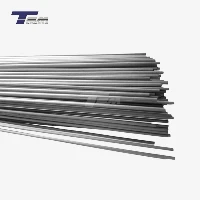
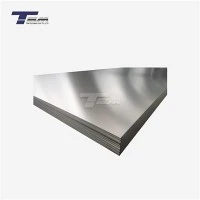
Choosing between Grade 1 Titanium and Grade 2 Titanium can affect your product's strength, formability, and service life. Both belong to the commercially pure titanium family. They offer excellent corrosion resistance, low weight, and good weldability. Yet they perform differently under mechanical stress and during forming.
Grade 1 offers greater ductility, making it useful for complex shapes and deep-drawn components. Grade 2 provides higher strength while maintaining good formability.
Understanding these differences helps you select the right titanium grade for heat exchangers, chemical equipment, marine systems, and industrial components.
Choose Grade 1 for extensive forming and high ductility. Choose Grade 2 when higher mechanical strength and good corrosion resistance are essential.
What Are Grade 1 and Grade 2 Titanium?
Grade 1 and Grade 2 are commercially pure (CP) titanium grades. Unlike titanium alloys containing major additions of aluminum or vanadium, both grades contain titanium with controlled amounts of residual elements.
Their main differences come from oxygen and iron content. These elements influence mechanical strength and ductility.
Grade 1 Titanium: High Ductility and Excellent Formability
Grade 1 Titanium, also known as UNS R50250, has the lowest strength and highest ductility among the standard commercially pure titanium grades.
It offers:
- Excellent cold-forming performance
- High ductility for complex components
- Strong corrosion resistance in suitable environments
- Good weldability with proper shielding
- Low weight compared with steel
These properties make Grade 1 suitable for deep-drawn parts, thin sheets, and components requiring extensive forming.
Grade 2 Titanium: A Balance of Strength and Formability
Grade 2 Titanium, designated UNS R50400, provides higher mechanical strength than Grade 1.
It combines:
- Higher tensile and yield strength
- Good ductility and fabrication performance
- Excellent resistance to many corrosive environments
- Good weldability
- Wide application across industrial equipment
Engineers often select Grade 2 for components that need corrosion resistance alongside moderate mechanical strength.
Titanium Grade 1 vs Grade 2: Mechanical Properties Comparison
Mechanical properties play a major role in titanium material selection. Tensile strength, yield strength, and elongation help determine how each grade responds to loading and forming.
The following table shows commonly specified minimum mechanical properties for annealed commercially pure titanium.
| Property | Grade 1 Titanium | Grade 2 Titanium |
|---|---|---|
| UNS Designation | R50250 | R50400 |
| Tensile Strength | 240 MPa min. | 345 MPa min. |
| Yield Strength (0.2%) | 170 MPa min. | 275 MPa min. |
| Elongation | 24% min. | 20% min. |
| Density | Approx. 4.51 g/cm³ | Approx. 4.51 g/cm³ |
| Relative Strength | Lower | Higher |
| Formability | Excellent | Good |
Technical note: Values represent commonly referenced specification minimums, not actual test results for every product form. Verify the relevant ASTM specification, material condition, dimensions, and mill test report.
Tensile Strength: Why Is Grade 2 Stronger?
Tensile strength measures the maximum stress a material can withstand before failure during a tensile test.
Grade 1 has a commonly specified minimum tensile strength of 240 MPa. Grade 2 increases this minimum to 345 MPa.
The Grade 2 minimum is approximately 44% higher. This difference matters when you design components exposed to mechanical loads.
Grade 2 can support higher tensile stresses, subject to the complete design requirements. However, higher tensile strength does not automatically mean better performance in every application.
Components requiring extensive forming may benefit more from Grade 1.
Yield Strength: Resistance to Permanent Deformation
Yield strength indicates when a material begins to deform permanently under loading.
Grade 1 has a commonly specified minimum yield strength of 170 MPa. Grade 2 offers 275 MPa.
Higher yield strength helps components resist permanent deformation during service.
This makes Grade 2 attractive for industrial fittings and equipment that must maintain dimensional stability.
Engineers should use approved design stresses rather than tensile or yield strength alone when designing pressure equipment.
Ductility: Why Grade 1 Is Easier to Form
Ductility describes a material's ability to deform plastically before fracture.
Grade 1 generally offers greater ductility because its composition allows easier plastic deformation.
Its commonly specified minimum elongation reaches 24%, compared with 20% for Grade 2.
This difference becomes important during:
- Deep drawing
- Sheet forming
- Rolling
- Flanging
- Forming complex geometries
Grade 2 also offers good ductility. It can handle many industrial fabrication processes when manufacturers use suitable methods.
Chemical Composition: What Makes Grade 1 and Grade 2 Different?
Both grades contain titanium as their principal element. Controlled oxygen and iron levels help explain their mechanical differences.
| Element | Grade 1 Maximum | Grade 2 Maximum |
|---|---|---|
| Oxygen (O) | 0.18% | 0.25% |
| Iron (Fe) | 0.20% | 0.30% |
| Nitrogen (N) | 0.03% | 0.03% |
| Carbon (C) | 0.08% | 0.08% |
| Hydrogen (H) | 0.015% | 0.015% |
| Titanium (Ti) | Balance | Balance |
Composition limits are expressed in weight percent. Check the applicable material specification for complete requirements.
How Oxygen Affects Titanium Strength
Oxygen acts as an interstitial strengthening element in commercially pure titanium.
Higher oxygen content generally increases strength and reduces ductility.
Grade 2 permits more oxygen than Grade 1. This helps explain its higher specified tensile and yield strengths.
Iron also affects titanium's mechanical behavior.
These differences show why selecting titanium by purity alone is not enough. You must consider the mechanical requirements of your finished component.
Corrosion Resistance: Is Grade 1 Better Than Grade 2?
Both titanium grades provide excellent corrosion resistance across many industrial environments.
Titanium naturally develops a thin, protective titanium oxide film on its surface. This passive layer helps protect the underlying metal.
When damage occurs, the film can reform in environments that support passivation.
Performance in Seawater and Marine Environments
Grade 1 and Grade 2 perform well in many seawater applications.
Their protective oxide films provide strong resistance to general corrosion in typical marine conditions.
Common applications include:
- Marine heat exchangers
- Seawater cooling systems
- Desalination equipment
- Condenser tubing
- Corrosion-resistant marine components
Grade 2 often offers a useful balance between corrosion resistance and mechanical strength.
However, crevice conditions, elevated temperatures, and water chemistry can affect titanium performance.
Chemical Processing Environments
Both grades can resist many chloride-containing and oxidizing chemical solutions.
Engineers use titanium in equipment exposed to corrosive industrial fluids.
However, neither grade resists every chemical environment.
Reducing acids, fluoride-containing solutions, and certain hot crevice conditions may cause corrosion problems.
Before selecting either grade, check:
- Chemical concentration
- Operating temperature
- Fluid composition
- Pressure and flow conditions
- Crevice exposure and cleaning practices
For critical chemical applications, review reliable corrosion data under your actual operating conditions.
Typical Applications of Grade 1 Titanium
Grade 1 works well when easy forming matters more than maximum mechanical strength.
Heat Exchanger Plates
Plate heat exchangers often require thin metal sheets with complex formed channels.
Grade 1's high ductility makes it suitable for deep-drawn and pressed plate designs.
Its corrosion resistance also supports service in suitable industrial fluids.
Chemical Equipment and Linings
Manufacturers can form Grade 1 sheets into corrosion-resistant linings and components.
Its formability helps create complex shapes without demanding high forming loads.
Potential uses include protective cladding, shaped sheet components, and corrosion-resistant equipment surfaces.
Specialized Fabricated Components
Grade 1 also suits applications involving extensive sheet deformation.
Engineers may choose it for formed covers, thin-walled components, and intricate parts.
The final decision depends on mechanical loading, forming geometry, and operating conditions.
Typical Applications of Grade 2 Titanium
Grade 2 serves a wide range of industrial applications requiring moderate strength and corrosion resistance.
Chemical Processing Equipment
Grade 2 appears in chemical processing equipment where corrosion resistance and structural reliability matter.
Applications include:
- Process piping
- Industrial vessels
- Heat exchanger components
- Flanges and fittings
- Corrosion-resistant equipment parts
Material selection must account for service conditions and applicable equipment codes.
Heat Exchangers and Condensers
Grade 2 titanium tubing offers corrosion resistance alongside higher strength than Grade 1.
It is a practical option for heat-transfer equipment handling suitable cooling water and process fluids.
The selected tube must meet the correct dimensional, mechanical, and inspection requirements.
Marine and Desalination Systems
Grade 2 is widely applicable to equipment that handles seawater.
Its combination of strength and corrosion resistance makes it useful for cooling systems, piping, and marine components.
Industrial Bars and Machined Parts
Grade 2 bars provide material for machined parts requiring moderate mechanical strength.
Typical applications include shafts, fittings, fastener-related components, and equipment parts.
Actual suitability depends on design loads, fatigue requirements, and operating conditions.
Looking for Grade 2 Titanium Products?
Explore available Grade 2 titanium materials and product options from TSM Technology.
Explore Grade 2 Titanium ProductsGrade 1 vs Grade 2 Titanium: Which Should You Choose?
The best grade depends on what your component must do.
| Your Requirement | Suggested Grade | Main Reason |
|---|---|---|
| Extensive deep drawing | Grade 1 | Higher ductility |
| Complex sheet forming | Grade 1 | Excellent formability |
| Higher mechanical loads | Grade 2 | Greater strength |
| General industrial piping | Grade 2 | Strength and corrosion resistance |
| Heat exchanger plates | Often Grade 1 | Forming performance |
| Industrial heat exchanger tubes | Often Grade 2 | Balanced properties |
| Machined industrial components | Often Grade 2 | Higher yield strength |
These recommendations are general selection guidelines. They do not replace engineering calculations or application-specific qualification.
Consider Manufacturing Requirements
Material properties influence production efficiency.
Grade 1 can reduce forming difficulties in complex shapes. Grade 2 may provide better mechanical performance where components face higher loads.
For either grade, titanium welding requires effective shielding from atmospheric contamination.
Manufacturers must also control tools, forming conditions, and surface cleanliness.
Consider Total Project Cost
Do not compare titanium grades using material prices alone.
Your total project cost may include:
- Raw material purchase
- Forming and machining
- Welding and inspection
- Scrap and rework
- Maintenance and expected service life
Grade 1 may offer fabrication advantages in demanding forming operations.
Grade 2 may reduce the need for additional section thickness in some strength-controlled designs.
Any potential saving requires engineering verification and a supplier quotation.
ASTM Standards for Grade 1 and Grade 2 Titanium
ASTM specifications help buyers define material quality, mechanical requirements, and inspection conditions.
The correct standard depends on the product form and intended application.
| ASTM Standard | Product Scope |
|---|---|
| ASTM B265 | Titanium sheet, strip, and plate |
| ASTM B338 | Seamless and welded tubes for condensers and heat exchangers |
| ASTM B348/B348M | Titanium bars and billets |
| ASTM F67 | Unalloyed titanium for surgical implant applications |
What Should Buyers Check Before Ordering?
Before placing an order, confirm these details with your titanium supplier:
- Material grade: Grade 1 or Grade 2
- UNS designation: R50250 or R50400
- Product form: Sheet, plate, bar, tube, or another form
- Applicable ASTM standard: Correct specification and edition
- Dimensions: Thickness, diameter, length, and tolerances
- Material condition: Annealed or another permitted condition
- Documentation: Mill test report and heat traceability
- Inspection: Chemical, mechanical, dimensional, and required nondestructive tests
For medical applications, verify all applicable material, regulatory, and device requirements. General industrial-grade certification does not establish medical suitability.
Sourcing Grade 1 and Grade 2 Titanium From TSM Technology
Selecting a reliable titanium supplier helps reduce procurement risks.
At TSM Technology, we manufacture and supply titanium products for industrial and engineering applications.
Our product range includes titanium tubes, plates, bars, forgings, flanges, fasteners, and machined components.
We help customers source titanium materials according to applicable specifications and project requirements.
Our team can review material grades, dimensional requirements, inspection documentation, and manufacturing needs before providing a quotation.
Depending on your order, we can discuss:
- Material grade and specification requirements
- Product dimensions and manufacturing options
- Mill test reports and inspection documents
- Custom machining requirements
- Packaging and international delivery arrangements
Our team can also review your drawings and material requirements before quotation.
Frequently Asked Questions
Is Grade 2 Titanium Stronger Than Grade 1?
Yes. Grade 2 has a commonly specified minimum tensile strength of 345 MPa, compared with 240 MPa for Grade 1. It also offers higher minimum yield strength.
Which Grade Has Better Ductility?
Grade 1 generally provides better ductility and formability. It is often preferable for deep drawing and complex sheet components.
Is Grade 1 or Grade 2 Better for Heat Exchangers?
Both can work well. Grade 1 is useful for deeply formed exchanger plates. Grade 2 is a common choice for industrial exchanger tubing. Check the equipment design and service conditions before selection.
Do Both Grades Resist Seawater Corrosion?
Yes. Both offer excellent resistance in many seawater environments. However, elevated temperature and crevice conditions require careful evaluation.
Can Grade 2 Replace Grade 1 Titanium?
Not automatically. Grade 2 provides higher strength but lower ductility. A replacement requires checking forming requirements, design calculations, and applicable standards.
Choose the Right Titanium Grade for Your Project
Grade 1 Titanium stands out for ductility and forming performance. Grade 2 Titanium offers higher strength while retaining excellent corrosion resistance.
Your application, fabrication process, and operating environment should guide your selection.
Need Grade 1 or Grade 2 Titanium for Your Next Project?
Share your required grade, dimensions, quantity, applicable standard, and drawings. Our team can review your requirements and provide a quotation.
Request a Titanium QuotationEmail: info@tsm-titanium.com
References
- ASTM International. ASTM B265: Standard Specification for Titanium and Titanium Alloy Strip, Sheet, and Plate.
- ASTM International. ASTM B338: Standard Specification for Seamless and Welded Titanium and Titanium Alloy Tubes for Condensers and Heat Exchangers.
- ASTM International. ASTM B348/B348M: Standard Specification for Titanium and Titanium Alloy Bars and Billets.
- ASTM International. ASTM F67: Standard Specification for Unalloyed Titanium, for Surgical Implant Applications.
- TIMET (Titanium Metals Corporation). Titanium Design and Fabrication Handbook.
- ASM International. ASM Handbook, Volume 2: Properties and Selection: Nonferrous Alloys and Special-Purpose Materials. 1990.