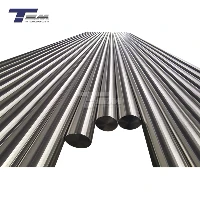
Titanium is widely used in chemical processing equipment because of its excellent corrosion resistance in many oxidizing environments. Its corrosion resistance mainly comes from a thin, stable, and self-repairing oxide film on the metal surface. This protective layer is primarily composed of titanium dioxide (TiO₂).
However, titanium does not perform equally well in every acidic environment. Hot, concentrated sulfuric acid can be particularly aggressive, and its effect on titanium depends on acid concentration, temperature, oxygen availability, impurities, and alloy composition.
For equipment operating in 98% sulfuric acid at 70°C, material selection requires careful evaluation. Under these conditions, commercially pure titanium, including Grade 2 Titanium, should not be assumed to provide reliable long-term corrosion resistance without supporting test data.
Engineering note: Corrosion resistance must be confirmed under representative process conditions. Do not select a titanium grade solely from its name or a single alloying-element threshold.
1. Why Is Titanium Vulnerable to Sulfuric Acid at 70°C?
Titanium normally relies on its surface oxide film to resist chemical attack. When exposed to air or suitable aqueous environments, titanium naturally forms a protective TiO2 layer. The film acts as a barrier between the metal and the surrounding solution, slowing down the electrochemical reactions responsible for corrosion.
However, sulfuric acid is a reducing acid, and titanium's corrosion resistance in this medium is limited. As temperature increases, the stability of the passive film can decrease, particularly when the solution chemistry does not support repassivation.
At 70°C, the following conditions may contribute to corrosion:
- Elevated temperature: Higher temperature can accelerate electrochemical reactions and increase the rate of metal dissolution.
- High acid concentration: Concentrated sulfuric acid creates a chemical environment in which titanium may lose its normal passive behavior.
- Limited oxidizing conditions: The availability of oxidizing species can influence whether titanium remains passive or becomes active.
- Solution impurities: Chlorides, metal ions, dissolved oxygen, and other contaminants may change the corrosion behavior.
- Local operating conditions: Flow velocity, stagnant zones, deposits, and concentration variations can create different corrosion conditions across equipment surfaces.
Titanium corrosion in sulfuric acid is not determined by acid concentration alone. Temperature and solution chemistry must be considered together.
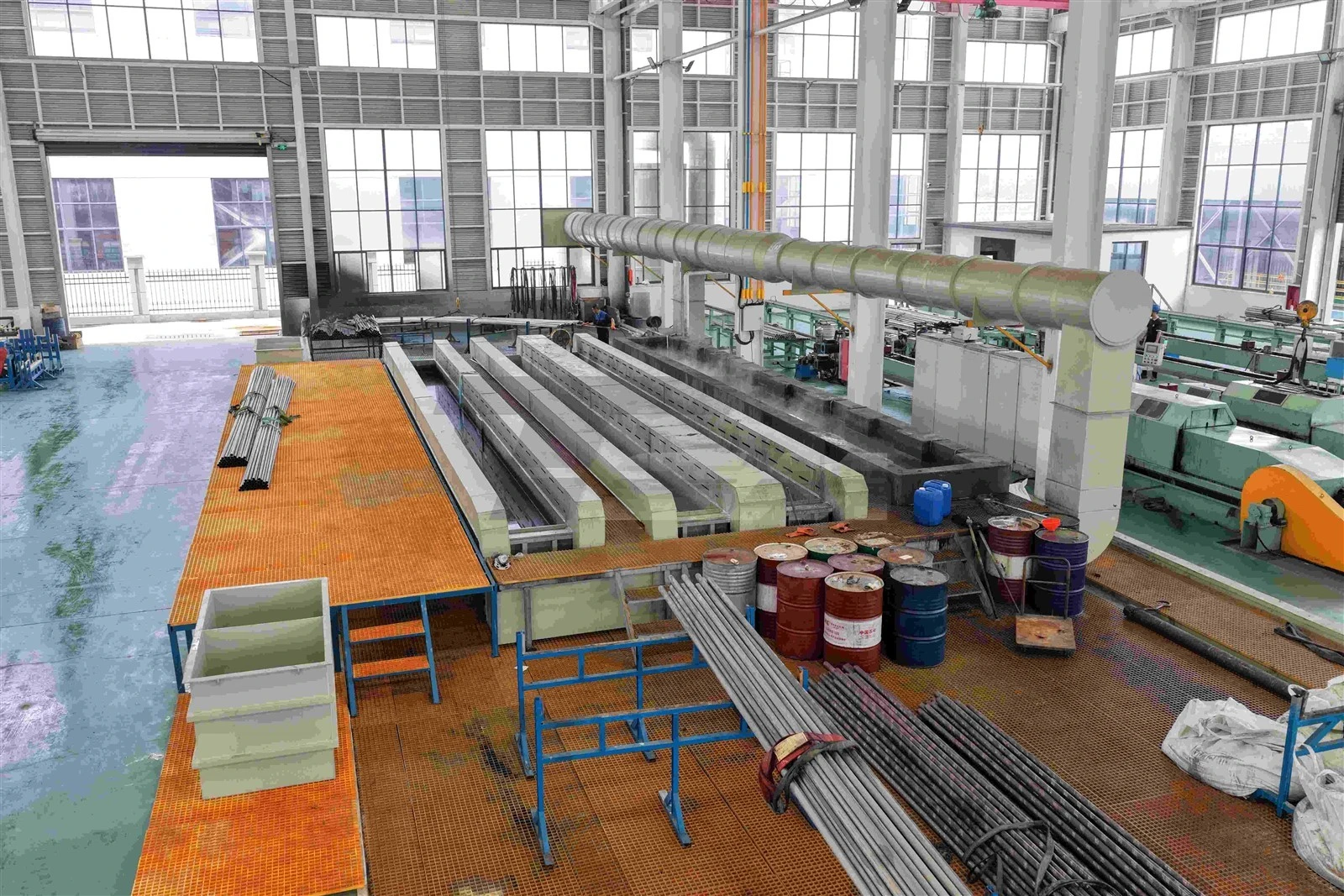
TSM Technology Titanium equipment
2. Corrosion Mechanism: Breakdown of the TiO2 Passive Film
The corrosion behavior of titanium in sulfuric acid can be understood through the formation, deterioration, and possible loss of its passive film.
2.1 Formation of the TiO2 Protective Film
When titanium is exposed to an environment containing oxygen or other suitable oxidizing species, a thin oxide film forms on its surface. This film is mainly composed of TiO2 and provides protection by restricting the movement of ions and electrons involved in corrosion reactions. Under suitable conditions, damage to the oxide film can be followed by repassivation.
2.2 Destabilization of the Passive Film
In hot sulfuric acid, the chemical and electrochemical conditions may no longer support a stable protective film. The passive layer can become less effective, allowing the underlying titanium to contact the acid more directly. The rate of metal dissolution may then increase. Temperature can accelerate the reactions occurring at the metal-solution interface.
2.3 Active Dissolution of Titanium
Once the passive film loses its protective effectiveness, titanium can undergo anodic dissolution.
Ti → Ti4+ + 4e−
Simplified anodic dissolution reaction
The released titanium ions enter the solution and may subsequently participate in reactions with sulfate-containing species. The overall corrosion rate depends on both the anodic dissolution reaction and the corresponding cathodic reactions, as well as the ability of the surface to reform a protective film.
2.4 Localized Attack and Continued Material Loss
If the passive film is not restored effectively, corrosion may continue across the exposed surface. Depending on operating conditions, damage may appear as relatively uniform metal loss or localized surface deterioration.
- Wall-thickness reduction
- Surface roughening
- Localized corrosion
- Increased risk of leakage
- Reduced equipment service life
The actual corrosion morphology must be determined through inspection and testing rather than assumed from acid concentration alone.
3. Does 98% Sulfuric Acid Always Cause More Corrosion Than Dilute Sulfuric Acid?
Not necessarily. Titanium corrosion in sulfuric acid does not follow a simple linear relationship with concentration. Published corrosion studies show that corrosion behavior can change significantly as sulfuric acid concentration increases.
In some concentration ranges, titanium may exhibit relatively lower corrosion rates, while other ranges can produce much more aggressive attack. Temperature and the presence of oxidizing agents or metal ions can further change the results.
Corrosion data obtained from 20%, 40%, or 60% sulfuric acid cannot be directly used to predict the performance of titanium in 98% sulfuric acid at 70°C. Material selection should be based on data obtained under conditions as close as possible to the actual process.
4. Can Molybdenum Improve Titanium's Corrosion Resistance?
Molybdenum is an alloying element that has been investigated for improving the corrosion resistance of titanium in certain acidic environments. Its addition can change the alloy's microstructure and electrochemical behavior. Depending on alloy composition and environment, it may help improve corrosion resistance.
However, the effect of molybdenum is not universal. Its performance depends on molybdenum content, other alloying elements, metallurgical structure and heat treatment, sulfuric acid concentration, operating temperature, and oxidizing or reducing conditions.
Important: It is not appropriate to conclude that adding at least 3% molybdenum will automatically form a stable TiMoO4 protective layer and guarantee corrosion resistance in 98% sulfuric acid at 70°C. The formation and protective role of any specific surface compound must be confirmed by material characterization and corrosion testing.
For engineering applications, the complete alloy composition and test results are more important than relying on a single alloying-element threshold.
5. Is TA12 Titanium Alloy a Suitable Alternative?
TA12 may be considered as a candidate for further evaluation when commercially pure titanium does not meet corrosion-resistance requirements. However, a material designation alone does not establish suitability for a particular sulfuric acid environment. The applicable material standard, exact chemical composition, product form, heat treatment, and corrosion test results should all be verified.
Before selecting TA12 for equipment operating in 98% sulfuric acid at 70°C, engineers should confirm:
- Material specification: Verify the applicable standard and chemical composition of the supplied TA12 material.
- Corrosion test results: Obtain test data for 98 wt% sulfuric acid at approximately 70°C.
- Test duration: Evaluate whether the test duration is sufficient for the intended application.
- Mechanical properties: Confirm that the material meets pressure, temperature, and fabrication requirements.
- Weld performance: Evaluate the corrosion behavior of weld metal and heat-affected zones.
- Operating conditions: Consider impurities, dissolved oxygen, flow conditions, and possible concentration fluctuations.
If available data do not demonstrate acceptable performance, other corrosion-resistant materials or alternative equipment designs should be evaluated.
6. Material Selection for Equipment Handling 98% Sulfuric Acid at 70°C
Selecting a material for concentrated sulfuric acid equipment requires more than comparing nominal alloy compositions.
| Evaluation factor | What should be checked |
|---|---|
| Acid concentration | Actual concentration and possible operating fluctuations |
| Temperature | Normal operating temperature, startup, shutdown, and temperature excursions |
| Chemical composition | Chlorides, metal ions, oxidizing agents, and other impurities |
| Corrosion rate | Test results under representative process conditions |
| Mechanical properties | Strength, ductility, and pressure-design requirements |
| Welding performance | Corrosion resistance of welds and heat-affected zones |
| Service life | Allowable corrosion rate and maintenance requirements |
A practical material-selection process should include laboratory testing, engineering review, and, where necessary, field validation. For severe chemical environments, corrosion coupons and representative welded specimens can provide useful information before full-scale equipment is manufactured.
7. What Corrosion Tests Should Be Conducted?
For titanium equipment exposed to concentrated sulfuric acid, corrosion testing should reproduce the actual operating environment as closely as possible.
Immersion Corrosion Testing
Test representative material specimens in sulfuric acid with a controlled concentration and temperature. Measure weight loss and calculate the corrosion rate over the test period.
Metallographic Examination
Inspect the specimen surface and cross-section to identify localized attack, surface degradation, and possible microstructural changes.
Surface Composition Analysis
Techniques such as X-ray photoelectron spectroscopy (XPS) can help identify the chemical composition of surface films and investigate whether protective oxide layers remain stable.
Electrochemical Testing
Open-circuit potential, potentiodynamic polarization, and electrochemical impedance spectroscopy can provide information about passivation behavior and the stability of the surface film.
Welded Specimen Testing
For fabricated equipment, test the base metal, weld metal, and heat-affected zone where relevant. The corrosion performance of welded areas should not automatically be assumed to match that of the parent material. Test results should be interpreted together with intended service life, mechanical design requirements, and applicable equipment standards.
8. How TSM Titanium Supports Industrial Titanium Material Selection
TSM Technology supplies titanium products for industrial applications, including titanium tubes, plates, bars, forgings, fasteners, flanges, and custom-machined components.
With more than 15 years of manufacturing experience and a 60,000 m² production facility, TSM Titanium supports customers requiring material selection and manufacturing solutions for demanding industrial applications.
Quality control and inspection capabilities include:
- Chemical composition analysis
- Mechanical property testing
- Ultrasonic and eddy current testing
- Positive material identification (PMI)
- Dimensional and surface inspection
- Material traceability and inspection documentation
For titanium equipment used in sulfuric acid service, the material grade should be selected according to the actual chemical environment and engineering requirements.
Explore our Titanium Pipe and Tube Products or browse our Grade 2 Titanium Products.
9. Conclusion
Titanium corrosion in 98% sulfuric acid at 70°C is closely related to the stability of its protective TiO2 passive film. Under aggressive conditions, the passive film may lose its protective effectiveness, allowing active titanium dissolution and continued material degradation.
Molybdenum-containing titanium alloys and TA12 may be considered during material evaluation, but neither should be selected solely on the basis of a general composition claim or alloy designation.
For reliable equipment performance, engineers should verify the exact material specification and obtain corrosion test data under representative operating conditions.
Need Help Selecting Titanium Materials for a Chemical Processing Application?
Contact TSM Titanium to discuss your product requirements, material specifications, and inspection documentation.
Email: info@tsm-titanium.com
Frequently Asked Questions
1. Can Grade 2 Titanium be used in 98% sulfuric acid at 70°C?
Grade 2 Titanium should not be assumed suitable for this environment without supporting corrosion data. Hot, concentrated sulfuric acid can cause titanium to lose its passive behavior and undergo accelerated corrosion.
2. Why does titanium corrode in sulfuric acid?
Titanium normally relies on a protective TiO2 film. In aggressive sulfuric acid conditions, the film may become unstable or lose its protective effectiveness, allowing titanium to dissolve into the solution.
3. Does adding molybdenum improve titanium's sulfuric acid resistance?
Molybdenum can influence the corrosion behavior of titanium alloys. However, the improvement depends on the complete alloy composition and test environment. A specific molybdenum content does not guarantee resistance under every sulfuric acid condition.
4. Is TA12 suitable for 98% sulfuric acid at 70°C?
TA12 may be evaluated as a candidate material, but its suitability must be confirmed using the applicable material specification and corrosion test data under representative operating conditions.
5. What factors affect titanium corrosion in concentrated sulfuric acid?
Important factors include acid concentration, temperature, dissolved oxygen, impurities, flow velocity, surface condition, and alloy composition.
6. What is the best way to evaluate titanium corrosion resistance?
Conduct immersion tests and, where appropriate, electrochemical and surface-analysis tests using the actual acid concentration and operating temperature. Welded specimens should also be evaluated when the equipment contains welded joints.
References
- Corrosion of Titanium: Part 1: Aggressive Environments and Main Forms of Degradation. Journal of Applied Biomaterials & Functional Materials.
- Parr Instrument Company. Titanium Corrosion Information – Sulfuric Acid.
- ASM Handbook. Corrosion and Corrosion Testing of Titanium.
- Influence of Concentration and Temperature on the Corrosion Behavior of Titanium in Sulfuric Acid Solutions. Materials Chemistry and Physics.
- Effect of Alloying Elements on Corrosion Properties of High Corrosion Resistant Titanium Alloys in High Concentrated Sulfuric Acid. Materials Today Communications.
- TSM Titanium. Titanium Products and Manufacturing Information. https://www.tsm-titanium.com/