


Hastelloy G30 tubes, known for their exceptional corrosion resistance and mechanical strength, are widely used in chemical processing, phosphoric acid plants, and heat exchanger systems. Engineers and procurement managers often face the choice between seamless and welded tubes. This decision impacts operational safety, maintenance, and long-term performance. Understanding the differences in manufacturing, mechanical properties, corrosion resistance, and suitability for application is essential for selecting the right tube for your project.

Seamless vs Welded Hastelloy Tubes: Manufacturing Overview
|
Feature |
Seamless Tube |
Welded Tube |
|
Manufacturing Method |
Extruded or hot-rolled without a seam |
Rolled and welded from flat plates or strips |
|
Structural Uniformity |
High, no weld seam |
Slightly lower, weld seam can be weaker |
|
Size Range |
Small to medium diameters |
Large diameters possible |
|
Cost |
Higher due to complex process |
Lower, economical for larger sizes |
|
Pressure Rating |
Higher, suitable for high-pressure applications |
Moderate, depends on weld quality |
|
Applications |
Chemical piping, high-pressure reactors |
Storage tanks, large heat exchangers |
Seamless tubes are ideal for critical chemical processes where pressure integrity and uniform corrosion resistance are essential. Welded tubes can be used where budget constraints or large diameters make seamless tubing impractical.
Mechanical Properties Comparison
|
Property |
Seamless G30 Tube |
Welded G30 Tube |
|
Tensile Strength |
586 MPa |
550–580 MPa |
|
Yield Strength |
241 MPa |
230–240 MPa |
|
Elongation |
≥30% |
≥28% |
|
Hardness |
≤100 HRB |
≤95 HRB |
|
Pressure Rating |
High |
Medium |
Seamless tubes offer slightly higher mechanical strength due to the absence of welds, making them more suitable for high-pressure, high-temperature chemical environments.
Corrosion Resistance
Both seamless and welded Hastelloy G30 tubes maintain excellent corrosion resistance, but welded tubes require post-weld annealing to match seamless performance.
|
Environment |
Seamless Tube |
Welded Tube |
Notes |
|
Phosphoric Acid |
Excellent |
Very Good |
Seamless preferred in high-temperature pipelines |
|
Nitric Acid |
Excellent |
Very Good |
Seamless better for critical reactors |
|
Sulfuric Acid |
Excellent |
Good |
Post-weld heat treatment needed for optimal performance |
|
Chloride Solutions |
Excellent |
Very Good |
Seamless has uniform protection |
|
Mixed Acid Systems |
Excellent |
Very Good |
Welded requires proper inspection and testing |

Application Scenarios
Seamless Hastelloy G30 Tubes
High-pressure chemical piping
Evaporator coils
Reactor internals
Heat exchanger tubing under corrosive conditions
Welded Hastelloy G30 Tubes
Large-diameter pipelines
Storage tanks and vessels
Low to medium-pressure acid transfer lines
Non-critical heat exchangers
Application Comparison Table
|
Application |
Seamless Tube |
Welded Tube |
Recommendation |
|
Phosphoric Acid Pipelines |
Excellent |
Very Good |
Use seamless for high temperature & pressure |
|
Heat Exchangers |
Excellent |
Good |
Seamless preferred for critical units |
|
Storage Tanks |
Good |
Excellent |
Welded is more economical |
|
Large-Diameter Piping |
Limited |
Excellent |
Welded is feasible and cost-effective |
Choosing the Right Tube
Factors to Consider:
Process Conditions: Acid type, temperature, pressure
Mechanical Requirements: Strength, ductility, pressure rating
Tube Diameter: Seamless for small/medium, welded for large
Budget Constraints: Welded tubes generally cost less
Fabrication & Inspection: Post-weld heat treatment and NDT required for welded tubes
Supplier Considerations:
ASTM B622 compliance
UNS N06030 material certification
EN 10204 3.1 Mill Test Certificate
PMI testing, hydrostatic test, eddy current inspection
FAQ
Q1: Can welded G30 tubes match seamless performance?
A1: With proper post-weld annealing and testing, welded tubes approach seamless corrosion resistance, but seamless is always preferred for critical high-pressure applications.
Q2: Are seamless tubes more expensive than welded tubes?
A2: Yes, seamless tubes cost more due to complex manufacturing, but they offer higher mechanical and corrosion performance.
Q3: What industries commonly use seamless G30 tubes?
A3: Chemical processing, phosphoric acid plants, heat exchangers, reactors, and high-pressure industrial piping.
Q4: When should I choose welded G30 tubes?
A4: For large diameters, storage tanks, or budget-sensitive projects, welded tubes are suitable if post-weld treatment and inspection are followed.
Q5: What testing ensures welded tube quality?
A5: Hydrostatic test, PMI verification, eddy current inspection, and post-weld heat treatment certificates.
Q6: Can G30 tubes be welded on-site?
A6: Yes, but onsite welding must follow strict procedures with proper filler material and heat treatment to maintain corrosion resistance.
Conclusion
The choice between seamless and welded Hastelloy G30 tubes depends on pressure, diameter, acid type, and budget. Seamless tubes are optimal for critical, high-pressure, high-temperature, or aggressive acid environments, while welded tubes are cost-effective for large diameters or less demanding conditions.
For certified Hastelloy G30 tubes, both seamless and welded, TSM Technology provides ASTM B622 compliance, full traceability, and custom manufacturing solutions.
Email: info@tsm-titanium.com
We are always at your service when you need
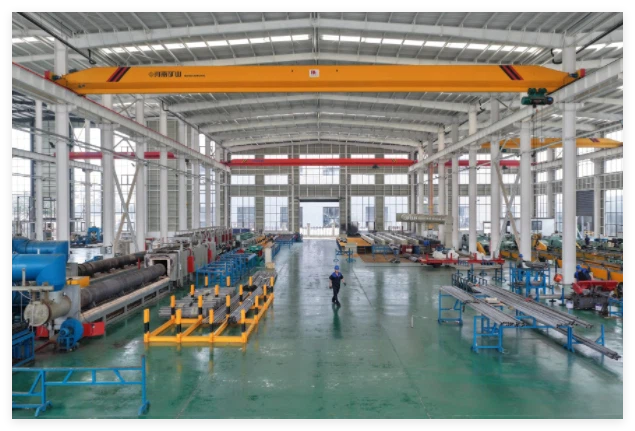
TSM Technology, one of the leading Asian suppliers of high-performance titanium-based materials in China, specializes in factory-made products such as titanium tubes, welded titanium pipes and fittings, titanium flanges, titanium fasteners and nuts, titanium plates and rods, among others.
They are widely used in the construction of heat exchangers, condensers, power plants, seawater desalination facilities, oil and gas pipelines, chlor-alkali plants, and other related fields.
Number of Employees
years experience
Modern factory
Global Supply
We are here for you
To create the top brand in the field of titanium products

Let TSM help you get your project off the ground
Since 2011, TSM has served over 1,000 clients all over the world, especially in Europe, the USA.TSM has its distributor in the Netherlands and Romania. The market distribution of TSM will shown as follows: North America: 10%, South America: 12%, Europe: 60%, Southeast Asia: 8%, Lcoal market: 10%.


