


Both seamless and welded Hastelloy C276 tubes offer outstanding corrosion resistance and are widely used in chemical processing, heat exchangers, and acid handling systems. However, seamless tubes are generally preferred for high-pressure, high-temperature, and critical process applications because they have no weld seam and provide more uniform mechanical properties. Welded tubes are often a cost-effective solution for larger diameters and less demanding service conditions.
Introduction
When specifying Hastelloy C276 tubes for industrial projects, one of the most common questions engineers and procurement managers ask is:
Should I choose seamless or welded tubes?
The answer depends on several factors:
- Operating pressure
- Process temperature
- Corrosive media
- Tube size requirements
- Budget considerations
- Inspection requirements
Although both products are manufactured from the same UNS N10276 alloy, their manufacturing processes create important differences in performance, cost, and application suitability. This guide compares seamless and welded Hastelloy C276 tubes in detail to help buyers select the most suitable option.

Understanding Hastelloy C276
Hastelloy C276 is a nickel-chromium-molybdenum alloy designed for exceptional corrosion resistance in both oxidizing and reducing environments.
Typical Chemical Composition
|
Element |
Content (%) |
|
Nickel (Ni) |
Balance |
|
Chromium (Cr) |
15–17 |
|
Molybdenum (Mo) |
15–17 |
|
Iron (Fe) |
4–7 |
|
Cobalt (Co) |
3–7 |
|
Tungsten (W) |
0.5–3 |
|
Carbon (C) |
≤0.03 |
This composition allows C276 to resist:
Hydrochloric acid
Sulfuric acid
Phosphoric acid
Chloride-containing solutions
Mixed chemical media
Seawater environments
How Seamless and Welded Tubes Are Manufactured
Understanding the manufacturing process helps explain the performance differences.
Seamless Tube Manufacturing
Seamless tubes are produced from a solid billet.
Production Process
Nickel alloy billet preparation
Hot piercing
Extrusion or rolling
Cold working
Solution annealing
Final inspection
Because no weld seam exists, the tube structure remains continuous throughout the entire circumference.
Welded Tube Manufacturing
Welded tubes are manufactured from alloy strip or plate.
Production Process
Alloy strip forming
Longitudinal welding
Weld bead treatment
Heat treatment
Non-destructive testing
Final inspection
Modern welding technology produces high-quality welded tubes with excellent performance, especially when properly solution annealed.
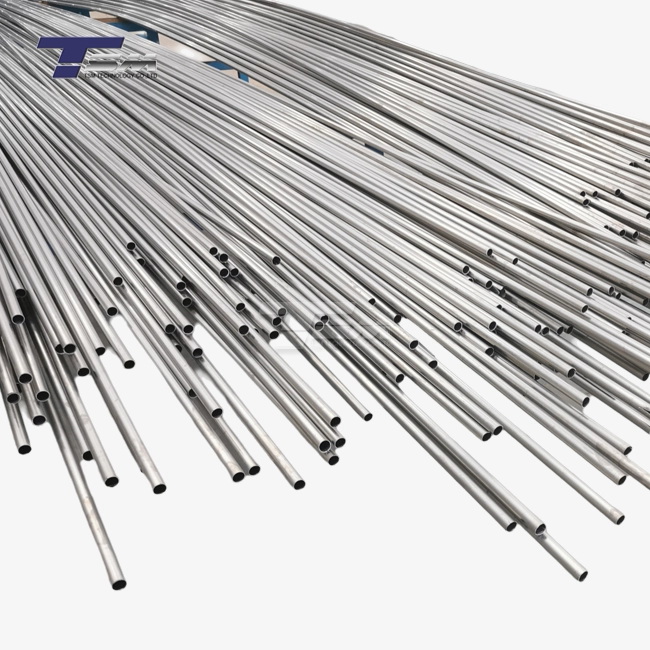
Seamless vs Welded C276 Tubes: Manufacturing Comparison
|
Feature |
Seamless Tube |
Welded Tube |
|
Weld Seam |
None |
Present |
|
Material Uniformity |
Excellent |
Very Good |
|
Pressure Capability |
Higher |
Moderate to High |
|
Large Diameter Availability |
Limited |
Excellent |
|
Production Complexity |
High |
Moderate |
|
Cost |
Higher |
Lower |
|
Lead Time |
Longer |
Shorter |
Mechanical Properties Comparison
Since both products use the same alloy chemistry, mechanical properties are generally similar.
However, seamless tubes often provide slightly better consistency.
|
Property |
Seamless C276 |
Welded C276 |
|
Tensile Strength |
≥485 MPa |
≥485 MPa |
|
Yield Strength |
≥205 MPa |
≥205 MPa |
|
Elongation |
≥30% |
≥30% |
|
Structural Uniformity |
Excellent |
Very Good |
|
High Pressure Performance |
Excellent |
Good |
For most industrial applications, both meet ASTM requirements.
Corrosion Resistance Comparison
One of the biggest misconceptions is that welded tubes automatically have inferior corrosion resistance.
Modern solution-annealed C276 welded tubes can achieve corrosion resistance very close to seamless products.
Corrosion Performance
|
Environment |
Seamless |
Welded |
|
Hydrochloric Acid |
Excellent |
Excellent |
|
Sulfuric Acid |
Excellent |
Excellent |
|
Phosphoric Acid |
Excellent |
Excellent |
|
Chloride Solutions |
Excellent |
Excellent |
|
Seawater |
Excellent |
Excellent |
|
Mixed Acid Systems |
Excellent |
Very Good |
The key factor is weld quality and post-weld heat treatment.
Pressure Performance Comparison
Pressure resistance is often the deciding factor.
Why Seamless Tubes Are Preferred for High Pressure
A seamless tube has:
No weld seam
Uniform grain structure
Lower risk of weld-related defects
Therefore, industries frequently specify seamless tubes for:
High-pressure reactors
Critical process piping
Nuclear systems
Pharmaceutical production
Pressure Application Guide
|
Application |
Recommended Tube Type |
|
High Pressure Chemical Piping |
Seamless |
|
Reactor Coils |
Seamless |
|
Heat Exchanger Tubes |
Seamless Preferred |
|
Condensers |
Both |
|
Storage Systems |
Welded |
|
Low Pressure Transfer Lines |
Welded |
Heat Exchanger Applications
Heat exchangers represent one of the largest markets for Hastelloy C276 tubes.
Seamless Heat Exchanger Tubes
Advantages:
Better pressure resistance
Uniform wall thickness
Enhanced reliability
Common applications:
Acid coolers
Condensers
Evaporators
Process heat exchangers
Welded Heat Exchanger Tubes
Advantages:
Lower cost
Larger diameters available
Faster production
Common applications:
Large shell-and-tube exchangers
Cooling systems
Utility services
Cost Comparison
Cost often plays a major role during procurement.
Typical Cost Factors
|
Factor |
Seamless |
Welded |
|
Raw Material Cost |
Similar |
Similar |
|
Manufacturing Cost |
Higher |
Lower |
|
Inspection Cost |
Higher |
Lower |
|
Large Diameter Production |
Expensive |
Economical |
|
Total Purchase Cost |
Higher |
Lower |
Depending on dimensions, welded tubes can be 15–40% less expensive than seamless alternatives.
Size Availability Comparison
Common Dimensions
|
Parameter |
Seamless Tube |
Welded Tube |
|
Outside Diameter |
6 mm–114.3 mm |
Up to 2000 mm+ |
|
Wall Thickness |
0.5 mm–10 mm |
Custom |
|
Length |
Up to 12 m |
Custom |
|
Surface Finish |
BA, Pickled, Polished |
BA, Pickled, Polished |
For very large diameters, welded tubes are usually the only practical solution.
Inspection and Testing Requirements
Both seamless and welded C276 tubes should undergo rigorous testing.
Common Inspection Methods
|
Test Method |
Purpose |
|
PMI Testing |
Alloy verification |
|
Hydrostatic Test |
Pressure integrity |
|
Eddy Current Test |
Surface defect detection |
|
Ultrasonic Testing |
Internal defect detection |
|
Tensile Testing |
Mechanical verification |
|
Hardness Testing |
Strength evaluation |
|
Dimensional Inspection |
Size verification |
Always request testing documentation before purchase.
Which Tube Should You Choose?
Choose Seamless C276 Tubes If:
✓ High-pressure service is involved
✓ Maximum reliability is required
✓ Critical process equipment is being specified
✓ Pharmaceutical or nuclear applications are involved
✓ Project specifications require ASTM B622 seamless tubing
Choose Welded C276 Tubes If:
✓ Large diameters are required
✓ Budget is a major consideration
✓ Operating pressure is moderate
✓ Fabrication flexibility is important
✓ Project specifications allow welded products
Supplier Evaluation Checklist
Before purchasing Hastelloy C276 tubes, verify:
|
Requirement |
Check |
|
ASTM B622 Compliance |
✓ |
|
UNS N10276 Certification |
✓ |
|
EN 10204 3.1 MTC |
✓ |
|
PMI Testing |
✓ |
|
Hydrostatic Testing |
✓ |
|
Traceability System |
✓ |
|
Heat Treatment Records |
✓ |
|
Export Packaging |
✓ |
Why Choose TSM Technology?
TSM Technology supplies premium Hastelloy C276 tubes for global industries including:
Chemical processing
Heat exchangers
Oil and gas
Power generation
Environmental engineering
Our advantages include:
ASTM-compliant production
Custom dimensions
Full material traceability
EN 10204 3.1 certification
PMI and NDT testing
Global shipping support
FAQ
Q: Is Seamless C276 Stronger Than Welded C276?
A: Generally yes. Seamless tubes provide more uniform mechanical properties and are preferred for high-pressure applications.
Q: Is Welded C276 Less Corrosion Resistant?
A: Not necessarily. Properly welded and heat-treated C276 tubes can achieve corrosion resistance very close to seamless products.
Q: Which Is More Expensive?
A: Seamless tubes are typically 15–40% more expensive due to the manufacturing process.
Q: Are Welded Tubes Acceptable For Heat Exchangers?
A: Yes. Many industrial heat exchangers successfully use welded C276 tubing.
Q: Which Tube Type Is Best For Hydrochloric Acid Service?
A: Both offer excellent corrosion resistance, but seamless tubes are preferred for high-pressure systems.
Q: What Standard Covers Seamless C276 Tubes?
A: ASTM B622 is the primary specification for seamless Hastelloy C276 tubes.
Q: What Standard Covers Welded C276 Tubes?
A: ASTM B619 and ASTM B626 are commonly used for welded nickel alloy tubing.
Q: Can Welded Tubes Be Used In Chemical Plants?
A: Absolutely. Welded C276 tubes are widely used in chemical processing equipment worldwide.
Conclusion
Both seamless and welded Hastelloy C276 tubes provide exceptional corrosion resistance and long-term reliability in aggressive chemical environments. Seamless tubes remain the preferred choice for critical, high-pressure applications, while welded tubes offer significant cost advantages and greater dimensional flexibility. By understanding the differences in manufacturing, performance, and application suitability, engineers and buyers can select the most cost-effective solution for their projects.
Looking for a Reliable Hastelloy C276 Tube Supplier?
TSM Technology supplies ASTM-compliant Hastelloy C276 seamless and welded tubes with full material traceability, PMI testing, EN 10204 3.1 certification, and customized manufacturing capabilities.
Email: info@tsm-titanium.com
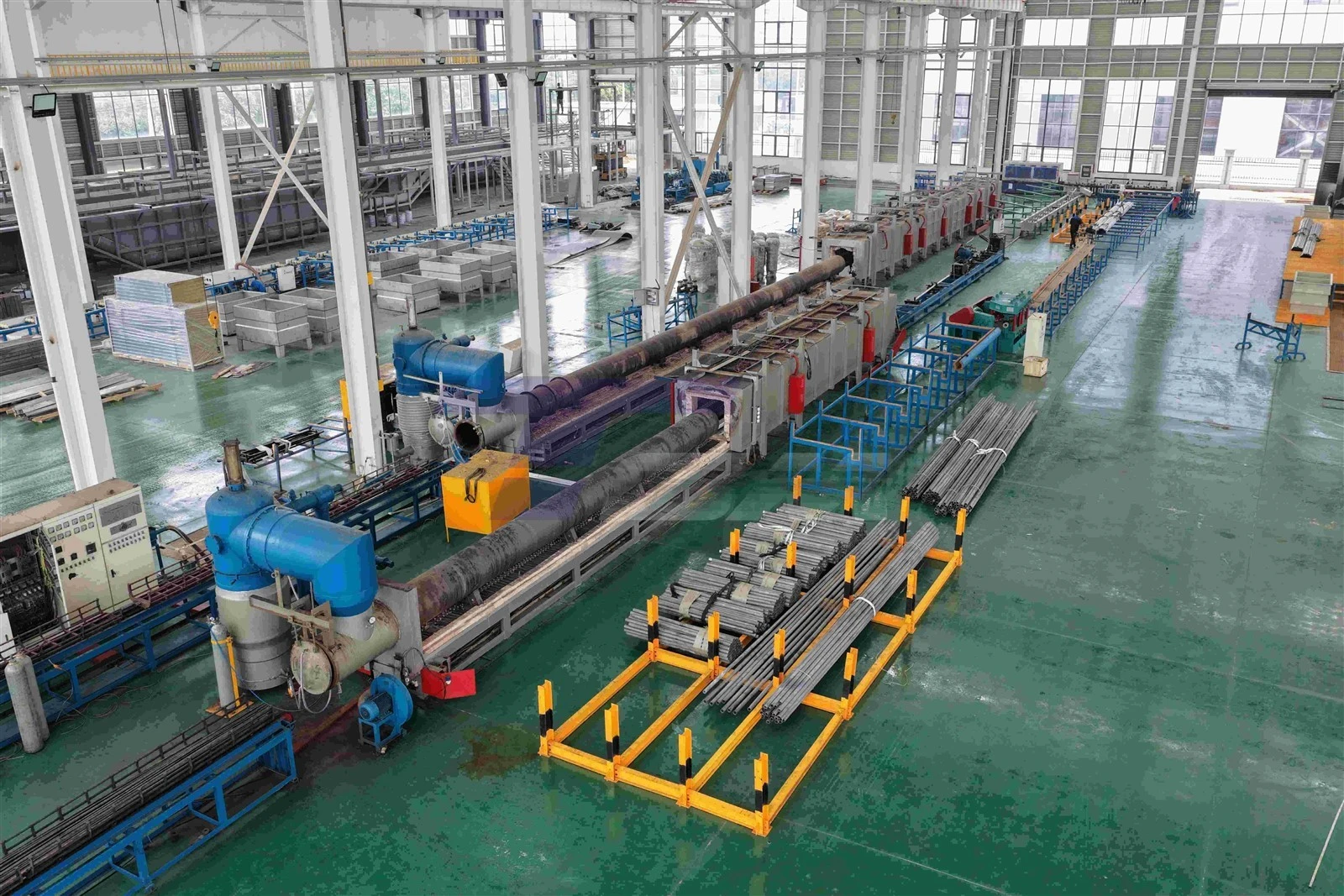
We are always at your service when you need
TSM Technology, one of the leading Asian suppliers of high-performance titanium-based materials in China, specializes in factory-made products such as titanium tubes, welded titanium pipes and fittings, titanium flanges, titanium fasteners and nuts, titanium plates and rods, among others.
They are widely used in the construction of heat exchangers, condensers, power plants, seawater desalination facilities, oil and gas pipelines, chlor-alkali plants, and other related fields.
Number of Employees
years experience
Modern factory
Global Supply

Let TSM Technology help you get your project off the ground
Since 2011, TSM Technology is a China-based titanium manufacturer specializing in titanium tubes, plates, bars, forgings, fasteners, flanges, and custom-machined titanium components for aerospace, medical, marine, and industrial applications.


