


Grade 3 titanium plate, part of the commercially pure titanium family, exhibits exceptional resistance to corrosion in seawater and marine atmospheres, maintaining durability even after prolonged exposure to saltwater, tidal zones, and splashing environments. Thanks to a naturally forming protective oxide layer (TiO₂) on the surface, titanium resists general corrosion, pitting, crevice corrosion, and microbiologically influenced corrosion much better than almost all conventional engineering metals - including stainless steels and copper-nickel alloys - making it a preferred choice for offshore, desalination, and shipbuilding applications.
What Makes Titanium Exceptional in Marine Corrosion Resistance?
Titanium's ability to withstand corrosion in seawater stems from its highly adherent and self-healing oxide film that forms instantly when the metal is exposed to oxygen - even in wet or submerged conditions. This passive TiO₂ layer acts as a barrier to chloride ions and other aggressive species that typically accelerate corrosion in metal structures.
Unlike many metals that suffer accelerated attack in saline environments, titanium - including Grade 3 titanium plate and other commercially pure grades - remains largely unaffected by:
General corrosion in seawater up to ~260°C
Pitting corrosion even under chloride attack
Crevice corrosion in aerated seawater up to elevated temperatures
Microbiologically influenced corrosion (MIC), which affects most other metals
This resilience makes titanium plate and titanium sheet metal extremely reliable for marine and offshore structures.
Scientific Data Supporting Titanium in Marine Use
According to the International Titanium Association, commercially pure titanium (which includes Grade 3) is immune to crevice corrosion in aerated seawater up to at least 70°C, and immune to pitting unless extremely high impressed currents are applied. Titanium also resists hydrogen damage and demonstrates extensive service life even under flowing seawater conditions.
Historical marine service data show titanium components - including titanium alloy sheet and tube products - in seawater for decades with no measurable corrosion, even at depths exceeding a mile and in polluted or high-chloride environments. This contrasts sharply with materials like copper-nickel or stainless steels, which are prone to pitting and crevice corrosion in similar conditions.
What Is Grade 3 Titanium Plate and Why It Matters in Marine Environments
Grade 3 titanium plate is a commercially pure titanium grade with a balanced combination of strength, ductility, and corrosion resistance, typically stronger than Grade 1 and Grade 2, yet maintaining the excellent seawater resistance characteristic of CP titanium. This makes it ideal for larger structures and applications where mechanical load and marine corrosion resistance are both critical.
Other grades (like Grade 4 or palladium-alloyed variants) may be selected for even higher corrosion resistance in extremely aggressive marine environments, but Grade 3 remains a robust, cost-effective solution for most seawater exposures.
Key Marine Corrosion Modes and Titanium's Behavior
General Seawater Corrosion
Titanium demonstrates negligible general corrosion when exposed to natural seawater, tidal zones, and splash zones. Even marine deposits over time do not significantly alter corrosion performance, largely due to titanium's stable passive film.
Pitting and Crevice Corrosion
Titanium's resistance to pitting and crevice corrosion - two devastating marine corrosion modes caused by chloride ion concentration in stagnant zones - is significantly better than stainless steels or copper-nickel alloys. In most service conditions, titanium plate products do not show localized attack that would jeopardize structural integrity.
Microbiologically Influenced Corrosion (MIC)
Unlike other metals, titanium shows a unique immunity to MIC. Marine bacteria and biological growth that compress moisture layers and create corrosive microenvironments do not degrade titanium's protective surface.
Erosion Corrosion
Titanium also resists corrosion under high water velocity and abrasive conditions better than many alternatives. Titanium can endure flowing seawater at high velocities (tens of meters per second) with only minimal erosion, which is critical for piping and heat exchanger systems.
How Titanium Compares to Other Marine Materials
|
Material |
Corrosion Resistance in Seawater |
Localized Attack Resistance |
Service Life |
|
Grade 3 Titanium Plate |
Excellent (negligible general corrosion) |
Very High (pitting/crevice resistant) |
20+ years (often >30 yrs) |
|
Stainless Steel 316/316L |
Moderate; susceptible to pitting |
Moderate |
5–15 years |
|
Copper-Nickel Alloys |
Good general resistance |
Moderate (crevice risk) |
10–20 years |
|
Carbon Steel |
Poor (rapid corrosion) |
Poor |
1–5 years |
Titanium's advantage is rooted in its self-healing oxide layer and noble position in the corrosion series, meaning it often serves as the cathode when coupled with other metals and does not corrode easily in galvanic contexts.
Design and Fabrication Considerations in Marine Systems
Welded vs. Weld-Free Construction
While corrosion resistance for Grade 3 titanium plate remains high even at welded joints, good fabrication practices - including proper shielding gas coverage and heat control - ensure that weld zones do not lose their passive protection.
Compatibility with Cathodic Protection
Titanium integrates well with cathodic protection systems often used on ships and offshore platforms. Unlike sacrificial anodes on steel structures, titanium can function passively without requiring additional corrosion protection.
Temperature and Chloride Conditions
Titanium's passive film remains stable across a broad range of seawater temperatures and chloride concentrations. However, for extreme marine environments (very hot seawater above ~80–90°C or high stress crevice zones), palladium-modified grades (e.g., Grade 7 or other alloyed variants) may offer enhanced localized corrosion resistance.
Practical Marine Applications for Grade 3 Titanium Plate
Grade 3 titanium plate and titanium sheet metal are widely used in:
- Seawater piping systems (heat exchangers, condensers, pipelines)
- Offshore production facilities (platform structures and corrosion-resistant components)
- Shipbuilding (hull fittings, fasteners, marine hardware)
- Desalination plants (tubing, heat exchanger surfaces)
- Marine sensors and instrumentation housings
In these applications, titanium's corrosion resistance translates into lower maintenance costs, longer operation life, and reduced risk of unexpected failures compared to traditional materials.
Industry Standards and Certification
To ensure reliable performance in marine environments, Grade 3 titanium plate and related titanium alloy sheet products are manufactured and inspected according to international standards such as:
ASTM B265 – Titanium and Titanium Alloy Strip, Sheet, and Plate
ASME SA-265 – Marine and pressure vessel applications
ISO 3585 – Wrought titanium and titanium alloy plate/sheet
These standards specify chemical composition, mechanical properties, allowable tolerances, and testing protocols - all critical for ensuring corrosion resistance in demanding environments.
Why Choose TSM Technology for Marine-Grade Titanium Solutions
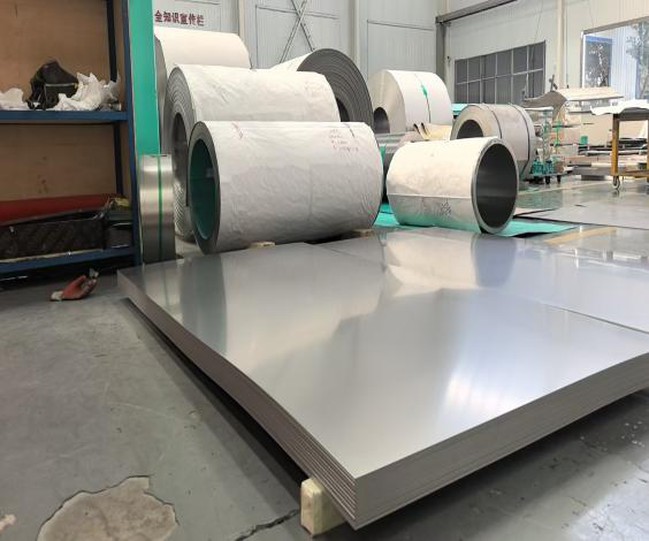
At TSM Technology, we specialize in producing high-quality Grade 3 Titanium Plate, titanium plate, titanium sheet metal, and titanium alloy sheet suitable for marine and offshore use. Our products are manufactured with meticulous control over composition, surface quality, and mechanical properties, ensuring long-term corrosion resistance and structural reliability.
TSM Technology advantages include:
Advanced melting, rolling, and finishing processes
Compliance with ASTM, ASME, EN, and ISO standards
Global supply and customization for specific marine requirements
Experienced technical support for material selection
Whether your project involves seawater piping, desalination equipment, or offshore structures, TSM's titanium solutions deliver the performance and durability needed for long-term marine service.
Conclusion
In summary, Grade 3 titanium plate offers exceptional corrosion resistance in marine environments, far outperforming many traditional metals in seawater exposure, tidal zones, and offshore conditions. Its naturally forming, self-healing oxide film protects against general, pitting, and crevice corrosion, while its compatibility with marine fabrication and cathodic protection systems makes it a preferred material for long-lasting marine engineering applications.
For engineers and procurement specialists seeking reliable, corrosion-resistant materials, Grade 3 Titanium Plate from TSM Technology provides a sustainable and high-performance choice for marine and offshore projects.
References
International Titanium Association, Titanium Continues to Demonstrate Its Value in Seawater Service, titanium.org.
Sales Offices – Corrosion of Titanium & Titanium Alloys in Water & Seawater, australwright.com.au.
US Titanium Industry – Seawater General Corrosion & Erosion, usa-titanium.com.
Selecting Titanium Sheet for Marine Environments – Lasting Titanium.
JL Clad Metals – Marine-Grade Titanium Clad Plates for Anti-Corrosion Seawater Systems.
Contact Us
For more information about our marine-grade titanium products, including Grade 3 Titanium Plate, titanium sheet metal, and titanium alloy sheet, please contact us.Our expert team is ready to assist you in selecting the right material for your project and ensuring optimal performance in marine environments.
Email: info@tsm-titanium.com

We are always at your service when you need
TSM Technology, one of the leading Asian suppliers of high-performance titanium-based materials in China, specializes in factory-made products such as titanium tubes, welded titanium pipes and fittings, titanium flanges, titanium fasteners and nuts, titanium plates and rods, among others.
They are widely used in the construction of heat exchangers, condensers, power plants, seawater desalination facilities, oil and gas pipelines, chlor-alkali plants, and other related fields.
Number of Employees
years experience
Modern factory
Global Supply

Let TSM help you get your project off the ground
Since 2011, TSM has served over 1,000 clients all over the world, especially in Europe, the USA.TSM has its distributor in the Netherlands and Romania. The market distribution of TSM will shown as follows: North America: 10%, South America: 12%, Europe: 60%, Southeast Asia: 8%, Lcoal market: 10%.


