


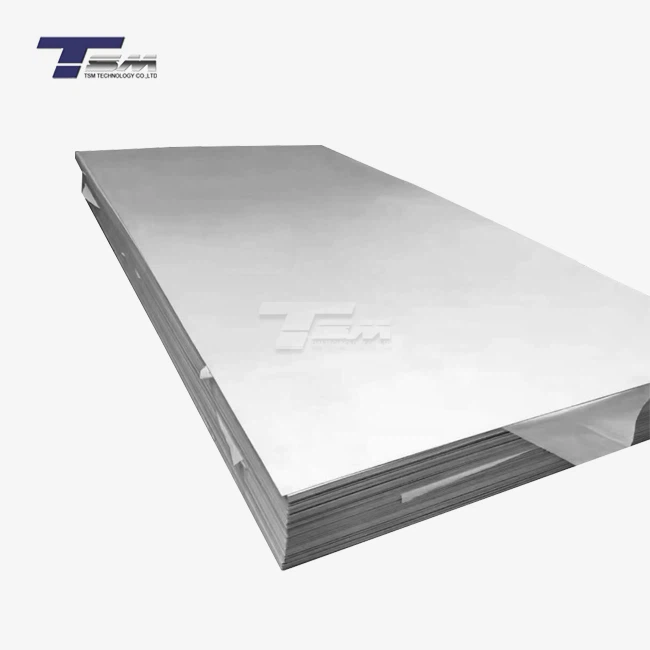
ASTM B265 Titanium Gr.5 Sheet (Ti-6Al-4V) generally offers higher strength, excellent corrosion resistance, and competitive weight advantages compared with both Grade 2 and Grade 9 titanium grades. While Gr2 provides the best corrosion resistance in mild environments and Gr9 delivers a balance of strength and ductility, Gr5 provides superior strength and overall performance for applications that demand high load-bearing capacity without significantly sacrificing corrosion resistance or weight savings.

Understanding Titanium Grades and ASTM B265
ASTM B265 defines chemical composition and mechanical property requirements for titanium and titanium alloy strip, sheet, and plate used in a wide range of industrial applications. Among these, ASTM B265 Titanium Gr.5 Sheet (commonly referred to as Ti-6Al-4V) is one of the most frequently specified grades due to its high strength and favorable combination of other properties.
Other common grades include:
Grade 2 Titanium: Commercially pure titanium with excellent corrosion resistance and good ductility.
Grade 9 Titanium: A titanium alloy (typically Ti-3Al-2.5V) that combines moderate strength with good ductility and weldability.
Understanding how these grades compare in terms of strength, weight, and corrosion resistance is crucial for engineers and material buyers making design decisions.
Strength Comparison: Gr5 vs Gr2 vs Gr9
When it comes to tensile strength and yield strength, ASTM B265 Titanium Gr.5 Sheet consistently outperforms both Grade 2 and Grade 9.
ASTM B265 Titanium Gr.5 Sheet (Ti-6Al-4V): Exhibits tensile strengths in the range of ~900–1,200 MPa and high yield strength (typical ~880 MPa or higher in heat-treated conditions). This makes it suitable for aerospace, automotive, and structural applications where high mechanical load and fatigue resistance are required.
Grade 9 (Ti-3Al-2.5V): Offers moderate strength (~700–900 MPa tensile) with better ductility than Gr5, making it a balanced choice for hydraulic tubing, aerospace actuators, and certain marine applications.
Grade 2 Titanium: Has lower strength (~345–550 MPa tensile) but excellent corrosion resistance and formability, suitable for chemical process equipment, marine hardware, and less stressed components.
In summary, Gr5 > Gr9 > Gr2 in terms of strength, with Gr5 significantly outpacing the others in high-stress environments.
Weight and Density Considerations
One of titanium's most compelling advantages is its lightweight nature, with a density of approximately 4.43 g/cm³, which is significantly lower than steel (≈7.85 g/cm³) and most nickel alloys.
Across titanium grades:
ASTM B265 Titanium Gr.5 Sheet shares nearly the same density as Gr2 and Gr9 because the base metal is titanium. Alloying elements such as aluminum and vanadium in Gr5 and the vanadium in Gr9 do not significantly alter density.
In real-world terms, this means that designers can exploit strength gains without a corresponding increase in weight-especially beneficial in aerospace, motorsport, and lightweight structural applications.
If strength is a priority, Grade 5 allows engineers to use thinner sections for equivalent performance, further reducing overall component weight compared to Grade 2 or Grade 9.
Corrosion Resistance: How the Grades Compare
Corrosion resistance is a key consideration, particularly in marine, chemical processing, and biomedical environments.
Grade 2 Titanium
Excellent corrosion resistance virtually across all natural environments.
Highly stable oxide film prevents general corrosion, pitting, and crevice corrosion even in seawater and acidic environments.
Often chosen for pipework, tanks, and chemical plant components where exposure to aggressive media is expected.
ASTM B265 Titanium Gr.5 Sheet
Corrosion resistance remains very good in many environments, though marginally lower than pure titanium grades in some specific conditions (e.g., reducing acids).
In general seawater, oxidizing conditions, and non-reducing environments, Gr5 performs comparably to Grade 2.
The alloying elements (Al and V) promote strength while retaining robust corrosion resistance.
Grade 9 Titanium
Offers corrosion resistance similar to Grade 2 in many environments, particularly in chloride and marine conditions.
Slightly lower general corrosion resistance than pure titanium grades, but still excellent compared to stainless steels.
In terms of corrosion resistance alone, Grade 2 ≥ Grade 9 ≥ ASTM B265 Titanium Gr.5 Sheet, though all exhibit excellent stability compared to most metals.
Practical Comparisons for Typical Applications
|
Property |
Grade 2 |
ASTM B265 Titanium Gr.5 Sheet |
Grade 9 |
|
Tensile Strength |
~345–550 MPa |
~900–1,200 MPa |
~700–900 MPa |
|
Yield Strength |
~275–480 MPa |
~800–900+ MPa |
~600–700 MPa |
|
Density |
~4.43 g/cm³ |
~4.43 g/cm³ |
~4.43 g/cm³ |
|
Corrosion Resistance |
Excellent |
Very Good |
Very Good |
|
Formability |
Best |
Moderate |
Moderate–Good |
|
Weldability |
Excellent |
Good |
Excellent |
|
Typical Use Cases |
Chemical, marine hardware |
Aerospace, high-load structures |
Hydraulic systems, tubing |
This practical table helps illustrate the typical performance characteristics of each grade in terms that matter for design and procurement.
Weight and Strength Tradeoffs in Engineering Design
When selecting materials for high-performance applications, engineers often face a tradeoff between strength and corrosion resistance. While ASTM B265 Titanium Gr.5 Sheet offers top-tier strength, engineers must evaluate whether its slightly lower corrosion resistance compared to pure titanium grades is sufficient for the environment.
In aerospace or structural frames where strength and fatigue resistance are paramount, Gr5 is often the material of choice. In marine or chemical process applications where corrosion resistance is a priority and stress levels are lower, Grade 2 or Grade 9 might be better suited.
Corrosion in Seawater: A Case Example
In seawater exposure tests, pure titanium grades (like Grade 2) typically show negligible corrosion rates even after long-term immersion. Gr9 also performs well due to its beta-stabilizing vanadium content and resistance to chloride attack.
Gr5, while still highly corrosion resistant, may show slightly higher corrosion currents in aggressive conditions compared to pure grades-but this difference rarely affects service life in non-reducing environments.
For offshore heat exchangers, marine piping, and cooling systems, engineers often specify pure grades unless mechanical strength requirements dictate the use of Gr5. In these high-chloride applications, protective design and fabrication practices are equally important in maintaining long-term performance.
Fabrication and Weldability
Weldability and fabrication characteristics also affect material selection:
Grade 2 and Grade 9 both weld easily with standard titanium techniques and benefit from excellent ductility.
ASTM B265 Titanium Gr.5 Sheet can be welded, but requires more attention during welding due to its alloyed nature. Protective shielding and controlled heat input help ensure high-quality welded joints with minimal loss of corrosion resistance.
Fabricators should always adhere to best practices for shielding gas coverage and cleanliness when welding titanium alloys to prevent contamination and to preserve corrosion resistance.
Cost and Lifecycle Considerations
Cost is another important factor. Gr2 is generally the most economical titanium grade due to its simpler composition and widespread availability.
ASTM B265 Titanium Gr.5 Sheet is typically more expensive due to alloying elements and additional processing required to achieve high strength. However, the lifecycle cost may be justified by its structural performance, especially in weight-sensitive designs.
Grade 9 is often positioned between Gr2 and Gr5 in cost terms, offering a compromise between strength and fabrication ease.
Sustainability and Material Selection
As sustainability becomes a design priority, titanium alloys shine due to:
Long service life with minimal corrosion-related failures
Lower weight than steels, contributing to energy savings
High recyclability and reduced environmental impact
When selecting between Grade 2, Gr5, and Grade 9, engineers should consider not only upfront cost and mechanical requirements, but also long-term environmental and maintenance savings.
Why Choose TSM Technology for Titanium Materials
At TSM Technology, we specialize in supplying high-quality titanium products, including ASTM B265 Titanium Gr.5 Sheet, Grade 2 plate, Grade 9 alloy sheet, and custom titanium solutions tailored to customer needs.
Our products are manufactured to international standards and supported by rigorous quality control systems certified to ISO 9001, AS9100D, and AS9120. Whether your project demands high strength, corrosion resistance, or optimal weight performance, our technical team can help you select the most suitable titanium grade.
TSM Technology also offers material testing, fabrication recommendations, and comprehensive documentation to support procurement and engineering decisions in critical applications.
Conclusion
Comparing ASTM B265 Titanium Gr.5 Sheet with titanium grades like Gr2 and Gr9 reveals key differences in strength, weight, and corrosion resistance:
Gr5 offers the highest strength and competitive weight savings, making it ideal for high-load applications.
Gr2 provides excellent corrosion resistance and formability, best suited for general marine and chemical applications.
Gr9 balances strength and corrosion resistance, offering good weldability and moderate mechanical properties.
Choosing the right titanium grade depends on application requirements, design conditions, and lifecycle expectations. With its blend of strength and corrosion resistance, ASTM B265 Titanium Gr.5 Sheet remains a versatile and high-performance choice for demanding engineering applications.
Contact Us
For more information about ASTM B265 Titanium Gr.5 Sheet, titanium alloy selection, or tailored material solutions for your project, please contact TSM Technology. Our expert team is ready to support your material and engineering needs.
References
ASTM B265 – Standard Specification for Titanium and Titanium Alloy Strip, Sheet, and Plate
ASM International. Titanium and Titanium Alloys
Schutz, R. W. Corrosion of Titanium and Titanium Alloys
Fontana, M. G. Corrosion Engineering
ASME Boiler and Pressure Vessel Code, Section VIII
We are here for you
To create the top brand in the field of titanium products


