


At TSM TECHNOLOGY CO, we recognize that material selection can make or break a project's success. This comprehensive guide delves into every aspect of Grade 1 Titanium Sheets, providing you with the technical knowledge and practical insights needed to make informed decisions for your specific applications. Whether you're designing a new chemical processing system, developing marine components, or engineering medical devices, understanding the full capabilities of this remarkable material will empower you to optimize your designs and maximize performance.
What Is Grade 1 Titanium Sheet?
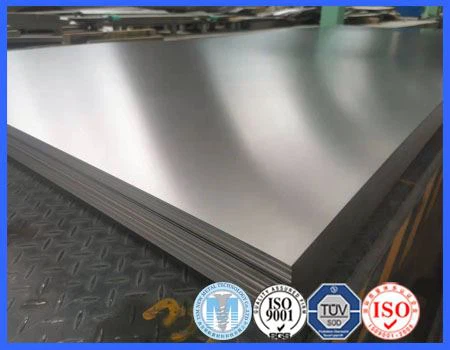
Grade 1 titanium sheet is the softest and most ductile form of commercially pure titanium (99.5% Ti). It offers exceptional corrosion resistance, formability, and weldability, making it ideal for applications in chemical processing, marine, aerospace, and medical industries.
Because of its low oxygen content, Grade 1 titanium can be easily formed, stamped, or deep drawn into complex shapes without cracking. Despite its softness, it maintains a high strength-to-weight ratio and excellent resistance to seawater and oxidizing environments.
This combination of lightweight strength, biocompatibility, and durability makes Grade 1 titanium sheet a preferred material for fabricating heat exchangers, pressure vessels, medical implants, and architectural components. It conforms to standards such as ASTM B265 and ASME SB-265, ensuring consistent performance and reliability across industries.
The material's inherent characteristics stem from its hexagonal close-packed (HCP) crystal structure, known as alpha phase, which remains stable up to 1620°F (882°C). This atomic arrangement contributes to its excellent performance in corrosive environments while maintaining good strength-to-weight ratio. Unlike alloyed titanium grades such as Grade 5 (Ti-6Al-4V), Grade 1 Titanium does not contain additional elements like aluminum or vanadium, preserving its fundamental titanium properties in their purest form while offering lower mechanical strength but enhanced formability.
Industry statistics reveal that Grade 1 Titanium accounts for approximately 10% of the total titanium production , reflecting its specialized role in applications where its specific property advantages are essential. Despite its lower volume production compared to the more common Grade 2 Titanium, it maintains a critical position in industries where its unique combination of properties is indispensable for performance, safety, and cost-effectiveness.
Key Properties and Characteristics
Grade 1 Titanium Sheets possess a distinctive set of physical and mechanical properties that make them suitable for demanding applications across various industries. Understanding these characteristics is essential for proper material selection and application engineering.
Physical Properties:
Density: 4.51 g/cm³ - Approximately 40% lighter than steel while offering comparable strength-to-weight ratio
Melting Point: 1668±10°C - Higher than most steel alloys, providing excellent thermal stability
Thermal Conductivity: 14.99 W/(m·°C) at 25°C - Relatively low, only about 3% that of copper, requiring special consideration in heat transfer applications
Coefficient of Thermal Expansion: 8.36×10⁻⁶/°C at 25°C - Lower than steel and nickel, helping to minimize thermal stress during processing
Electrical Resistivity: 650×10⁻⁹ Ω·m for industrial purity - Higher than most common metals, affecting electrical applications
Mechanical Properties:
Tensile Strength: 240-370 MPa - The lowest among titanium grades but sufficient for many chemical and industrial applications
Yield Strength: 170-300 MPa - Provides excellent resilience in formed components
Elongation: 30% minimum - Signifying exceptional ductility, far exceeding most structural metals
Hardness: HB150-HB340 - Moderate surface hardness, suitable for many applications without excessive wear resistance requirements
Elastic Modulus: 115 GPa - Approximately half that of steel, resulting in higher flexibility under load
Table: Key Properties of Grade 1 Titanium Sheet
| Property | Value | Comparison Context |
|---|---|---|
| Density | 4.51 g/cm³ | 40% lighter than steel |
| Thermal Conductivity | 14.99 W/(m·°C) | 16% of aluminum's conductivity |
| Tensile Strength | 240-370 MPa | Lowest among pure titanium grades |
| Elongation | 30% minimum | Highest ductility among titanium grades |
| Elastic Modulus | 115 GPa | 58% of steel's stiffness |
The exceptional corrosion resistance of Grade 1 Titanium stems from its highly stable, continuous surface oxide film that forms spontaneously when exposed to air or moisture. This passive layer reforms almost immediately if damaged, providing self-healing protection that makes it highly resistant to various corrosive media, including seawater, chlorides, and many industrial chemicals . This combination of physical and mechanical properties positions Grade 1 Titanium as the material of choice when corrosion resistance, formability, and light weight are simultaneously required.
Grade 1 vs. Grade 2 Titanium: Key Differences
Understanding the distinctions between Grade 1 and Grade 2 titanium is crucial for proper material selection. While both are commercially pure titanium, their differing impurity levels significantly influence their mechanical properties and application suitability.
The fundamental distinction between these grades lies in their interstitial element content - specifically oxygen, iron, and nitrogen. Grade 1 Titanium maintains the strictest limits on these elements, resulting in its characteristically lower strength and higher ductility. Grade 2 Titanium, described as the "most used" pure titanium grade , permits slightly higher levels of these elements, notably oxygen content increased from 0.18% in Grade 1 to 0.25% in Grade 2 . This seemingly small compositional difference has profound effects on mechanical performance.
From a mechanical property perspective, Grade 1 offers tensile strength between 240-370 MPa, while Grade 2 provides 340-500 MPa tensile strength . The practical implication is that Grade 1 can undergo more severe forming operations, making it preferable for applications requiring complex shapes or deep drawing. Grade 2, with its higher strength, is often selected for structural applications where weight savings and corrosion resistance are important but extreme formability is not required.
Table: Comparison Between Grade 1 and Grade 2 Titanium
| Parameter | Grade 1 Titanium | Grade 2 Titanium |
|---|---|---|
| Oxygen Content | ≤0.18% | ≤0.25% |
| Iron Content | ≤0.20% | ≤0.30% |
| Tensile Strength | 240-370 MPa | 340-500 MPa |
| Ductility | Highest among pure titanium grades | Good ductility, lower than Grade 1 |
| Primary Applications | Deep drawing, complex forming | General corrosion-resistant structures |
| Relative Cost | Higher due to specialized processing | Most economical pure titanium option |
Corrosion resistance remains nearly identical between the two grades, as the passive oxide layer formation depends primarily on the titanium base rather than the slight variations in impurity elements . This means selection between grades should be based primarily on mechanical property requirements rather than corrosion performance expectations. For applications where forming demands are moderate and higher strength is beneficial, Grade 2 typically offers better value. Conversely, when severe forming is required, the additional cost of Grade 1 is justified by its superior manufacturability.
Manufacturing Process of Titanium Sheets
The production of Grade 1 Titanium Sheets involves a sophisticated manufacturing sequence that transforms raw titanium sponge into precision-engineered sheet products. The process demands strict control at every stage to ensure the final product meets the stringent requirements of industrial applications.
The manufacturing journey begins with titanium sponge production, typically through the Kroll process, where titanium tetrachloride is reduced with magnesium to form porous titanium "sponge." This sponge is then compressed with alloying elements (minimal for Grade 1) and welded into electrodes for primary melting. Most high-quality titanium sheet production employs vacuum arc remelting (VAR) , where the electrode is melted in a water-cooled copper crucible under vacuum conditions. This process may be repeated multiple times to achieve optimal chemical homogeneity and remove volatile impurities.
Following ingot production, the material undergoes hot working operations starting with forging or hot rolling above the beta transus temperature (typically 1650-1700°F for pure titanium). This breakdown process converts the coarse as-cast structure into a wrought microstructure with improved mechanical properties. The hot working continues with hot rolling at temperatures between 1300-1600°F , reducing the material to intermediate gauges while continuously recrystallizing the microstructure to maintain workability.
For final dimensioning, the material undergoes cold rolling with intermediate anneals to achieve the desired sheet thickness, which can range from 0.3mm to 100mm . The cold rolling process is particularly critical for Grade 1 Titanium as it enhances surface finish and dimensional precision while developing the preferred crystallographic texture that optimifies formability. Between rolling passes, annealing treatments at 1200-1400°F are employed to relieve stresses and restore ductility . The final annealing step determines whether the sheet will be supplied in the annealed (soft) condition or with some degree of cold work.
Surface preparation represents the final manufacturing stage, where sheets typically undergo descaling and pickling processes to remove surface contaminants and the alpha case (oxygen-enriched surface layer) that can detrimentally affect fatigue performance and formability. The resulting Grade 1 Titanium Sheets offer the optimal combination of surface quality, dimensional accuracy, and metallurgical properties required for the most demanding applications.
Applications and Industries
The production of Grade 1 Titanium Sheets involves a sophisticated manufacturing sequence that transforms raw titanium sponge into precision-engineered sheet products. The process demands strict control at every stage to ensure the final product meets the stringent requirements of industrial applications.


Technical Specifications and Standards
Grade 1 Titanium Sheets are governed by rigorous international standards that ensure consistent quality and performance across different manufacturers and production batches. Understanding these specifications is essential for design engineers, procurement specialists, and quality assurance personnel.
The primary standard governing Grade 1 Titanium Sheets is ASTM B265 , which establishes the chemical, mechanical, and dimensional requirements for titanium strip, sheet, and plate. This comprehensive standard specifies the allowable chemical composition ranges, mechanical property minimums, and standard sizes for commercially pure titanium grades. For medical applications, ASTM F136 provides additional requirements for the evaluation of titanium materials intended for surgical implant applications, with more stringent controls on interstitial elements and microstructural uniformity.
Internationally, ISO 7209:2023 specifies the technical delivery conditions for titanium and titanium alloy plates, sheets, and strips, creating a harmonized framework for global trade. In China, the relevant standards include GB/T 3621-2007 and GB/T 13810-2007 , which align closely with ASTM requirements while addressing specific domestic market needs.
Chemical composition requirements for Grade 1 Titanium are precisely defined with maximum limits for interstitial and impurity elements :
Nitrogen (N): ≤0.03%
Carbon (C): ≤0.08%
Hydrogen (H): ≤0.015%
Iron (Fe): ≤0.20%
Oxygen (O): ≤0.18%
Balance: Titanium
These controlled elemental limits are crucial for maintaining the characteristic low strength and high ductility of Grade 1 compared to other commercially pure titanium grades. Even minor variations, particularly in oxygen content, can significantly impact mechanical properties, with just 0.01% oxygen variation affecting strength by tens of MPa .
Standard available sizes for Grade 1 Titanium Sheets include :
Thickness: 0.3mm to 100mm
Width: 400mm to 3000mm
Length: 1000mm to 6000mm
Dimensional tolerances vary with thickness, with thinner sheets (0.13mm) having tolerances of ±0.03mm, while thicker plates (3.71-4.76mm) permit ±0.36mm variation . Surface finishes range from standard mill finish to specially pickled, descaled, or mechanically polished surfaces for specific applications. At TSM TECHNOLOGY CO, we maintain comprehensive certification for these international standards, ensuring our Grade 1 Titanium Sheets meet the most demanding application requirements across global markets.
Machining and Welding Guidelines
Working with Grade 1 Titanium Sheets requires specific techniques and precautions to maintain material properties and achieve optimal results. While Grade 1 offers better formability than other titanium grades, it shares the same challenging machining characteristics common to all titanium materials.
Machining Considerations:
The low thermal conductivity of titanium (only about 3% that of copper) presents the primary machining challenge, as heat generated during cutting doesn't dissipate through the material or chips but concentrates at the tool-workpiece interface. This can lead to premature tool wear and work hardening if not properly managed. Successful machining requires:
Sharp tools with positive rake angles and specialized coatings
Conservative speeds and feeds to control cutting temperatures
High-volume, high-pressure coolant directed at the cutting interface
Rigid tooling and workpiece support to minimize chatter and deflection
The high elasticity of titanium (modulus of 115 GPa) causes springback during machining, necessitating techniques that compensate for this tendency. Clamping must secure the workpiece without creating stress concentrations that could lead to distortion upon release. For these reasons, machining Grade 1 Titanium typically requires specialized parameters and tool geometries rather than standard metalworking approaches.
Welding Procedures:
Grade 1 Titanium is considered the most weldable titanium grade due to its low impurity content and high ductility . However, successful welding requires strict adherence to procedures that prevent contamination:
Proper shielding using high-purity argon (99.995% minimum) with trailing shields to protect the cooling weld
Scrupulous cleanliness with dedicated stainless steel wire brushing and solvent cleaning
Adequate gas coverage maintained until the weld cools below 800°F (427°C)
Recommended welding methods include Gas Tungsten Arc Welding (GTAW/TIG) and Gas Metal Arc Welding (GMAW/MIG) , with plasma arc and laser welding also producing excellent results in specialized applications. A high-quality titanium weld should exhibit a "frozen water silver" appearance - bright and reflective without the yellowish, bluish, or white discoloration that indicates contamination and embrittlement.
Post-weld heat treatment is generally not required for Grade 1 Titanium due to its inherent resistance to cracking, but stress relief annealing may be beneficial for complex structures or applications subject to corrosive media. When properly executed, welded joints in Grade 1 Titanium typically match the base metal's corrosion resistance and exhibit mechanical properties comparable to the parent material.
Price Considerations and Market Trends
The pricing of Grade 1 Titanium Sheets is influenced by a complex interplay of factors including raw material costs, manufacturing complexity, market demand, and global economic conditions. Understanding these elements provides valuable context for procurement planning and budget forecasting.
As of November 2025, the titanium market demonstrates specific pricing patterns, with TA2 titanium plate (3-8mm thickness) priced at approximately 60.5 RMB per kilogram , equivalent to roughly $8.50/kg. This positions Grade 1 Titanium typically at a premium compared to Grade 2 due to its more specialized nature and lower production volumes, though exact differentials vary with market conditions and order specifications.
Multiple factors contribute to the final cost of Grade 1 Titanium Sheets:
Raw Material Volatility: Titanium sponge prices, the primary raw material, have historically shown significant fluctuation, with documented increases from under $4/lb to $11/lb within two-year periods , reflecting the inherent volatility in titanium raw material markets.
Manufacturing Complexity: The multi-step processing sequence including melting, forging, hot and cold rolling with intermediate anneals, and precision finishing contributes significantly to the final cost. Thinner gauges and tighter tolerances command premium pricing due to increased processing challenges and yield losses.
Quantity and Dimensions: Standard sizes and production quantities typically offer the most favorable pricing, while custom dimensions, specialized finishes, or small batch sizes increase manufacturing costs through setup charges and specialized handling requirements.
Certification Requirements: Applications demanding additional testing or certification (such as aerospace, nuclear, or medical qualifications) incur additional costs for specialized testing, documentation, and quality assurance procedures.
Current market trends indicate growing demand across multiple sectors, particularly in chemical processing, aerospace, and marine applications . This increased consumption, coupled with supply chain considerations, suggests continued firmness in titanium pricing. The geographical concentration of production capacity in regions like China's Shaanxi province (which accounted for 51.6% of China's titanium material production in 2021) creates potential for supply chain disruptions that can influence global pricing.
At TSM TECHNOLOGY CO, we work closely with clients to optimize specifications balancing performance requirements with budget constraints, often suggesting alternative dimensions or processing routes that can deliver significant cost savings without compromising application performance.

One-stop Titanium Sheet Factory in China
Contact us today to discuss how our Grade 1 Titanium Sheets can enhance your project's performance, and experience the TSM TECHNOLOGY CO difference - where technical excellence meets customer-focused service.
Conclusion & Why Choose TSM TECHNOLOGY CO., LTD
At TSM TECHNOLOGY CO., LTD, we specialize in manufacturing and supplying Grade 1 titanium sheets with precision and reliability. Our advanced production lines ensure excellent flatness, consistent thickness, and smooth surface finish.
We serve industries across aerospace, marine, medical, and chemical processing. Whether you need custom cutting, CNC machining, or surface finishing, TSM provides full-service solutions from raw material to finished product. Contact our sales team today for a quotation or technical consultation - experience world-class titanium manufacturing excellence with TSM TECHNOLOGY CO., LTD.
faq
Q:1. What is the maximum operating temperature for Grade 1 Titanium Sheets?
A:Grade 1 Titanium Sheets are generally recommended for service up to 250°C (482°F) . Beyond this temperature, increased oxidation and potential strength reduction may occur. For elevated temperature applications requiring long-term stability, consideration of alternative titanium grades with improved high-temperature capabilities may be necessary.
Q:2.What fabrication precautions are necessary when forming Grade 1 Titanium Sheets?
A:While Grade 1 offers the best formability among titanium grades, successful fabrication requires attention to its high springback characteristics (due to low elastic modulus) and potential for galling. Proper tooling with polished surfaces, adequate radii on forming dies, and appropriate lubrication specifically formulated for titanium are recommended for optimal results.
Q:3.Is Grade 1 Titanium suitable for medical implant applications?
A:Grade 1 Titanium is biocompatible and used in medical applications , though Grade 5 (Ti-6Al-4V) and Grade 23 (Ti-6Al-4V ELI) are more common for load-bearing implants due to their higher strength. Grade 1 finds application in non-load-bearing implants, surgical instruments, and medical equipment where its superior formability facilitates complex designs.
Q:4.What welding methods are appropriate for Grade 1 Titanium Sheets?
A:The most common welding methods include Gas Tungsten Arc Welding (GTAW/TIG) and Gas Metal Arc Welding (GMAW/MIG) , with strict attention to shielding gas coverage and cleanliness. Properly executed welds in Grade 1 Titanium typically match the base metal's corrosion resistance and mechanical properties.
Q:5.How does Grade 1 Titanium perform in acidic environments?
A:Grade 1 Titanium exhibits excellent resistance to oxidizing acids like nitric and chromic acids, but shows poor resistance to reducing acids such as hydrochloric and sulfuric acids without inhibiting elements or oxidizing contaminants . Performance varies significantly with concentration, temperature, and presence of oxidizing species.
Q:6.What surface finishes are available for Grade 1 Titanium Sheets?
A:Standard finishes include mill finish, pickled, descaled, and mechanically polished surfaces. Specialized finishes such as electropolished for improved cleanability or anodized for decorative applications are also available. Surface finish selection depends on both functional requirements and aesthetic considerations.


