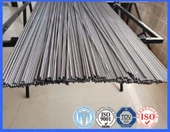
Nickel alloy tubes used in critical industries such as chemical processing, oil and gas, power generation, and heat exchanger manufacturing must undergo rigorous testing before delivery. Common inspection methods include Positive Material Identification (PMI), hydrostatic testing, eddy current testing, ultrasonic testing, flattening tests, flaring tests, and tensile testing. These procedures ensure that nickel alloy tubes, including Hastelloy G30 tubes, meet ASTM standards and provide reliable long-term performance in demanding service environments.

Why Tube Testing Is Critical for Nickel Alloy Tubes
Nickel alloy tubes are often selected for applications where failure is not an option. In industries handling corrosive acids, high-pressure fluids, and elevated temperatures, even a minor defect can lead to:
Process shutdowns
Product contamination
Equipment damage
Environmental incidents
Expensive maintenance costs
Unlike ordinary carbon steel tubing, premium alloys such as Hastelloy G30, Hastelloy C276, Hastelloy C22, Alloy 20, and Inconel grades are typically used in highly demanding systems where quality verification is essential.
Tube testing provides confidence that the material delivered matches the specified alloy grade and is free from manufacturing defects that could compromise performance.
Industry Standards Governing Tube Inspection
Most nickel alloy tubes are manufactured according to international standards that require specific inspection and testing procedures.
Common Standards
|
Standard |
Description |
|
ASTM B622 |
Seamless Nickel Alloy Pipe and Tube |
|
ASTM B619 |
Welded Nickel Alloy Pipe and Tube |
|
ASTM B626 |
Welded Nickel Alloy Tube |
|
ASTM B444 |
Nickel-Chromium-Molybdenum Alloy Tube |
|
ASME SB622 |
Pressure Vessel Applications |
|
EN 10204 3.1 |
Material Certification Standard |
These standards define testing requirements to ensure consistency, safety, and traceability.
Positive Material Identification (PMI Testing)
PMI testing is one of the most important inspection procedures for nickel alloy tubes.
Its purpose is to verify that the chemical composition matches the specified alloy grade.
For example, a Hastelloy G30 tube should contain the correct levels of:
Nickel
Chromium
Molybdenum
Copper
Tungsten
Iron
How PMI Testing Works
Portable XRF analyzers are commonly used to identify alloy chemistry without damaging the material.
Benefits of PMI Testing
|
Benefit |
Description |
|
Material Verification |
Confirms correct alloy grade |
|
Prevents Material Mix-Ups |
Reduces project risks |
|
Fast Inspection |
Immediate results |
|
Non-Destructive |
No damage to tubes |
PMI testing is particularly important for projects involving sulfuric acid, phosphoric acid, nitric acid, and chloride-containing media.
Hydrostatic Testing
Hydrostatic testing verifies the pressure integrity of a tube.
During this test, the tube is filled with water and pressurized to a specified level.
The objective is to identify:
Leaks
Wall defects
Manufacturing flaws
Structural weaknesses
Hydrostatic Test Advantages
|
Advantage |
Purpose |
|
Leak Detection |
Ensures pressure containment |
|
Safety Verification |
Prevents service failures |
|
Quality Assurance |
Meets ASTM requirements |
|
Reliability Confirmation |
Suitable for critical systems |
Hydrostatic testing is widely used for:
Chemical process piping
Heat exchanger tubes
Pressure vessel tubing
Acid transfer systems
Eddy Current Testing (ECT)
Eddy current testing is a non-destructive examination method that detects surface and near-surface defects.
An electromagnetic field is induced into the tube wall, allowing inspectors to identify abnormalities.
Defects Detected by Eddy Current Testing
|
Defect Type |
Detection Capability |
|
Surface Cracks |
Excellent |
|
Pinholes |
Excellent |
|
Wall Thinning |
Good |
|
Weld Defects |
Excellent |
|
Corrosion Damage |
Good |
Because it is fast and highly effective, ECT is commonly used as an alternative to hydrostatic testing for certain applications.
Ultrasonic Testing (UT)
Ultrasonic testing uses high-frequency sound waves to examine the internal structure of a tube.
Unlike eddy current testing, UT can detect defects deep within the material.
What Ultrasonic Testing Detects
Internal cracks
Laminations
Inclusions
Wall thickness variations
Hidden manufacturing defects
UT Advantages
|
Feature |
Benefit |
|
Deep Inspection |
Detects internal flaws |
|
High Accuracy |
Reliable defect identification |
|
Non-Destructive |
No damage to material |
|
Thickness Measurement |
Accurate wall verification |
UT is especially valuable for thick-wall nickel alloy tubes used in critical process equipment.
Tensile Testing
Tensile testing evaluates the mechanical properties of a tube.
The specimen is pulled until failure, allowing engineers to determine:
Tensile strength
Yield strength
Elongation
Ductility
Typical Mechanical Requirements for Hastelloy G30 Tube
|
Property |
Typical Value |
|
Tensile Strength |
≥586 MPa |
|
Yield Strength |
≥241 MPa |
|
Elongation |
≥30% |
Mechanical testing confirms that the material can safely withstand operational stresses.
Flattening Test
Flattening tests evaluate a tube's ability to deform without cracking.
The tube is compressed between parallel plates until a specified distance is reached.
Purpose of Flattening Tests
Verify ductility
Detect weld defects
Assess manufacturing quality
Confirm forming capability
This test is particularly important for tubes that may undergo bending or fabrication after delivery.
Flaring Test
The flaring test measures a tube's ability to expand without cracking.
A tapered tool is inserted into the tube end to enlarge the diameter.
Applications Requiring Flaring Tests
Heat exchanger tubing
Condenser tubing
Instrumentation tubing
Process system connections
Good flaring performance indicates high material ductility and excellent manufacturing quality.
Hardness Testing
Hardness testing determines a material's resistance to deformation and wear.
Common methods include:
Rockwell Hardness Testing
Brinell Hardness Testing
Vickers Hardness Testing
Why Hardness Matters
|
Reason |
Benefit |
|
Wear Resistance |
Longer service life |
|
Material Verification |
Confirms heat treatment |
|
Mechanical Evaluation |
Supports quality control |
Hardness testing is often included in final inspection reports.
Dimensional Inspection
Even a perfectly manufactured alloy tube can cause problems if dimensions fall outside specification.
Dimensional inspection verifies:
Outside diameter (OD)
Inside diameter (ID)
Wall thickness
Length
Straightness
Typical Inspection Items
|
Inspection Item |
Purpose |
|
OD Measurement |
Installation accuracy |
|
Wall Thickness |
Pressure capability |
|
Length Verification |
Fabrication requirements |
|
Straightness |
Assembly performance |
Visual Inspection
Visual inspection remains one of the simplest but most important quality control procedures.
Inspectors examine tubes for:
Surface defects
Scratches
Dents
Weld irregularities
Oxidation
Packaging damage
Although basic, visual inspection often identifies issues before more advanced testing begins.
Comparison of Common Tube Testing Methods
|
Testing Method |
Destructive |
Detects Internal Defects |
Detects Surface Defects |
Purpose |
|
PMI |
No |
No |
No |
Material Verification |
|
Hydrostatic |
No |
Limited |
Limited |
Pressure Integrity |
|
Eddy Current |
No |
Limited |
Excellent |
Surface Defects |
|
Ultrasonic |
No |
Excellent |
Good |
Internal Inspection |
|
Tensile Test |
Yes |
No |
No |
Mechanical Properties |
|
Flattening Test |
Yes |
No |
Yes |
Ductility Evaluation |
|
Flaring Test |
Yes |
No |
Yes |
Formability Verification |
|
Hardness Test |
Minor |
No |
No |
Material Strength |
Testing Requirements for Hastelloy G30 Tubes
When purchasing Hastelloy G30 tubes for chemical processing systems, buyers should request the following documentation:
Quality Documentation Checklist
|
Requirement |
Verify |
|
ASTM B622 Compliance |
✓ |
|
EN 10204 3.1 Certificate |
✓ |
|
PMI Report |
✓ |
|
Hydrostatic Test Report |
✓ |
|
Eddy Current Report |
✓ |
|
Mechanical Test Results |
✓ |
|
Dimensional Inspection Report |
✓ |
|
Heat Number Traceability |
✓ |
These documents ensure that the tube meets both specification requirements and project expectations.
Why Testing Matters in Chemical Processing Applications
Chemical plants often handle highly aggressive media such as:
- Sulfuric acid
- Nitric acid
- Phosphoric acid
- Hydrochloric acid
- Chloride solutions
- A single defective tube can result in:
- Corrosion failures
- Production losses
- Safety incidents
- Expensive downtime
Comprehensive testing significantly reduces these risks and improves long-term reliability.
FAQ
Q: What Is The Most Important Test For Nickel Alloy Tubes?
A: PMI testing is often considered the most important because it verifies that the correct alloy grade has been supplied.
Q: Is Hydrostatic Testing Mandatory?
A: Many ASTM specifications require hydrostatic testing or an approved non-destructive alternative such as eddy current testing.
Q: What Does PMI Stand For?
A: PMI stands for Positive Material Identification.
Q: Why Is Ultrasonic Testing Important?
A: UT can detect internal defects that are invisible during visual inspection.
Q: What Certifications Should Accompany Hastelloy G30 Tubes?
A: EN 10204 3.1 certificates, PMI reports, dimensional inspection reports, and pressure test reports are commonly required.
Q: Are All Tube Tests Non-Destructive?
A: No. Tensile, flattening, and flaring tests are destructive tests, while PMI, UT, ECT, and hydrostatic testing are generally non-destructive.
Q: Which Testing Method Detects Cracks Most Effectively?
A: A combination of eddy current testing and ultrasonic testing provides excellent crack detection capability.
Conclusion
Quality testing is a critical part of manufacturing nickel alloy tubes for chemical processing applications. From PMI verification and hydrostatic testing to ultrasonic inspection and mechanical testing, each procedure helps ensure that the final product meets industry standards and performs reliably in demanding environments. For corrosion-resistant alloys such as Hastelloy G30 tubes, comprehensive testing not only protects equipment but also reduces operational risk and maintenance costs over the long term.
We are here for you
To create the top brand in the field of titanium products